Restaurant Finance & Daily Operations
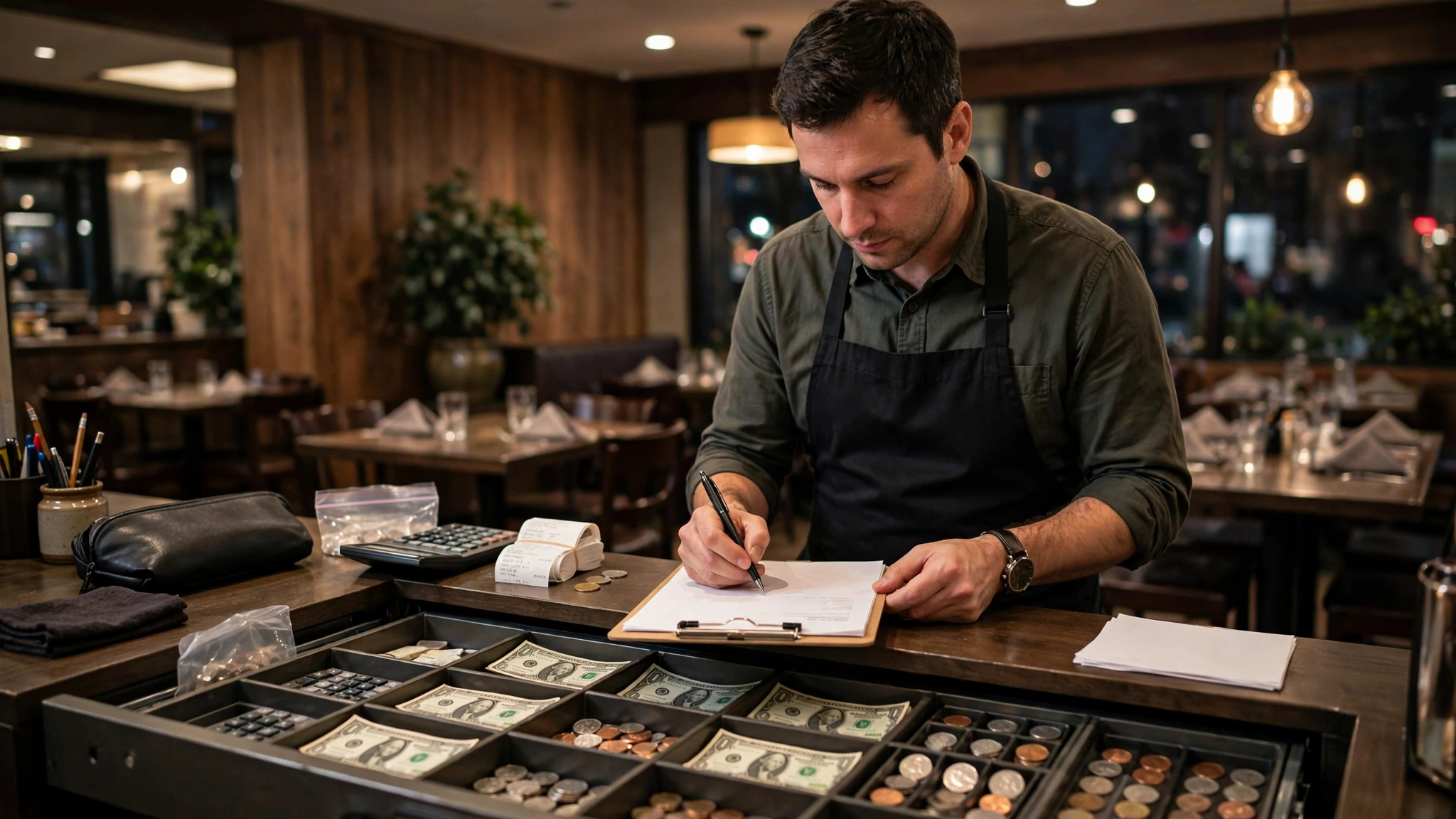
End-of-day reconciliation should prove that the restaurant’s sales records, payment records and physical cash agree—or clearly explain why they do not.
What reconciliation is trying to prove
The closing manager should be able to trace sales from the POS to payment methods, cash drawers and expected deposit. The process should also surface unusual refunds, voids, discounts and comps for review.
1. Close each drawer or cashier separately
Where the operating model allows it, individual accountability makes investigation easier. Record the opening float, cash sales, cash paid-outs or approved movements, and the physical closing count.
2. Reconcile by payment type
- Cash
- Credit and debit card
- Delivery-platform or online payments
- Gift cards or house accounts where applicable
- Other approved payment methods
Do not force differences into the cash line just because cash is easiest to adjust. The objective is to identify the actual source of the variance.
3. Review voids, refunds, discounts and comps
These transactions are legitimate in many restaurants, but they are also areas where weak controls can hide mistakes or abuse. Require appropriate authorization and review unusual patterns by employee, shift, reason or value.
4. Calculate expected cash
Expected cash = Opening float + Cash receipts − Approved cash paid-outs
Compare expected cash with the physical count. Record the variance rather than silently adjusting the number.
5. Prepare and control the deposit
Use the restaurant’s approved deposit and cash-handling procedure, including dual verification where required by policy. Limit unnecessary cash exposure and maintain a clear chain of custody.
6. Use variance thresholds for escalation
A small isolated difference may be handled differently from repeated or material variances. Define when the closing manager must investigate, document or escalate. The threshold should reflect the business and its risk controls.
End-of-day manager sequence
- Run the final POS sales summary.
- Close and count each cash drawer.
- Reconcile payment methods.
- Review voids, refunds, comps and discounts.
- Record unexplained variances.
- Prepare the deposit or cash transfer.
- Sign off the close and leave exception notes for follow-up.
Cash control should sit inside the wider closing routine described in How to Build a Daily Restaurant Opening and Closing Checklist.
Manager takeaway
A good close does not make variances disappear. It makes them visible, documented and traceable.