Inventory & Purchasing
Restaurant inventory is not only a list of what is on the shelf. It is a control system connecting purchasing, receiving, storage, production, sales and cash.
What a good inventory system should answer
- What do we have?
- What should we have?
- What needs to be ordered?
- What is moving too slowly?
- Where are unexplained losses occurring?
- Are counts and purchase records reliable?
1. Build a clean item master
Use one name and one counting unit for each inventory item. If “chicken breast,” “chicken fillet” and “breast 5 kg” refer to the same product, reporting becomes unreliable. Record supplier pack size separately from the unit you use for counting and costing.
2. Organize storage before improving the spreadsheet
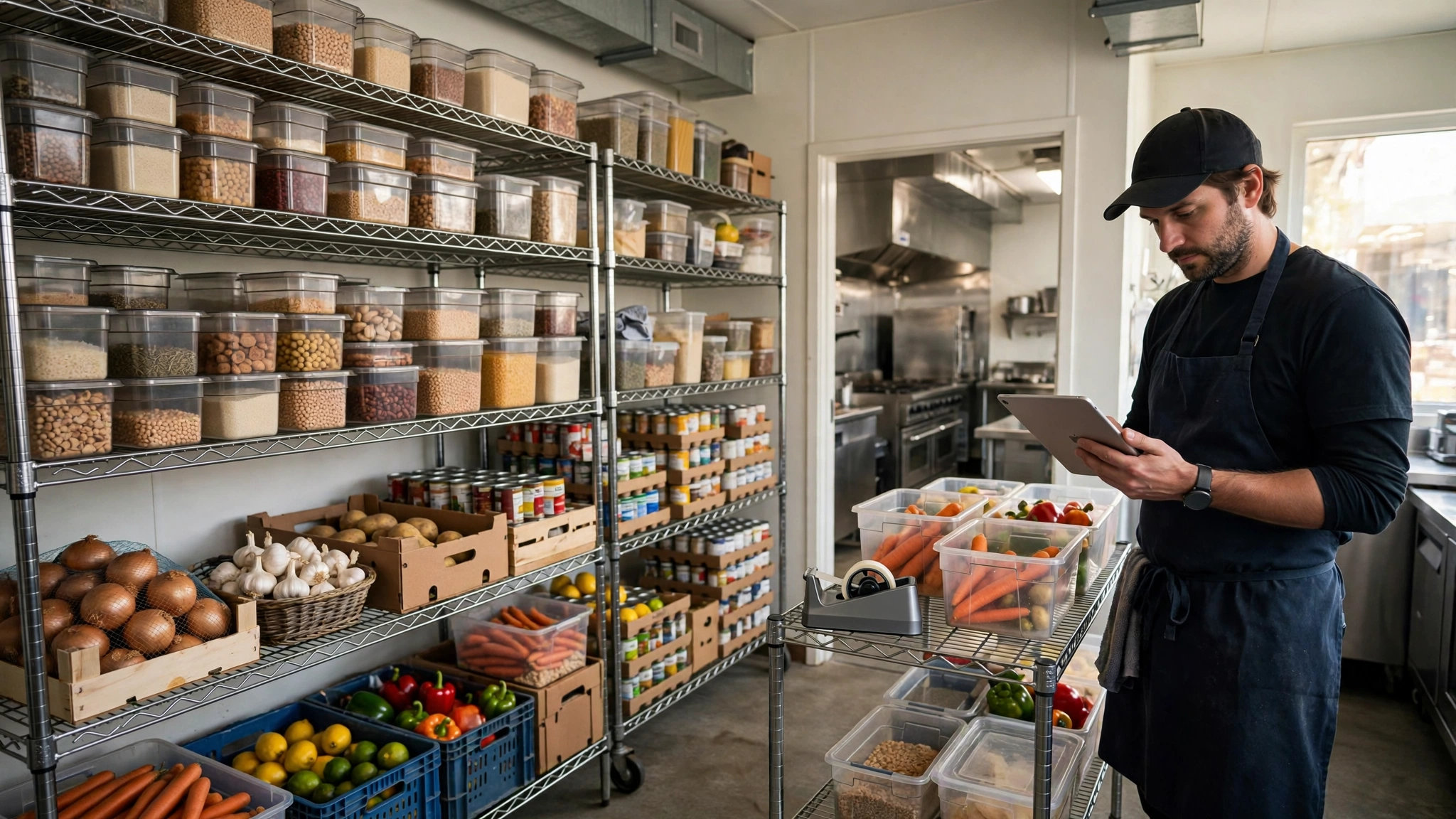
A count is only as good as the physical storage system. Group similar items, label shelves, establish fixed locations where practical and separate damaged or returned stock. A clean storeroom reduces duplicate ordering and makes shortages visible sooner.
3. Use a consistent count sequence
Count in the same order every time: for example, dry store, walk-in, freezer, bar and kitchen line. Use the same units and avoid switching between cases, pieces and kilograms without a defined conversion.
4. Set par levels from real usage
A par level is a target quantity that helps the team order enough stock for the next delivery cycle without carrying unnecessary inventory. It should reflect expected usage, delivery frequency, lead time, safety stock and pack size.
For the full method, read How to Set Par Levels for Restaurant Inventory.
5. Treat receiving as a control point
- Match delivered quantity to the order.
- Check product specification and condition.
- Verify price changes.
- Record substitutions and shortages.
- Move temperature-sensitive items into proper storage promptly.
Food-safety checks must follow the restaurant’s approved procedures and applicable local requirements.
6. Use cycle counts for priority items
Full inventories are useful, but high-value or high-variance items often deserve more frequent cycle counts. This creates an early warning without forcing the team to perform a complete stock count every day.
7. Investigate variance instead of merely reporting it
A stock variance can come from counting error, receiving error, spoilage, recipe drift, theft, unrecorded transfer or data-entry problems. Before assigning blame, verify the evidence.
A practical inventory rhythm
- Daily: review critical shortages and unusual usage.
- On delivery days: verify receiving and supplier changes.
- Weekly: count priority items and review waste.
- At a fixed period-end: complete the full inventory count.
- After each count: investigate the largest exceptions first.
Connect inventory to food cost
Inventory is one of the foundations of food-cost accuracy. Weak counts can make food cost appear better or worse than reality. Use consistent inventory practices alongside the controls in How to Control Food Cost in a Small Restaurant.
Manager takeaway
Good inventory control makes the exceptions visible. It does not require counting everything constantly.