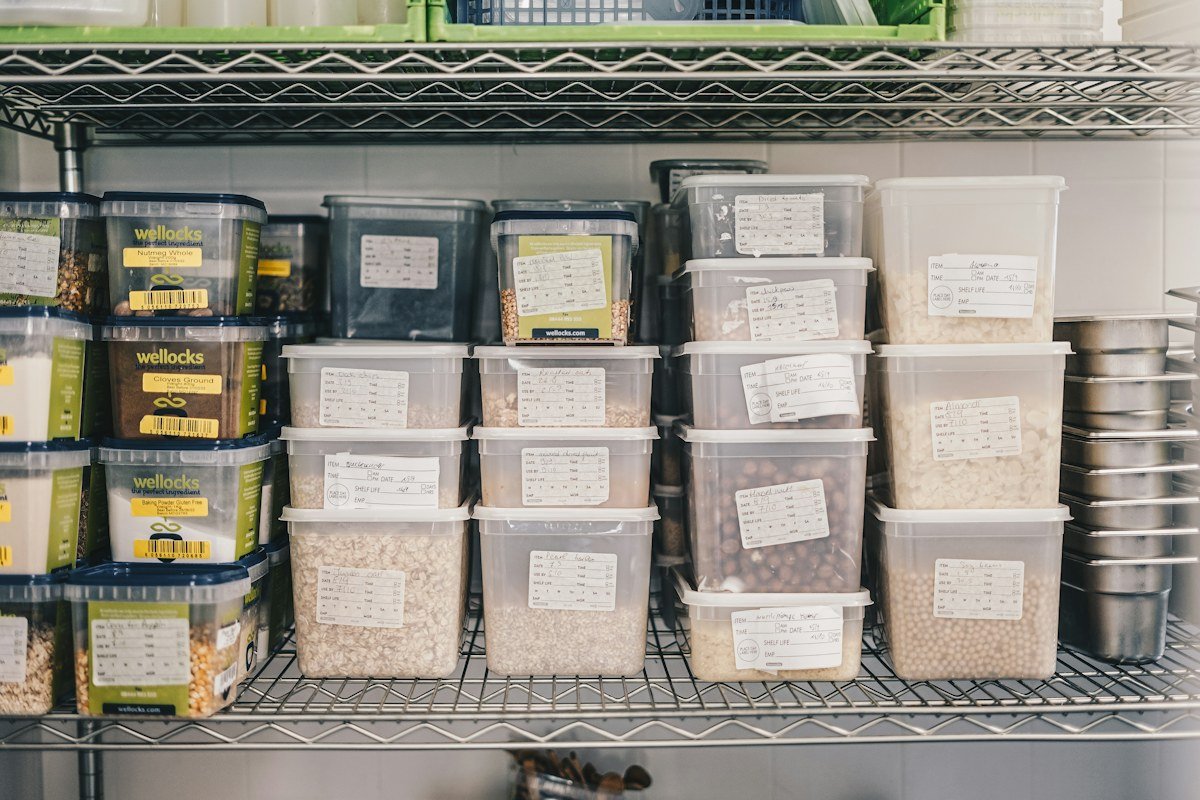
A restaurant purchase-order approval limit should control who can commit money before a supplier receives an order, without forcing a manager to seek permission for every bag of flour. The most useful policy sets limits by transaction value and risk, separates ordering from receiving, and makes exceptions visible. It also distinguishes an approved budget from permission to buy a specific product: a branch with $8,000 left in its monthly food budget should not automatically be allowed to order $8,000 of one ingredient.
Consider a hypothetical independent restaurant with a $24,000 monthly purchasing budget. The owner authorizes routine orders up to $300 for a shift manager, $301–$1,000 for the general manager, and larger commitments for the owner. These are example thresholds, not standard industry limits. The right thresholds depend on business scale, supplier contracts, credit terms, fraud exposure, delivery frequency and who is available to approve emergencies.
Start by defining what counts as a commitment
An approval should happen before the restaurant becomes committed to a supplier. A purchase order is not the same as a received invoice, and neither proves the goods were physically accepted. Define whether the approval amount includes tax, delivery, fuel surcharge and other unavoidable charges. For conservative controls, use the full expected landed commitment rather than a product subtotal that omits predictable charges.
Some restaurants buy from standing contracts, others use phone orders and electronic catalogs. A valid policy should cover all of them. If a supplier automatically delivers a recurring standing order, assign the approval to the standing-order agreement and require a periodic review of quantities and prices. If a manager adds items outside the standing order, the addition needs its own authorization according to the policy.
Example one: set thresholds against actual operating scale
Assume a restaurant expects $24,000 in monthly food and paper purchases and typically places 80 orders. Its average order commitment is $24,000 ÷ 80 = $300. Management might choose to let the shift manager approve ordinary documented orders up to $300, the general manager approve commitments above $300 through $1,000, and the owner approve higher values. This structure gives routine low-risk purchasing a fast path while escalating unusually large orders.
| Illustrative commitment | Authority | Evidence |
|---|---|---|
| $0–$300 | Shift manager | Approved SKU, quantity, unit price, current stock |
| $300.01–$1,000 | General manager | Demand reason and budget check |
| Above $1,000 | Owner or delegated controller | Written commercial rationale and supplier terms |
| Any new vendor or bank-account change | Independent designated approver | Vendor identity and verified payment instructions |
| Any safety-critical emergency | Emergency process | Immediate escalation and subsequent documented review |
The authority matrix should not be interpreted as a right to divide one purchase into several smaller orders. If a manager needs $1,200 of a product and submits four $300 orders to avoid approval, the commitment is still $1,200. Aggregate linked orders for the same purpose, supplier and time window. Set a policy against splitting and require an exception report that can flag repeated orders just below a threshold.
Example two: a low-priced item can create a high commitment
Suppose chicken is quoted at $3.40 per raw pound and a buyer requests 250 pounds. The line subtotal is 250 × $3.40 = $850. Add an agreed $35 delivery charge and a hypothetical $20 packaging fee: the full expected commitment is $905. Under the example authority matrix, the general manager must approve, even though the unit price looks inexpensive. If the supplier later bills 260 pounds at the same rate, the line cost becomes $884 and the full bill becomes $939; the receiver and AP team must still verify whether the additional ten pounds were permitted.
If a vendor requires minimum order quantities, include that constraint in the order proposal. A minimum of 300 pounds would raise the product subtotal to $1,020 and the illustrative landed amount to $1,075, moving the decision to the owner tier. The purchasing system should show the threshold crossing before the order is sent, not after delivery.
Approval is not a substitute for inventory planning
Buying should start with a replenishment calculation: required stock for forecast demand plus authorized safety stock, less usable stock on hand and confirmed incoming deliveries. The restaurant prep sheet and par-level guide illustrates the logic. An approved manager can still overbuy if the stock record is wrong or if a second branch has already ordered the same item.
Check actual lead times, vendor delivery calendars, minimum order requirements, shelf life, storage capacity and projected usage. Perishable goods deserve special attention: a quantity discount that forces the restaurant to discard food may be more expensive than buying fewer units at a higher price. Approval thresholds should therefore coexist with maximum stock coverage or order-quantity rules for selected high-risk products.
Use a three-way match after approval
When the order arrives, the receiver should compare the authorized PO with physically received and accepted quantities. Accounts payable should then compare the invoice with both records. A signed PO proves authorization, not delivery. A supplier invoice proves a claim for payment, not physical acceptance. The receiving variance guide describes the reconciliation, and the supplier credit log covers shortages and disputed amounts.
In a small restaurant, strict separation of every duty may be impractical. Compensating controls can include an owner reviewing high-value invoices weekly, using supplier statements to detect duplicates, and requiring a second person to verify new bank instructions. Do not let the same individual create a new vendor, change its payment details, approve a purchase, confirm receipt and release payment without independent review.
Emergency purchasing needs a narrow exception
Suppose a refrigerator fails and the kitchen must urgently obtain a replacement food-safe storage solution. Waiting for an unavailable owner could create an operational or safety problem. Define an emergency approval route with a backup decision-maker, spending ceiling, approved contact method and a next-business-day review. Require evidence of the incident and alternatives considered. A vague label of “urgent” should not permit routine convenience purchases to bypass controls.
Consider a hypothetical emergency replacement purchase of $460 versus a normal supplier cost of $350. The incremental procurement premium is $110. If the restaurant also pays $45 in delivery and $60 in verified incremental overtime, the full exceptional premium is $215 compared with the normal $350 product-only baseline, assuming the baseline had no equivalent delivery or overtime charges. That amount should be visible in the emergency-purchasing report, not hidden in the normal unit-price trend.
Approval limits by supplier risk
A $200 purchase from a newly created, unverified supplier can be riskier than a $900 routine delivery from a contracted vendor. Consider separate escalation rules for new suppliers, unusual payment methods, advance deposits, bank-detail changes, restricted items, unusual price increases and single-source purchases. Approval policy should specify who validates a vendor’s legal identity and how bank instructions are confirmed through a trusted independent channel.
Do not approve invoices solely because they arrived from a familiar-looking email address. A compromised email chain can redirect payment. A control for bank changes should require an independent callback to a previously verified contact, with the verification logged. The exact process should fit the business’s payment system and banking controls.
Weekly exception register
| Field | What to capture |
|---|---|
| PO ID and request date | Unique reference and actual timestamp |
| Supplier and item | Vendor, SKU and pack unit |
| Requested quantity and landed total | All expected charges |
| On-hand, incoming and par level | Stock-based justification |
| Approver and authority tier | Recorded before commitment |
| Exception reason | Emergency, contract minimum, price change |
| Receiving discrepancy | Actual accepted quantity and quality |
| Invoice variance and credit | Reconciled AP outcome |
| Possible order splitting | Related orders and reviewer |
| Final review | Owner, date and disposition |
Roll out the policy without slowing the kitchen
- Review the last 30–60 days of orders to see the real distribution of commitments, supplier types and urgent purchases.
- Set initial tiers that allow most routine low-risk orders to proceed quickly while escalating meaningful exceptions.
- Write one-page authority rules, including the full landed amount and anti-splitting definition.
- Configure approval before supplier transmission in whichever purchasing tool the restaurant uses.
- Train requesters to attach current inventory and forecast demand, not just a verbal explanation.
- Test the emergency backup route while managers are available; a policy no one can execute on Sunday is not effective.
- Reconcile purchase orders, receipts and invoices and review bypasses each week.
- After four weeks, revise thresholds based on real exceptions, control failures and delays rather than arbitrary percentages.
What should owners measure?
Track percentage of commitments approved before purchase, number and dollar value of bypasses, duplicate orders, orders split near thresholds, supplier invoice disputes, emergency purchase premium and time to approve. Do not celebrate a low exception count if managers simply avoid recording exceptions. Cross-check credit-card statements, supplier statements and inventory receipts to identify off-system buying.
Suppose 80 monthly orders include 12 that need general-manager approval, three that need owner approval, and five genuine emergencies. If approvals take an average of four hours and suppliers have same-day cutoffs, measure whether the delays cause stockouts. The policy may need delegated backup authority or a preapproved standing order rather than weaker controls.
Frequently asked questions
Does every restaurant need the same dollar approval tiers?
No. Thresholds should be calibrated to actual order sizes, working capital, supplier risk, operating hours and available oversight. The amounts in this article are hypothetical.
Can a manager approve a purchase that is within budget but above the tier?
Not under the example policy. Budget availability and transaction authority are separate checks; both must pass.
Is a supplier invoice sufficient to prove receipt?
No. Verify accepted quantities and condition using receiving evidence, then reconcile with the purchase order and invoice.
What if the owner is unavailable during an emergency?
Use a predesignated alternate approver and documented emergency limits, followed by independent review. Do not invent retrospective approval or leave safety-critical decisions unaddressed.
References and assumptions
The U.S. Small Business Administration’s financial-management guidance provides broader context for expense controls and cash management. For receiving food, follow the locally adopted code; the FDA Food Code 2026 is a model rather than a nationwide uniform law. The amounts, thresholds and cost scenarios here are examples, not legal requirements or benchmark recommendations. Featured photograph by Ambitious Studio / Rick Barrett via Unsplash, under the Unsplash license.