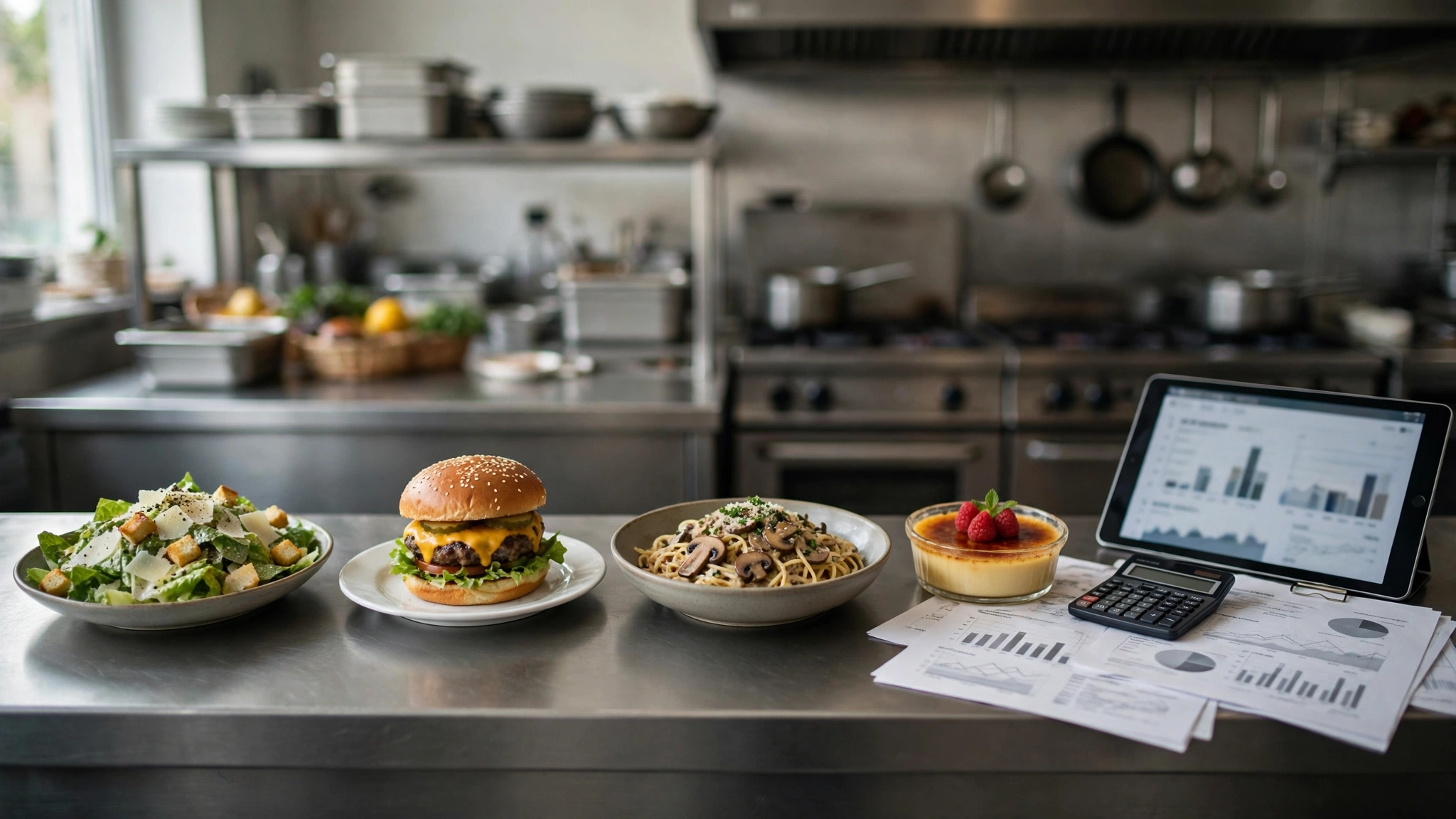
Menu mix describes what guests actually buy, not what the menu merely offers. A high-profit menu mix strategy increases total contribution by shifting a reasonable share of demand toward items that combine strong contribution dollars, dependable execution and guest appeal. The objective is not to push the highest food-cost percentage or the highest-priced dish. It is to understand which items create the best economic result per sale and then use placement, naming, server prompts, bundles and availability to make those choices easier to buy. Because mix changes can affect kitchen load and guest value, the financial analysis must stay connected to operations.
Why the sales mix can matter more than one price increase
Two restaurants can sell the same total number of entrées and produce different contribution because guests choose different items. That makes menu mix a lever that sits between pricing and volume. A small shift toward an item that contributes several dollars more per order can add meaningful gross contribution without changing the menu price of every dish or asking guests to spend dramatically more.
The opportunity is strongest when the better-contribution item is also operationally dependable. Promoting a dish that requires a fragile garnish, scarce ingredient or overloaded station can create service problems that erase the economic gain. The mix review should therefore rank items on both contribution and execution fit before deciding what deserves more visibility.
Guest choice still sets the boundary. The goal is to improve the architecture of choice—placement, descriptions, bundles and prompts—not to pressure guests into items that do not match their needs.
What the system should control
A mix decision needs current item economics, clean unit sales and a realistic view of production capacity. The controls below keep the analysis tied to what guests buy and what the kitchen can actually execute at higher volume.
- accurate item-level sales counts
- current recipe or plate cost
- selling price and contribution per item
- attach rates for sides, beverages and add-ons
- daypart and channel differences
- operational capacity to produce promoted items consistently
Use the same costing basis and sales period when comparing items. If recipe cost is current for one dish and months old for another, the contribution ranking is unreliable. The same applies to unit counts: compare like-for-like periods and separate meaningful daypart or channel differences when the restaurant sells very different mixes at lunch, dinner, dine-in and delivery.
Core calculations and evidence
Menu-mix math should answer a commercial question: what happens if some orders move from Item A to Item B? Use contribution per item, units sold and mix percentage to estimate the change. The calculation becomes useful when it includes the likely source of those shifted orders and any capacity limit that could make additional volume harder to execute.
- Contribution margin per item = price – variable cost
- Menu mix % = item units sold / total units sold × 100
- Weighted contribution = contribution margin × units sold
- Mix shift effect = change in units × contribution difference
Menu mix should be translated into units and contribution dollars. A 3-point mix shift matters only if enough transactions moved and the contribution difference between the items is meaningful. Review the actual order count, the contribution gained or lost, and any change in kitchen load so the team does not celebrate a mix percentage that produced little economic benefit.
A practical review workflow
Rank the menu first, choose a realistic mix opportunity second, and then test one demand lever while measuring the sales transfer it creates. That sequence keeps the team from mistaking a popular item for a profitable opportunity or a promoted-item sales increase for a genuine contribution gain.
- rank items by volume and contribution
- identify profitable items with room to grow
- separate high-margin items that are operationally fragile
- adjust menu placement, naming, server prompts or bundles carefully
- measure mix changes by daypart and channel
- keep only changes that improve contribution without hurting guest value; pair with a menu simplification audit when complexity is the blocker
Run menu-mix changes as a small portfolio of tests, not a pile of simultaneous promotions. Select the one or two items with the clearest contribution opportunity and enough kitchen capacity, assign a specific demand lever, and define the comparison period. Once the result is visible, keep, adjust or stop the intervention before starting another. That protects the signal and makes the learning reusable.
Test a mix shift like an operating experiment
Choose one or two candidate items and define the intervention before changing anything. It might be a stronger menu position, a clearer description, a server prompt, a bundle or a channel-specific feature. Record the starting mix %, contribution per item and relevant operational measure such as ticket time or modifier error. Then run the change long enough to collect comparable sales without changing several other menu variables at the same time.
Judge the result on incremental contribution, not only units sold. If Item A gains 40 orders but simply steals 40 orders from an item with nearly equal contribution, the financial effect is small. If it gains orders from a materially weaker-contribution item without increasing complaints or service pressure, the mix change is doing useful work. This is why mix strategy needs a before-and-after comparison rather than intuition.
Illustrative example
Two entrées sell at similar prices, but one contributes $5 more per order and uses ingredients already shared across the menu. A modest shift of 60 weekly orders toward that item adds meaningful contribution without a price increase. The mix strategy is therefore about demand steering, not merely margin percentages.
The $5 contribution difference and 60-order shift are illustrative. Use current recipe costs, actual unit sales and realistic cannibalization assumptions before estimating the value of a menu-mix change.
Build a menu-mix opportunity table
For each meaningful item, track units sold, menu mix %, contribution per unit, total contribution, operational difficulty and whether the item has room to grow. This table separates three different situations: high contribution items already selling strongly, high contribution items with untapped demand, and apparently profitable items that the operation cannot scale reliably. The second group is usually where mix strategy has the clearest opportunity.
Add daypart and channel when the mix changes substantially. An item that performs well dine-in may travel poorly; a dinner entrée may have little lunch opportunity. Promotion should follow the context in which the item actually delivers value.
Review mix after meaningful menu changes
Weekly review is useful during a controlled test, but long-term mix strategy does not require constant tinkering. Reopen the analysis after menu placement changes, pricing changes, new-item launches, major recipe-cost movements or channel shifts. Give each intervention enough time to collect representative data before declaring it a success or failure.
Menu-mix mistakes that destroy the signal
- Promoting the item with the highest margin percentage instead of the strongest contribution opportunity.
- Using stale recipe costs when ranking items.
- Changing price, placement, photography and server scripts at the same time and then not knowing what moved demand.
- Ignoring cannibalization from another high-contribution item.
- Promoting an item that creates a bottleneck on the line.
- Using manipulative upselling that damages guest trust or value perception.
Implementation checklist for a mix test
- Refresh recipe cost and contribution for the candidate items.
- Choose one or two items with both economic and operational capacity.
- Record baseline units, mix %, contribution and ticket-time context.
- Select one demand lever: menu position, description, prompt, bundle or channel feature.
- Train the relevant service team without creating pressure tactics.
- Measure sales transfer from other items, not only the promoted item’s growth.
- Keep the change only if total contribution and operational performance improve together.
Questions before steering demand
- Which item would the promoted item most likely replace?
- What is the contribution difference between those two choices?
- Can the kitchen handle more volume of the candidate item during the busiest period?
- Does the item support profitable add-ons or beverages?
- Would the change still feel like good value to the guest?
- What metric would make us stop the test?
High-profit menu mix FAQ
Is menu mix the same as menu engineering?
Menu mix is one important input to menu engineering. Menu engineering usually combines popularity and contribution to classify items and guide pricing, placement and development decisions.
Should servers always suggest the highest-contribution item?
No. Recommendations should fit the guest’s stated preferences and the restaurant’s service style. The economic goal should improve the menu system, not override hospitality.
How do I measure whether a mix shift worked?
Compare total contribution before and after while accounting for sales volume, cannibalization and any meaningful operational effect. Item-unit growth alone is not enough.
Can a lower-margin item still deserve promotion?
Yes, if it drives traffic, supports a profitable bundle, fills capacity efficiently or meets an important guest need. Contribution should inform the decision rather than act as the only rule.
Next step
Choose one high-contribution item with room to grow and enough production capacity, document its current mix and likely substitute item, then test one demand lever. Measure total contribution and cannibalization after the test. That gives the restaurant a clean first experiment instead of a vague instruction to “sell more profitable items.”
Contextual next step: Use the free Menu Item Contribution Margin Calculator to compare candidate items before you change menu placement or promotion. Open the free tools
Train the team on contribution, not just “high margin”
Managers and servers do not need a finance lecture, but they should understand why two similarly priced dishes can contribute different dollars. Use a few real items and show price, variable cost and contribution. Then explain which items the kitchen can comfortably produce at higher volume. This keeps the commercial message grounded in the actual menu rather than turning staff into aggressive salespeople.
Watch mix by context, not only by total week
A mix shift can look positive overall while failing in a critical daypart. Break the result down when useful: lunch versus dinner, dine-in versus delivery, weekday versus weekend, or location versus location. An item may be a strong candidate in one channel and a poor fit in another because packaging, holding or station capacity changes the economics.
Feed the result back into menu engineering
Successful mix tests should inform the next menu engineering review. Items that respond well to better placement may deserve permanent prominence. Items that require constant prompting may need a clearer value proposition, a recipe change or a different role. Mix data is most powerful when it helps the menu evolve rather than becoming another weekly dashboard number.
Protect guest value while improving contribution
The long-term win is a menu that naturally guides guests toward satisfying choices that also support the business. Do not hide cheaper options, create misleading bundles or train servers to ignore guest preferences. Better contribution should come from clearer choice architecture, well-designed pricing and products the restaurant executes well. If a mix strategy increases short-term contribution but reduces repeat demand or trust, it is not a high-profit strategy in any durable sense.
Quantify the opportunity before investing effort
Estimate the upside before redesigning menus or retraining staff. Multiply the realistic number of orders that could shift by the contribution difference between the candidate item and the item it is likely to replace. If the potential weekly gain is small, the intervention should also be small. If the opportunity is large and the kitchen has capacity, a more deliberate test may be justified. This keeps menu-mix work proportional to the dollars at stake.
Include attach rate in the mix decision
An entrée’s contribution does not tell the whole transaction story. Some items naturally lead to beverages, sides, desserts or premium modifiers, while others are usually purchased alone. Compare the average attached contribution around candidate items when reliable order-level data is available. A dish with slightly lower direct contribution may create a stronger total check if guests consistently add profitable items. Use this carefully: the goal is to understand the basket economics, not to invent credit for add-ons the item did not actually influence.