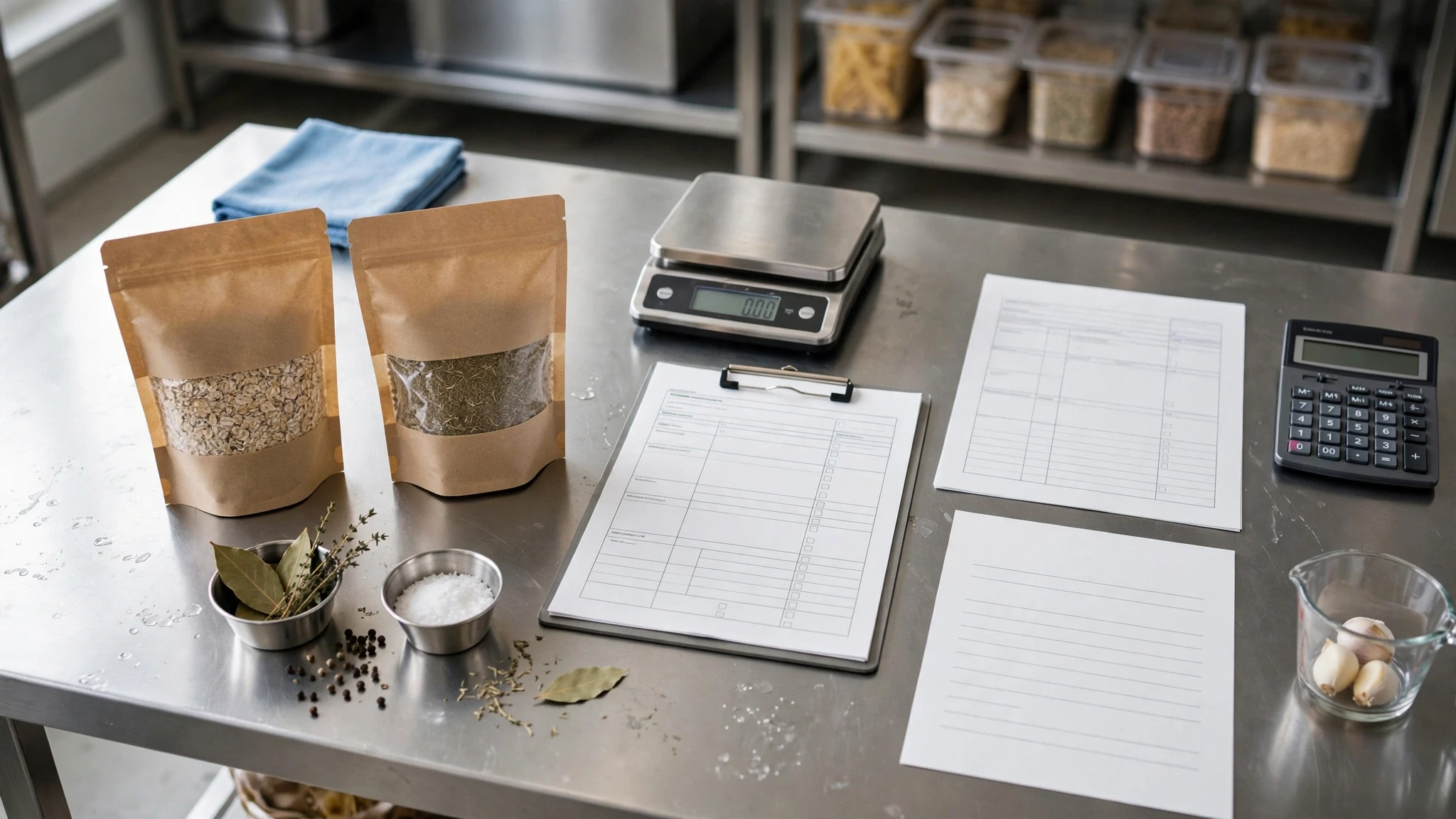
Ingredient substitutions happen for ordinary reasons: a supplier is out of stock, a brand is discontinued, a case pack changes, a cheaper alternative appears, or a buyer needs an emergency replacement before service.
The purchasing price may look acceptable while the true recipe economics change. A cheaper protein may trim differently. A sauce may have a different concentration. A cheese may portion differently. A frozen product may carry more glaze or moisture. A replacement can also change allergen information, cooking behavior, quality or guest perception.
Ingredient substitution control ensures the restaurant compares usable cost and recipe impact—not only the invoice price.
Start with the approved specification
Every important ingredient should have a practical specification: product type, size/grade where relevant, pack, unit, quality requirements and any critical culinary or allergen characteristics.
A substitute is evaluated against that specification. “Chicken breast” is too broad if the approved recipe depends on a particular size range, trim level or pack.
Classify the substitution
| Type | Meaning |
| Equivalent approved alternate | pre-tested product that can be used under defined conditions |
| Temporary emergency substitute | short-term replacement requiring manager/culinary approval |
| Permanent specification change | new product intended to replace the old standard |
| Recipe change | replacement materially changes formula, portion or production method |
The class determines how much testing, documentation and recosting are required.
Compare price in a common unit
Do not compare case price to case price if pack sizes differ.
Convert both products to a comparable purchase unit such as cost per kilogram, pound, liter, piece or another meaningful unit.
If Product A is $48 for 12 kg and Product B is $45 for 10 kg, the cheaper case is not the cheaper purchase unit.
Then compare usable yield
Purchase-unit cost is still incomplete when trim, thaw loss, cooking loss or usable pieces differ.
Usable cost per unit = purchase cost ÷ usable yield quantity.
Illustrative example: two products both cost $5.00/kg purchased, but one yields 90% usable product and the other 80%. Their usable cost is not the same.
See Restaurant Recipe Yield Test: How to Calculate Edible Yield and True Ingredient Cost.
Check portion impact
A substitute can change portion count even when usable weight is similar. Different slice size, density, piece count or scoop behavior can alter how many standard portions the kitchen gets.
Recalculate cost per standard portion rather than stopping at cost per kilogram.
Re-cost every affected recipe
Once the substitute’s usable unit cost is known, identify all recipes and sub-recipes that use it.
See Restaurant Sub-Recipe Costing: Control Shared Recipe Costs.
A shared ingredient can affect several menu items, catering packages or prep components. The cost change should flow through the whole dependency chain.
Test operational behavior
- Prep time and trim requirement.
- Cooking time/process under approved procedures.
- Yield and shrink.
- Portion consistency.
- Flavor, texture and appearance.
- Equipment load or station effect.
- Packaging or holding behavior.
- Guest-facing presentation.
The restaurant may reject a financially attractive substitute because it creates unacceptable quality or service problems.
Control allergen and ingredient-information changes
A replacement can introduce or remove allergens or change ingredient statements. Use the restaurant’s approved allergen review and communication process before the substitute reaches service.
Do not assume two products with similar names have the same allergen profile. Check current supplier/manufacturer information as required by the operation.
Use a substitute approval sheet
| Field | What to capture |
| Original item/spec | current approved product |
| Proposed substitute | new product and supplier |
| Purchase-unit comparison | same-unit cost |
| Usable yield | tested/verified where material |
| Cost per usable unit | economic comparison |
| Affected recipes | dependency list |
| Quality/process result | pass/change/reject |
| Allergen/spec review | completed under approved process |
| Status | temporary/permanent/approved alternate |
| Effective/expiry date | controls temporary use |
| Approver | responsible manager/culinary role |
Use an expiry date for temporary substitutions
Emergency replacements often become permanent by accident. Set an expiry/review date. When the normal product returns, the restaurant should deliberately decide whether to revert, extend or convert the substitute into a permanent specification.
Protect recipe version control
If the substitution changes the operational formula, portion, yield or cooking method, update the recipe version rather than adding a handwritten note that survives for months.
See Restaurant Recipe Version Control: Keep One Approved Formula in Use.
Separate procurement substitution from recipe substitution
Some substitutes are truly equivalent under the restaurant’s approved specification and do not change the recipe. Others require a recipe adjustment.
That distinction matters because changing the supplier item code is not always the same as changing the culinary standard.
Watch pack-size effects
A new supplier may offer a lower unit price but a larger case. That can increase cash tied up, storage pressure and spoilage risk.
Include order quantity, shelf/storage practicality and usage rate in the buying decision.
Include prep labor where it materially changes
If the replacement is cheaper but requires significant extra trimming or preparation, the restaurant may want to measure the labor effect.
Do not invent a labor allocation for every minor substitution. Include it when the change is large enough to affect the decision.
Example: cheaper case, higher portion cost
A restaurant replaces a pre-portioned product with a cheaper bulk product. The bulk case costs 8% less. After trimming and portioning, usable yield is lower and labor rises.
The final standard portion costs more than the original. The invoice comparison would have approved the wrong product.
Example: higher purchase price, better economics
A higher-priced fillet arrives closer to the restaurant’s required portion size and produces less trim. Its usable cost per plated portion is lower and preparation is faster.
The purchasing team should be allowed to choose the product with better total operating economics rather than the lowest case price.
Review actual results after release
For material substitutions, compare the planned yield/cost with actual production for several batches or service periods.
- Actual usable yield.
- Actual portion count.
- Waste/trim.
- Prep time where relevant.
- Guest or quality issues.
- Recipe cost change.
- Stock usage rate.
- Whether the substitute should remain approved.
Connect substitution data to supplier performance
Frequent unplanned substitutions can indicate supplier reliability problems. Track which vendors repeatedly require emergency alternatives and how much management effort or cost variance those changes create.
See Restaurant Supplier Scorecard: How to Measure Vendor Performance.
Common substitution mistakes
Comparing only case price
Pack size and usable yield are ignored.
Letting a driver or salesperson choose the replacement
The substitute reaches the kitchen before an authorized operational review.
No dependency list
One changed ingredient silently affects several recipes.
No expiry for temporary products
Emergency replacements become uncontrolled permanent standards.
Ignoring allergen/specification change
A purchasing decision creates a guest-safety and communication risk.
Frequently asked questions
Can a restaurant substitute the same ingredient from another brand without testing?
Only if the product fits the restaurant’s approved alternate/specification process. Similar product names do not guarantee the same yield, allergens or operational performance.
How should substitute cost be compared?
Use a common purchase unit, then usable yield and standard portion cost. Add material labor or process effects when they affect the decision.
Should temporary substitutions change the menu price?
Not automatically. Recalculate the economics and consider duration, contribution and guest value. A short-term cost increase may be managed differently from a permanent specification change.
Who should approve substitutions?
Define authority by ingredient risk and impact. Purchasing may approve pre-tested equivalents; major recipe, allergen or quality changes may require culinary/management review.
Next action
Choose the last five emergency substitutions the restaurant made. Recalculate each one as cost per usable standard portion, not case price. Any substitution that changes yield, allergens or the recipe should be moved into a controlled approval record.
Related guides: