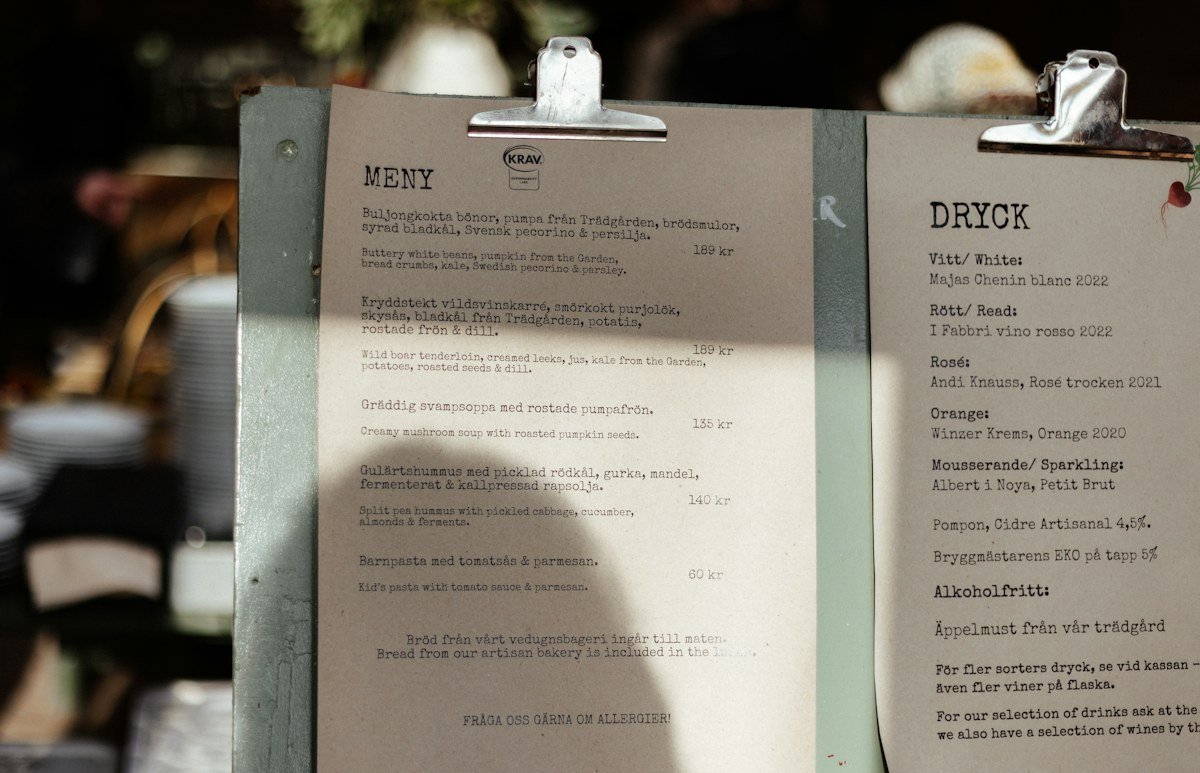
A restaurant menu modifier should be priced from its incremental cost and the value customers receive, not from a blanket “add $1” rule. Extra cheese, a larger protein portion, a premium side, a sauce substitution and a gluten-free alternative can have different food costs, preparation times, packaging needs and customer expectations. A profitable modifier is one whose incremental contribution justifies the operational work without misleading guests or making the base dish feel incomplete.
For example, if an extra-cheese option costs an illustrative $0.42 in cheese and $0.08 in other incremental materials, a $1.50 modifier generates $1.00 incremental contribution before any additional labor, payment fees and fixed costs. If the modifier also requires $0.15 in incremental variable labor, the contribution becomes $0.85. This is not the restaurant’s net profit and not a typical market quote. Calculate each modifier using actual portion weights, purchase prices and process observations.
First distinguish an add-on from a substitution
An add-on supplies something additional to the base recipe. A substitution removes one ingredient and adds another. The financial calculation differs. If a burger already includes a $0.25 sauce and the customer swaps to a $0.45 specialty sauce, the incremental ingredient cost is $0.45 − $0.25 = $0.20, not $0.45, assuming the original sauce is genuinely omitted and the portion standards are comparable. If the kitchen accidentally serves both sauces, the realized cost is higher than the planned substitution cost.
A larger protein portion requires a matched edible-yield cost. If the base dish contains five cooked ounces and the upgrade adds two cooked ounces, price those two cooked ounces at the usable cooked unit cost, not the raw purchase rate. For an approved cooked cost of $5.60 per pound, two ounces cost 2 ÷ 16 × $5.60 = $0.70. Add any incremental cooking, packaging and other genuinely variable expenses.
Worked example one: extra cheese and a contribution target
Assume a pizza shop offers an extra-cheese modifier with the following invented cost structure:
| Incremental component | Illustrative cost |
|---|---|
| Additional cheese portion | $0.42 |
| Additional packaging or consumables | $0.08 |
| Additional variable labor, if actually incurred | $0.15 |
| Total incremental variable cost | $0.65 |
| Customer modifier price | $1.50 |
| Incremental contribution | $0.85 |
The arithmetic is $1.50 − ($0.42 + $0.08 + $0.15) = $0.85. If the restaurant sells 400 of these add-ons in a comparable month, modeled incremental contribution is 400 × $0.85 = $340, before any change in base-item demand, fees or fixed overhead. Do not call $340 guaranteed extra profit. The modifier may cannibalize a premium pizza that would otherwise earn a different contribution, and some guests may stop buying when the price changes.
Worked example two: premium side substitution
Suppose a lunch bowl normally includes rice with a direct food cost of $0.55. A customer can replace it with a premium vegetable side costing $1.35, with an additional $0.10 of packaging and $0.20 of genuinely incremental variable prep labor. The incremental cost is $1.35 − $0.55 + $0.10 + $0.20 = $1.10. If the substitution is priced at $2.00, the modeled incremental contribution is $0.90.
If the kitchen continues to portion the rice and throws it away after the swap, the cost saving of $0.55 may not materialize. A substitution is profitable only if the removed ingredient is actually avoided or recovered safely within the approved workflow. Train order takers and cooks to interpret the POS modifier consistently. Track actual discarded rice and vegetable yield, not only recipe-card math.
What modifier price meets a target contribution?
For a chosen incremental contribution target, the simple formula is modifier price = incremental variable cost + desired incremental contribution. If a premium topping costs $0.80 in incremental variable expenses and the owner wants $1.20 contribution, the candidate price is $2.00. That is a starting point for a market and guest-value test, not an instruction to charge $2 regardless of customer response.
If management instead uses a target variable-cost percentage, be careful with the denominator. For $0.80 incremental variable cost and a target of 40% of modifier revenue, candidate price is $0.80 ÷ 0.40 = $2.00. The same result here is coincidental because the target implies $1.20 contribution. Different targets produce different prices. Food-cost percentage alone can be misleading if a modifier requires significant incremental labor or packaging.
Separate optional premium upgrades from essential ingredients
Guest trust matters. A menu should not advertise a complete dish and then charge extra for a component reasonably understood to be included. Clearly label optional extras, sizes, substitutions and any surcharge before the guest commits. Where the restaurant offers allergy-related or dietary accommodations, follow the applicable labeling, safety and accessibility obligations; do not treat a modifier button as proof that an allergen can be removed from a shared cooking environment.
Some guests will pay for additional protein, while others may prefer a lower-priced base item. Evaluate the perceived value of each option. A $4 protein upgrade that visibly adds a substantial portion may be easier to understand than a $1 charge for a small sauce that customers assumed was included. Use actual feedback and controlled price testing rather than unsupported claims about willingness to pay.
Modifier design can improve or damage kitchen speed
A profitable add-on in the spreadsheet may create costly ticket errors. Consider a burger with twelve optional modifiers, some of which conflict. If cooks must read a dense ticket, clarify combinations and remake mistakes, the true variable cost is higher. Reduce unnecessary modifier choices, group mutually exclusive substitutions, and use concise kitchen display labels. The POS should make the final guest price visible and distinguish “extra” from “replace.”
For a high-volume modifier, preportion ingredients to the approved weight and confirm that preparation does not violate food-safety holding requirements. A sauce cup can have its own packaging and labeling cost. A protein upgrade can change cook time and capacity during peak service. The portion variance guide helps prevent actual servings from drifting beyond the modifier specification.
Example three: a low-price modifier that looks successful
Suppose an add-on is priced at $0.75 with incremental cost of $0.55. Contribution is only $0.20 per sale. If 600 add-ons are sold, the gross incremental contribution is $120. Now suppose 20 of those orders require a remake at an actual additional variable cost of $3 each due to confusing ticket instructions. The modeled net contribution after those remakes is $120 − 20 × $3 = $60. This is before other costs. Improving POS clarity could be worth more than simply increasing modifier take rate.
Do not assume every modifier error creates a $3 cost; measure actual rework. Also distinguish a remake that replaces the original order from a fully incremental new meal. The right accounting depends on the production records.
Build a modifier scorecard from POS data
| Field | Purpose |
|---|---|
| Base item and modifier ID | Keep versions and names stable |
| Add-on or substitution | Identify removed and added ingredients |
| Approved portion and usable cost | Matched yield basis |
| Packaging and variable labor | Incremental costs only |
| Modifier selling price | Customer-facing charge |
| Quantity sold and attach rate | Sales mix by comparable period |
| Remakes, refunds and complaints | Guest and execution impact |
| Incremental contribution | Price minus relevant variable costs |
| Decision and next test | Keep, reprice, simplify or remove |
Attach rate means modifier orders divided by eligible base-item orders. If 150 extra-cheese orders occur among 600 eligible pizza orders, the attach rate is 150 ÷ 600 = 25%. Do not divide by all restaurant transactions when only pizza customers were eligible. Track the eligible population after changing menu placement or delivery-channel availability.
Test one change without confusing cause and effect
- Audit the actual modifier recipe and POS button against kitchen behavior, including whether substitutions remove the original ingredient.
- Calculate edible-unit costs from recent invoices and yield tests.
- Observe prep time and remake causes on representative shifts.
- Choose one change: portion standard, ticket label, placement or price. Avoid changing everything at once.
- Compare matched weekdays and channels before and after the change, controlling for promotions and seasonal demand where possible.
- Review modifier take rate, incremental contribution, base-item mix, complaints and ticket times together.
- Revert or revise if a price gain is offset by lower demand or more rework.
Modifiers and menu engineering are connected
A high-margin modifier may shift demand from a profitable premium entrée. Suppose a $12 base dish has $7 contribution and a $3 upgrade adds $1.80 contribution, making the upgraded order contribute $8.80. If customers previously bought a $17 premium dish with $10 contribution, moving them to the upgraded base dish could reduce contribution by $1.20 per switched order. Measure the whole choice set, not only modifier revenue. The menu contribution margin guide and menu mix analysis provide useful complementary methods.
Frequently asked questions
Should every add-on have the same food-cost percentage?
No. A simple sauce and a time-consuming protein upgrade have different economics and customer value. Calculate full incremental variable contribution and demand effects.
Is a substitution cost equal to the price of the new ingredient?
Usually not. Subtract the genuinely avoided cost of the removed ingredient and add any new materials or labor. Verify that the kitchen actually omits the original component.
Can a modifier be profitable if its selling price is below the base dish’s average food-cost percentage target?
Yes, potentially. Incremental contribution and operational effects matter more than imposing one blended percentage on every small add-on.
How do I handle allergy-related requests?
Use documented ingredient and cross-contact procedures, accurate guest communication and locally applicable requirements. A POS label is not a safety guarantee.
References and scope
The FDA food-allergen information provides background on major allergens; applicable restaurant requirements vary by jurisdiction. The FDA Food Code 2026 is a model for food-service regulation, not an automatically adopted nationwide law. All prices, portion sizes and demand scenarios above are hypothetical and require validation against actual invoices and POS results. Featured photograph by Annie Spratt via Unsplash, under the Unsplash license.