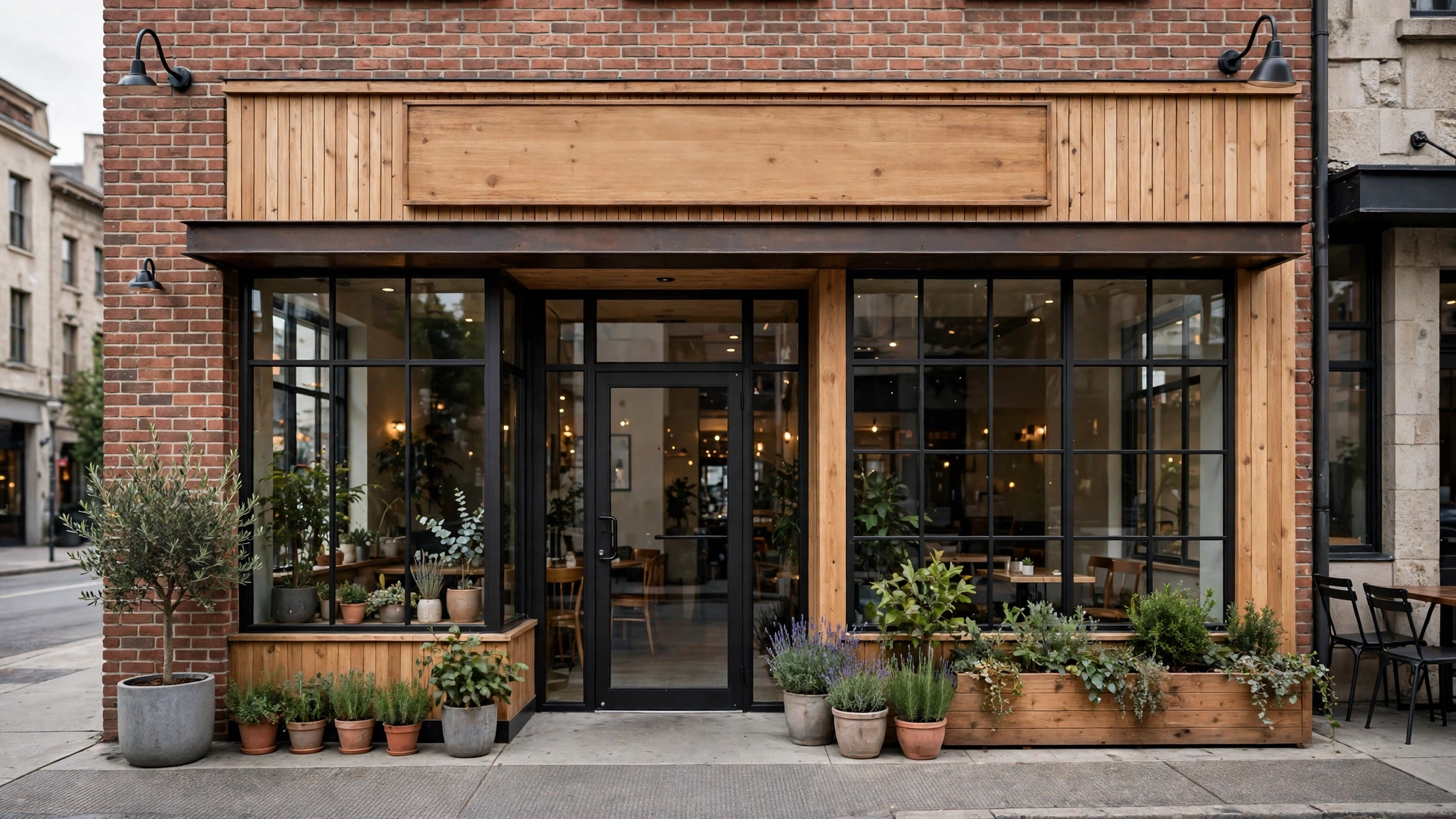
Opening day gets most of the attention. The week before it is usually where the real trouble starts.
A restaurant can have a finished dining room, a working kitchen and a trained team and still open badly because dozens of small operating details were never tested together. The card machine works, but nobody knows the refund process. The fryer works, but the closing team has never cleaned it. The menu is printed, but one dish takes twice as long to produce as expected.
A useful pre-opening checklist is not about making the restaurant look ready. It is about proving that the restaurant can actually run.
Start with one question: can the restaurant complete a normal day?
Before opening to paying customers, walk through the operation from the first person arriving in the morning to the last person locking the door at night.
That means testing:
- opening the building,
- receiving a delivery,
- preparing ingredients,
- starting equipment,
- opening the POS,
- serving an order,
- handling a complaint or refund,
- recording waste,
- counting cash,
- closing the kitchen,
- cleaning,
- locking up.
If any part of that sequence depends on “we’ll figure it out when it happens,” it belongs on the pre-opening list.
30 days before opening: lock the operating basics
About a month before opening, the biggest risk is still structural. This is the time to make sure the restaurant is not building daily operations on temporary decisions.
Finalize the menu
Do not keep changing the core menu while the kitchen team is trying to learn it.
Every final menu item should have:
- a standardized recipe,
- a defined portion,
- a current cost,
- a selling price,
- a clear preparation method,
- a station responsible for producing it.
If those pieces are missing, the restaurant may open with a menu that looks complete but is operationally unstable.
Our guides on recipe standardization and menu pricing are useful at this stage.
Confirm supplier routines
Do not stop at “we have suppliers.”
Know:
- which supplier provides each critical item,
- order cut-off times,
- delivery days,
- minimum orders,
- who checks deliveries,
- what happens when something is short or rejected.
A supplier relationship is not really ready until the restaurant knows what happens when the delivery is wrong.
Define basic stock levels
You do not need perfect par levels before opening, but you need a starting point.
For critical ingredients, estimate:
- opening stock,
- expected daily use,
- delivery frequency,
- reasonable safety stock.
Then adjust those numbers after real sales begin. The important thing is to avoid filling every shelf “just in case.”
That is one of the fastest ways to create early cash pressure and waste.
14 days before opening: move from setup to simulation
Two weeks before opening, the restaurant should stop thinking like a construction project and start thinking like an operating business.
Run the kitchen with real recipes
Cooking one test plate is not enough.
Run several items at the same time. This is where you discover that:
- two popular dishes need the same burner,
- one garnish takes too long during a rush,
- a refrigerator is too far from the station that uses it,
- the pass becomes crowded,
- one recipe produces inconsistent yield.
These are not recipe problems alone. They are workflow problems.
Build the opening and closing routines
The restaurant should already know what the first hour and last hour of the day look like.
Typical opening tasks might include:
- equipment start-up,
- temperature or condition checks required by the operation,
- cash/POS opening,
- prep verification,
- station setup,
- cleanliness check.
Typical closing tasks might include:
- cash reconciliation,
- waste recording,
- food storage,
- equipment shutdown,
- cleaning,
- stock notes for the next day,
- security checks.
If you need a structure, use the process in our restaurant opening and closing checklist guide.
7 days before opening: test the people, not just the equipment
A restaurant can pass every equipment test and still fail its first service because the team has never worked together at speed.
This final week should focus heavily on rehearsal.
Run a mock service
Use friends, family, staff from another business or invited guests if appropriate. The objective is not publicity. The objective is pressure.
Give the kitchen multiple orders at once.
Ask someone to change an order.
Process a refund.
Ask for a modification.
Have one item sell out during the exercise and see what the team does.
It is better to discover confusion during a rehearsal than during the first paid dinner rush.
Time the menu
Do not guess ticket times.
Take a sample of real orders and record:
- order received,
- production started,
- order completed,
- order handed off.
You are not looking for perfect speed yet. You are looking for outliers.
If most dishes take eight minutes and one dish repeatedly takes eighteen, the menu or station design may need attention.
Check the customer journey from the outside in
Operators spend so much time inside the kitchen that simple customer problems are easy to miss.
Walk through the restaurant as if you have never been there before.
Check:
- Can the entrance be found easily?
- Is the opening time clear?
- Is ordering obvious?
- Are menu prices readable?
- Is pickup clearly separated from ordering where needed?
- Can the customer understand where to wait?
- Are restrooms and key areas easy to locate?
Small confusion points become large when twenty customers arrive together.
Test every payment path
Do not test only one successful card transaction.
Test:
- cash sale,
- card sale,
- split payment if supported,
- refund,
- void,
- discount,
- failed payment,
- end-of-day close.
Then decide who is allowed to perform sensitive actions.
A refund process that only the owner understands is not a process.
Make the first inventory count meaningful
Before opening, complete a baseline stock count.
This matters because without a starting count, the first weeks of inventory analysis become difficult to interpret.
At minimum:
- count important food stock,
- record high-value items carefully,
- separate usable stock from damaged or test product,
- confirm units of measure,
- make sure the same item is not listed twice under different names.
Use the basic process in our inventory management guide rather than trying to build a perfect system on day one.
Do not overbuy for opening week
New restaurants are often afraid of running out, so they buy heavily.
That feels safe. It can create a different problem:
- too much cash sitting on shelves,
- short shelf-life products expiring,
- storage becoming disorganized,
- staff losing track of what is already available.
Opening week demand is uncertain. Where practical, shorter purchasing cycles and faster review can be safer than buying several weeks of stock.
Create a short first-week management dashboard
Opening week is not the time for a twenty-page management report.
Track a small number of useful signals every day:
- sales,
- transactions or covers,
- major stock-outs,
- waste,
- labor hours,
- cash variance,
- customer complaints,
- equipment problems.
The purpose is to identify operational problems quickly while memories are fresh.
Keep a launch issue log
During the first week, problems arrive too quickly to solve all of them in the moment.
Keep one simple issue list.
| Problem | When it happened | Impact | Owner | Next action |
|---|---|---|---|---|
| Fries backing up at peak | Dinner | Slow tickets | Kitchen lead | Review batch timing |
| Customers unsure where to collect | Lunch | Crowding | Manager | Add pickup sign |
| Chicken ran low | 8 PM | Near stock-out | Prep lead | Raise Friday prep target |
This is more useful than arguing about problems at midnight when everyone is tired.
Opening day: simplify the operation
Opening day is not the right time to prove how ambitious the restaurant can be.
Where possible:
- keep the menu stable,
- avoid unnecessary promotions,
- have experienced decision-makers on site,
- protect prep time,
- keep communication simple,
- fix critical problems first and cosmetic problems later.
The first objective is not maximum sales.
The first objective is a controlled service that the team can learn from.
What should be ready before the doors open?
By opening day, the restaurant should be able to answer yes to these questions:
- Can we produce every menu item consistently?
- Do we know who opens and who closes?
- Can we receive and check a supplier delivery?
- Can we process and reconcile payments?
- Do we know today’s prep targets?
- Can managers see the most important daily numbers?
- Does every station know what it owns?
- Have we tested a realistic service?
- Do we know how problems will be recorded and assigned?
If several answers are still “not really,” opening may technically be possible—but the operation is not yet controlled.
The opening is the beginning of the operating system
No pre-opening checklist eliminates every problem. That is not the goal.
The goal is to remove predictable problems before customers pay for them.
A restaurant will continue changing after launch. Sales patterns become clearer. Prep targets improve. Suppliers change. The team gets faster. Some menu items prove stronger than expected and others disappear.
The best opening plan leaves enough structure to learn from those changes instead of simply reacting to them.
Use opening-readiness gates instead of one final checklist
A long checklist can create false confidence if every item is treated as equal. Separate launch readiness into gates that must be passed before opening:
- Legal and safety gate: required approvals, inspections and operating conditions are satisfied.
- Menu gate: recipes, portions, prices and production sequence are stable enough for service.
- People gate: critical roles are staffed and trained for opening, service and close.
- Systems gate: POS, payments, cash, inventory and daily reporting have been tested.
- Supply gate: core products, backup suppliers and receiving routines are ready.
- Service gate: at least one realistic mock service has exposed and corrected major failures.
If a critical gate is not passed, the opening decision should be explicit rather than hidden inside a mostly completed checklist.
Create a launch-readiness scorecard
| Area | Status | Critical issue | Owner |
|---|---|---|---|
| Menu and recipe | Green / Yellow / Red | Chef | |
| Staff and training | Green / Yellow / Red | GM | |
| Suppliers and inventory | Green / Yellow / Red | Purchasing lead | |
| POS and payments | Green / Yellow / Red | Manager | |
| Facility and equipment | Green / Yellow / Red | Project lead | |
| Opening and closing routines | Green / Yellow / Red | Operations lead |
Red should mean the issue can materially prevent safe or controlled operation. Yellow should mean the restaurant can open only with a documented workaround and owner.
Run a 72-hour final review
Three days before opening, stop adding nonessential complexity. Review only launch-critical issues, confirm deliveries, staffing, equipment, payment systems, opening stock, reservations or pre-orders, and the escalation contacts needed if something fails. Cosmetic improvements can wait if they compete with operational readiness.
Frequently asked questions
Should a restaurant delay opening if the team is not fully ready?
If a critical safety, legal, staffing, supply or systems issue remains unresolved, delaying can be less costly than opening into a predictable failure. The decision should be based on risk and operational readiness, not only the announced date.
How many mock services should be run?
There is no universal number. Continue until the team has tested realistic order volume, payment exceptions, menu bottlenecks and closing procedures well enough that major failures are understood and controlled.
What should management review after opening day?
Sales, labor hours, stock-outs, waste, ticket-time outliers, cash variance, guest complaints and equipment issues are useful first-week signals. The purpose is rapid learning, not a perfect month-end report.
Operational note: Licensing, inspections, food-safety requirements, employment rules, accessibility obligations and other opening requirements vary by jurisdiction. This guide focuses on operational readiness and does not replace the specific legal or regulatory requirements applicable to your restaurant.