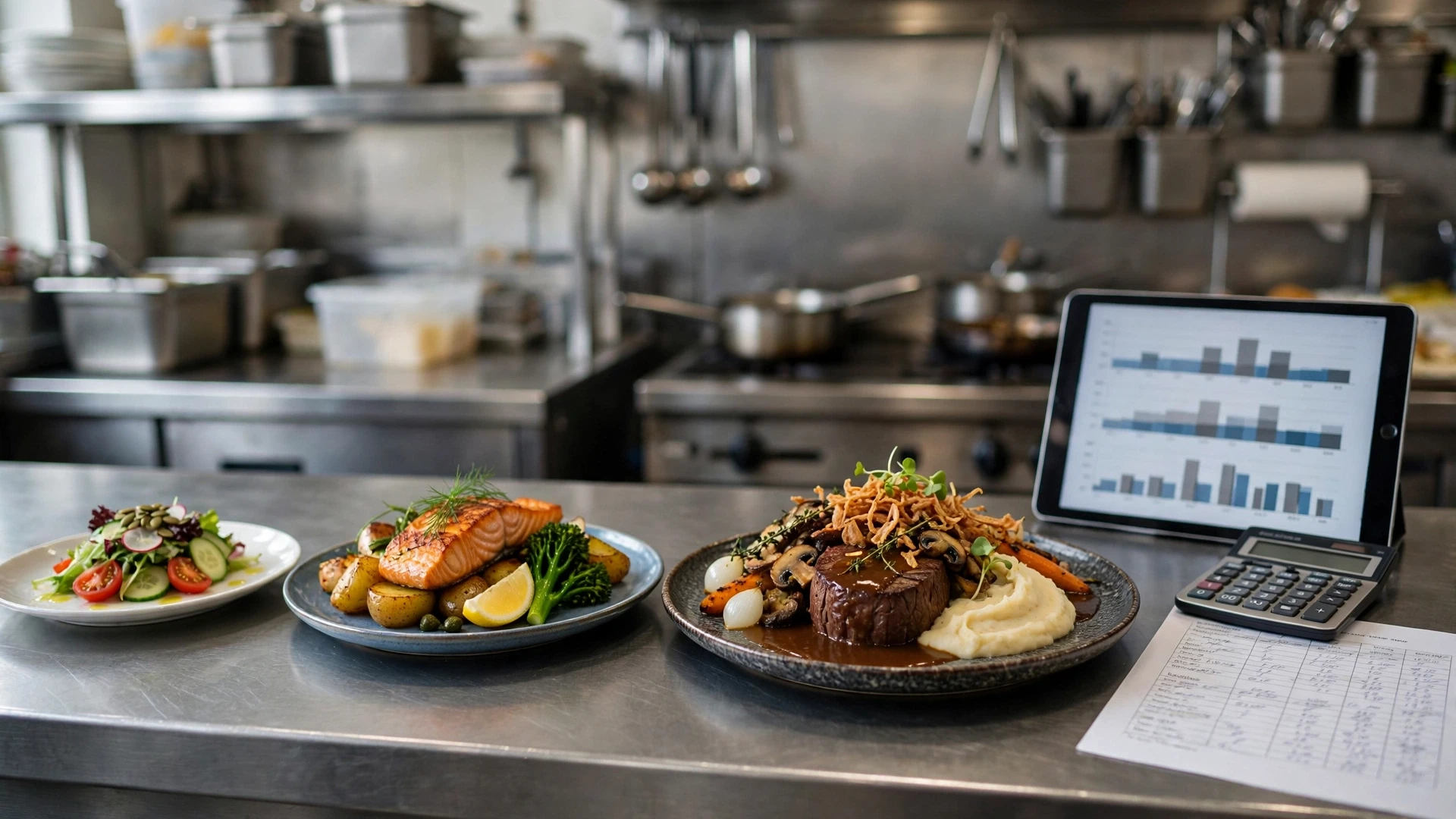
A restaurant promotion can increase sales and still make the business worse off.
A discount brings more orders. Revenue rises. The dining room feels busier. The online channel shows strong redemption. Staff conclude the offer worked.
But the restaurant may have discounted customers who would have bought anyway, shifted demand from a full-price item to a lower-contribution bundle, paid extra delivery-platform fees, added packaging cost, overloaded the kitchen at the wrong daypart or created a rush that required more labor than the promotion generated in contribution.
Promotion profitability is the discipline of asking a different question:
What incremental contribution did the promotion create after the direct economic and operational effects were considered?
This is not a marketing-theory exercise. It is an operator’s way to decide whether to repeat, change or stop an offer.
Define the promotion before measuring it
Write down the mechanics exactly.
Examples:
• 20% off one menu item,
• buy one, get one free,
• fixed-price meal bundle,
• free add-on above a minimum order,
• weekday lunch offer,
• delivery-channel discount,
• loyalty reward,
• limited-time item with introductory pricing.
Then define:
• dates and dayparts,
• eligible channels,
• eligible items,
• discount or giveaway rule,
• maximum redemption if any,
• promotion cost paid by the restaurant,
• promotion cost funded by another party if applicable.
Without a precise definition, the post-promotion review becomes a discussion of impressions.
Start with contribution, not revenue
Revenue does not show how much value remains after the direct cost of the sale.
For a simple menu-item view:
Item contribution = Selling price − Direct item cost
If a dish normally sells for $18 and has a direct food cost of $5.40:
Normal contribution before other costs = $18.00 − $5.40 = $12.60
If the restaurant discounts the item to $14.40:
Promotional contribution before other costs = $14.40 − $5.40 = $9.00
The restaurant gave up $3.60 of contribution on every discounted sale compared with the normal price.
That does not automatically make the promotion bad. It means the promotion must create enough incremental value to justify the reduction.
Menu-item profitability guide: Restaurant Menu Item Profitability: How to Measure Contribution Margin
Separate existing demand from incremental demand
This is the hardest part of promotion analysis.
Suppose a restaurant sells 100 units of an item in a normal comparable period and 145 during a promotion.
It is tempting to call all 145 promotional sales a success.
But a more useful view is:
• baseline demand: approximately 100 units,
• observed promotional demand: 145 units,
• apparent incremental demand: 45 units.
Even that is not perfect. Weather, events, seasonality, channel changes and other factors may affect the comparison.
The restaurant should use the best practical baseline available, such as:
• recent comparable weekdays,
• the same daypart before the promotion,
• a similar week without the offer,
• matched stores or channels where available.
Do not claim scientific certainty from a weak comparison. Label the baseline as an operating estimate.
Measure the discount cost on sales that would likely have happened anyway
If 100 baseline customers would probably have bought the item without the offer, discounting those orders reduces contribution without creating new volume.
Using the earlier example:
• normal contribution: $12.60,
• promotional contribution: $9.00,
• contribution given up per discounted order: $3.60.
If 100 baseline orders receive the discount:
Estimated contribution given up on baseline orders = 100 × $3.60 = $360
The extra 45 orders must create enough contribution to recover that loss before the restaurant can call the offer economically stronger.
This is why “redemptions” alone can mislead.
Add channel fees and packaging where they are incremental
A promotion may move business into a different channel.
If the offer is available through delivery, the restaurant should understand the actual commercial arrangement that applies to that channel.
Possible direct differences include:
• platform commission or fee,
• payment fee,
• promotional funding share,
• packaging,
• delivery-specific condiments or seals,
• refund or remake exposure.
Do not use a generic platform-fee assumption. Use the restaurant’s actual agreement and accounting definitions.
Online-ordering operations: Online Ordering Integration: Connect Orders Without Creating Operational Chaos
Compare full-price contribution with promotional contribution
A useful table is:
| Measure | Normal sale | Promotional sale |
|---|---|---|
| Selling price | $18.00 | $14.40 |
| Direct food cost | $5.40 | $5.40 |
| Incremental packaging/fee | $0.00 | $1.20 |
| Contribution before other costs | $12.60 | $7.80 |
The numbers are illustrative.
Now management can see the true trade:
Contribution given up per shifted order = $12.60 − $7.80 = $4.80
If the promotion mostly discounts existing customers, it will be expensive. If it creates genuinely incremental customers who later return at full price, the economics can be different.
Do not ignore menu-mix cannibalization
A promotion can grow one item’s sales by stealing demand from another item.
Example:
• promoted burger contribution: $7.80,
• regular chicken item contribution: $10.50.
If customers switch from chicken to the discounted burger, total transactions may be unchanged while average contribution falls.
Review:
• units by promoted item,
• units of likely substitute items,
• contribution by menu family,
• average transaction contribution if available.
This is especially important for bundles and “hero item” promotions.
High-profit menu mix guide: High-Profit Menu Mix: How to Shift Sales Toward Better Contribution
Include the cost of the free item in bundle offers
“Free” is a guest-facing message, not an economic category.
For a buy-one-get-one promotion:
Promotional direct cost = cost of paid item + cost of free item + incremental packaging/fees
Suppose one item normally sells for $12 and costs $3 to produce.
A buy-one-get-one offer produces two items for $12.
Direct food cost = $3 + $3 = $6
Contribution before other costs = $12 − $6 = $6
Compare that with the contribution the restaurant would normally earn from the relevant baseline demand.
Model the break-even incremental orders
A simple operating estimate can help management understand the volume required.
Suppose:
• contribution given up on baseline discounted orders = $360,
• fixed promotional cost = $90,
• contribution from each truly incremental promotional order = $7.80.
Total contribution to recover = $360 + $90 = $450
Incremental orders needed to recover that amount = $450 ÷ $7.80 = 57.7
The restaurant would need about 58 incremental orders under this simplified model before the offer recovers those identified costs.
This is illustrative, not a universal promotion formula. The model should include only costs and assumptions the restaurant can support.
Break-even planning guide: Restaurant Break-Even Point: How to Calculate Your Sales Target
Track throughput impact
Promotions can fail operationally even when the food economics look acceptable.
Watch whether the offer creates:
• ticket-time spikes,
• prep shortages,
• station overload,
• packaging bottlenecks,
• order-accuracy problems,
• overtime or late clock-outs,
• guest complaints,
• stock-outs of full-price items.
A promotion that concentrates demand into an already constrained period may damage normal sales.
The restaurant should not treat operations as an afterthought to the promotion math.
Use daypart capacity deliberately
Promotions often make more sense when they fill underused capacity rather than crowd peak capacity.
For example, an offer designed for a slow weekday afternoon may create incremental contribution with little additional labor if the team and equipment are already available.
The same offer during a Saturday peak may require extra labor and slow higher-contribution full-price demand.
The correct decision depends on the restaurant’s actual workload and capacity.
Do not use a discount merely because the daypart “feels slow.” Measure whether the capacity exists and whether the offer changes contribution.
Keep discount authorization separate from promotion profitability
There are two different controls:
• Was the discount authorized and applied correctly?
• Was the promotion economically worthwhile?
The first is transaction control. The second is business analysis.
A restaurant can have perfect discount authorization and still run an unprofitable promotion.
Discount-control guide: Restaurant Refund, Void and Discount Control: How Managers Should Review Revenue Adjustments
Worked example: weekday lunch promotion
Assume a restaurant tests a lunch offer for five weekdays.
Normal comparable period:
• 300 lunch transactions,
• average contribution per transaction: $9.50.
Promotion period:
• 390 lunch transactions,
• average contribution per transaction after discount and incremental packaging: $7.80.
Illustrative calculation:
Normal estimated contribution = 300 × $9.50 = $2,850
Promotion-period estimated contribution = 390 × $7.80 = $3,042
Difference = +$192
At first glance, the promotion appears positive on contribution.
Now add a $120 fixed advertising cost:
Estimated net improvement after identified fixed promotion cost = $72
Then management should ask:
• Did labor increase?
• Did dinner prep suffer?
• Did complaints or ticket time increase?
• Were the extra customers new or simply shifted from another channel?
• Did any customers return later without the discount?
The right conclusion might be “repeat,” “repeat only on Tuesday-Thursday,” “change the offer,” or “stop.”
The point of the example is the decision chain, not the exact numbers.
Track a small promotion scorecard
A practical review can include:
| Measure | Baseline | Promotion | Difference |
|---|---|---|---|
| Transactions | |||
| Sales | |||
| Direct contribution | |||
| Average contribution/order | |||
| Promoted item units | |||
| Likely substitute item units | |||
| Ticket-time exceptions | |||
| Remakes/refunds | |||
| Labor hours |
Do not collect metrics that management will never use. Focus on the few that explain whether the offer changed economics or capacity.
Review repeat behavior cautiously
A promotion can be worthwhile if it acquires customers who later buy at normal economics.
But do not assume that every new-looking transaction is a new customer.
If the restaurant has a loyalty system or another privacy-compliant way to observe repeat behavior, compare:
• first promotional purchase,
• later return,
• later full-price behavior,
• channel used on return.
Use customer data according to applicable privacy rules and the restaurant’s policies.
Without reliable customer identification, treat “new customer acquisition” as an assumption, not a proven result.
Set a stop rule before the promotion begins
A useful promotion brief can define in advance:
• target period,
• maximum discount exposure,
• stock allocation,
• capacity limit,
• what management will review,
• conditions that cause the offer to stop or change.
This is especially useful for offers that can suddenly accelerate through social media or delivery platforms.
The restaurant should know what happens if demand is much higher than expected.
Common promotion-analysis mistakes
Treating sales growth as profit growth
Discounted revenue can rise while contribution falls.
Counting all promotional orders as incremental
Many customers may have purchased anyway.
Ignoring cannibalization
The promotion steals sales from a stronger full-price item.
Ignoring channel economics
Packaging and commercial fees change the contribution.
Ignoring operational cost
The offer creates overtime, remakes or slower full-price service.
Measuring only during the promotion
Management never checks whether customers return at normal economics.
Repeating because the restaurant felt busy
Activity is not the same as profitable demand.
A post-promotion review sequence
Within a few days of the offer ending:
1. confirm actual promotion dates and redemptions,
2. compare the chosen baseline period,
3. calculate normal and promotional contribution using consistent definitions,
4. estimate how much demand was incremental,
5. check likely cannibalization,
6. add known channel and fixed promotion costs,
7. review labor and service effects,
8. decide whether to repeat, narrow, redesign or stop.
Document the decision so the next promotion starts with evidence rather than memory.
Frequently asked questions
What is the best discount percentage for a restaurant promotion?
There is no universal answer. The offer should be tested against the item’s cost, contribution, customer response, channel economics and operating capacity.
Should labor be included in promotion profitability?
Include labor when the promotion causes a measurable incremental labor cost or when the restaurant’s model is designed to allocate it consistently. Do not add arbitrary labor assumptions to make the analysis look complete.
How do I know which sales were truly incremental?
You may not know perfectly. Use the best comparable baseline available and label the estimate. Avoid claiming precision the data cannot support.
Is a buy-one-get-one promotion automatically worse than a percentage discount?
No. Different offers change price, volume, product mix and behavior differently. Compare their contribution economics and operating impact.
Should a successful promotion run permanently?
Not automatically. Permanent discounting can change guest expectations and menu economics. Reassess the role of the offer before turning a test into the standard price.
Five-step implementation sequence
- Define the promotion objective before launch: traffic, trial, mix shift or incremental contribution.
- Calculate the normal contribution and the promoted contribution per order.
- Track redemption, sales mix and operational effects during the offer.
- Separate incremental sales from sales that would likely have happened anyway.
- Repeat, revise or stop the offer based on contribution and operating evidence.
Promotion review checklist
- Discount value is visible in dollars and percentage.
- Direct food cost reflects the promoted mix.
- Extra labor or packaging is captured where material.
- Traffic and average check are compared with a useful baseline.
- The final decision is documented before the promotion is repeated.
Next action
Take the restaurant’s most recent promotion and calculate two numbers: contribution per normal order and contribution per promotional order. Estimate how many promotional orders would have happened anyway. If that changes the conclusion, the restaurant was measuring activity rather than profitability.