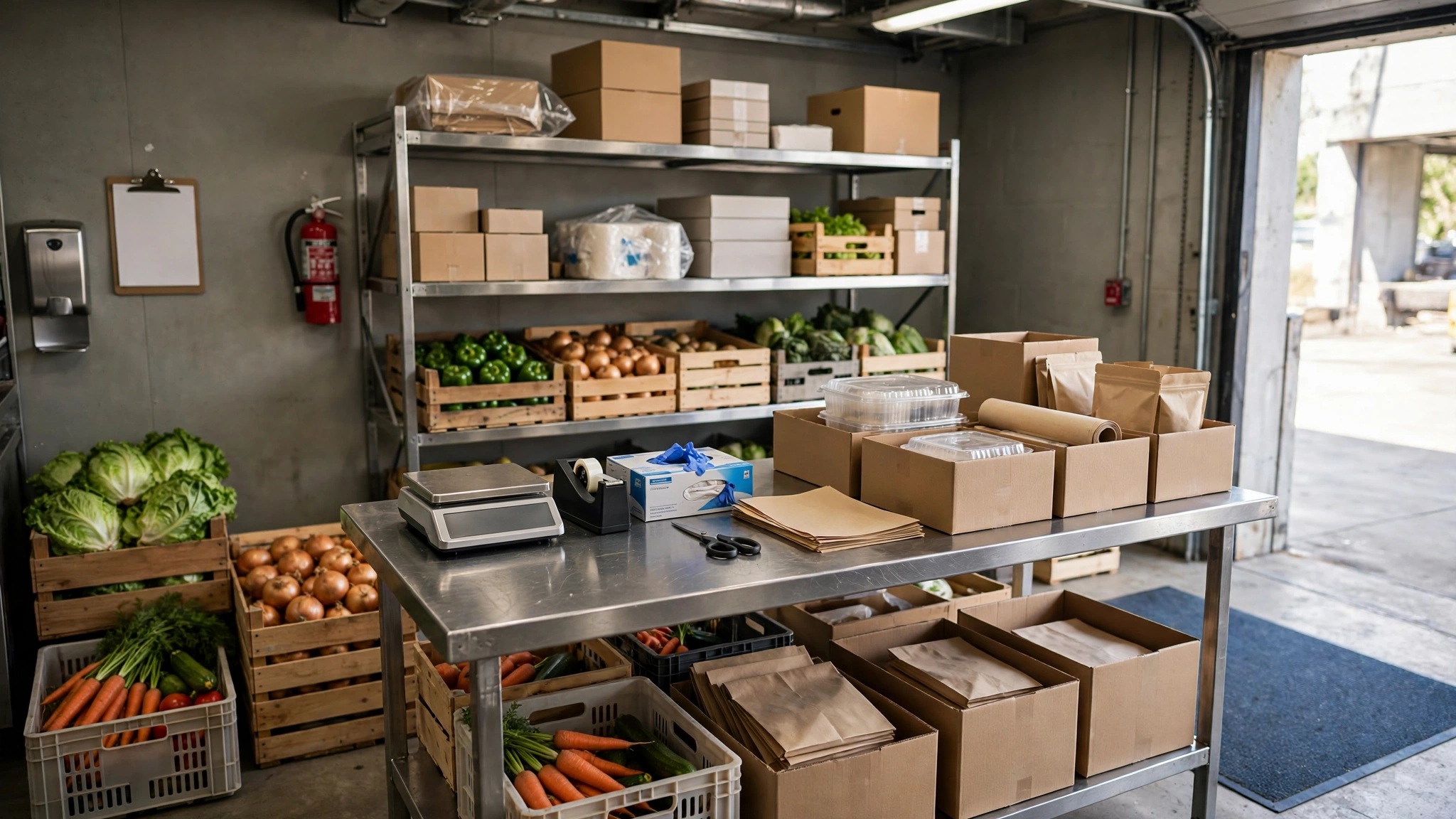
A supplier delivery can look routine right up until the kitchen opens a box and discovers the problem hours later.
The driver has already left. The invoice has been signed. The receiving employee is now busy with prep. One case is short, another product is the wrong size, and a chilled item has been sitting in the wrong place because nobody clearly owned the handoff.
That is why receiving should be treated as an operating control, not as a doorway task.
A good restaurant receiving process does three things at the same time: it protects food quality, protects inventory accuracy, and protects the restaurant from paying for goods it did not properly receive.
What the receiving process should confirm
Every meaningful delivery should answer five questions before it disappears into storage:
- Did we receive what we ordered?
- Did we receive the correct quantity?
- Is the product in acceptable condition?
- Does the invoice match what physically arrived?
- Was the product moved to the correct storage area promptly?
If one of those questions is skipped, the error usually appears later as an inventory variance, a kitchen shortage, a supplier dispute or avoidable waste.
Do not let the driver control the pace
Drivers are often under time pressure. That does not mean the restaurant should sign first and inspect later.
A common failure looks like this:
“Everything should be there. Just sign here and call us if something is wrong.”
That may be convenient for the delivery route, but it transfers the risk to the restaurant.
The receiving employee should be allowed enough time to check the items that matter most before confirming receipt.
Prepare the receiving area before the truck arrives
The receiving process is much easier when the area is ready.
Before a scheduled delivery, make sure there is:
- clear space to stage boxes temporarily,
- access to the purchase order or expected order list,
- a pen or device for recording differences,
- appropriate tools for any checks your operation requires,
- a clear path to dry, chilled or frozen storage.
The worst time to search for yesterday’s purchase order is while a stack of perishable product is waiting in the doorway.
Step 1: Match the delivery to the order
Do not begin with the supplier invoice alone. Begin with what the restaurant expected to receive.
For each important item, compare:
- product description,
- pack size,
- quantity ordered,
- quantity delivered.
A box labeled with the right product name can still be the wrong size or pack configuration.
For example, ordering four cases of twelve units is not the same as receiving four cases of eight units, even though the invoice may simply show “4 cases.”
Step 2: Count before putting anything away
Once product moves into multiple storage areas, recounting becomes harder.
Count deliveries while they are still staged.
Pay extra attention to:
- high-value proteins,
- expensive seafood,
- oils,
- specialty ingredients,
- items with frequent supplier substitutions,
- products that are commonly delivered in variable case sizes.
Not every packet needs the same level of scrutiny. The goal is to focus control where mistakes have the biggest financial or service impact.
Step 3: Inspect product condition
Receiving is not just about quantity.
Check for obvious problems such as:
- damaged packaging,
- leaks,
- broken seals,
- crushed produce,
- visible spoilage,
- unexpected thawing or condition changes,
- products that do not match the agreed specification.
For foods that require specific receiving temperatures or other safety checks, follow the food-safety procedures and legal requirements that apply to your operation. A generic checklist should never replace those requirements.
Step 4: Check substitutions carefully
A substitution is not automatically a problem. An unreviewed substitution is.
Suppose you normally buy a specific mozzarella pack because the portion cost works for your pizzas. The supplier sends a different brand at the same case price but with a smaller total weight.
The invoice value may look unchanged while your actual unit cost has increased.
When a substitution arrives, ask:
- Is the quality acceptable?
- Is the pack size equivalent?
- Does the price remain acceptable?
- Will recipe yield or portioning change?
This connects receiving directly to food-cost control, not just stock handling.
Step 5: Compare the invoice with what actually arrived
The invoice should reflect the physical delivery—not the supplier’s original intention.
Mark:
- short-delivered items,
- rejected items,
- approved substitutions,
- damaged products,
- unexpected price differences.
If your process allows invoice corrections later, record the discrepancy clearly while the delivery is still fresh in everyone’s mind.
A verbal promise like “we’ll fix it next time” is difficult to reconcile at month-end if nobody recorded the original issue.
Step 6: Move products into storage promptly
Receiving is not complete when the invoice is signed.
It is complete when the products are in the correct storage location and the receiving area is clear again.
A practical flow is:
Receive → inspect → record differences → accept/reject → store
Avoid leaving chilled or frozen goods in the receiving area while staff finish paperwork, take a break or wait for someone else to make space.
Use first-in, first-out as a physical habit
New stock should not simply be placed in front of old stock because that is faster.
Where appropriate for the item and your food-safety system, rotate products so older usable stock remains accessible first.
This is especially important when deliveries arrive during a busy prep period. Without a clear rule, staff often put new cases wherever they fit.
That creates hidden older stock and unnecessary waste.
Receiving should update inventory logic
A delivery is one of the main moments when stock changes.
If purchases are recorded in the restaurant’s inventory system, spreadsheet or operating log, the accepted quantity should be reflected accurately.
Do not record:
- rejected goods as accepted stock,
- ordered quantity when less was delivered,
- the wrong unit of measure,
- temporary substitutions under the wrong product without a clear rule.
For a broader foundation, see Restaurant Inventory Management Basics for Operators.
Use a three-way match before the delivery disappears into storage
A strong receiving control compares three records: what the restaurant ordered, what physically arrived, and what the supplier billed. These three numbers are not always the same.
Purchase order or order record → physical delivery → supplier invoice
If the order says 6 cases, the truck delivers 5, and the invoice bills 6, the receiving employee should record the accepted quantity before the goods are stored. The difference then becomes a supplier-credit issue instead of an unexplained inventory shortage later.
This same check should include pack size and unit of measure. A case with 8 units is not equivalent to a case with 12 units simply because both lines say “1 case.” When unit definitions change, update the item record before the next count or recipe-cost review.
For the purchasing side of this control, see Restaurant Purchasing Analysis and Control.
Separate acceptance decisions from invoice corrections
The person receiving the delivery needs a clear answer to two different questions:
- Should this product be accepted into the restaurant?
- Does the invoice need a correction, credit or price review?
A product can be physically acceptable but financially wrong. For example, the correct ingredient may arrive in good condition while the supplier charges an unexpected price. In that case, the team may accept the product for service continuity but flag the invoice for review before payment.
The reverse can also happen: the invoice may be correct while the product condition is unacceptable. The receiving process should therefore record product acceptance and invoice approval as separate controls.
Use a receiving exception decision table
| Exception | Immediate action | Record for follow-up |
|---|---|---|
| Short delivery | Confirm actual accepted quantity | Supplier credit or back-order |
| Damaged or unacceptable product | Reject or segregate according to policy | Photo, invoice note and supplier contact |
| Wrong item or pack size | Pause acceptance until approved | Substitution decision and unit conversion |
| Unexpected price increase | Verify agreed price and service need | Price-change review |
| Invoice quantity exceeds accepted quantity | Mark the invoice before sign-off | Credit confirmation |
| Food-safety or condition concern | Follow the restaurant’s food-safety acceptance procedure | Reason for rejection and disposition |
The table is a management framework, not a substitute for food-safety rules, supplier agreements or local requirements.
Make food-safety acceptance part of receiving, not an afterthought
Perishable food should move through receiving quickly enough that inspection does not become a storage delay. The person receiving the order should know which products require temperature, packaging, labeling, traceability or other acceptance checks under the restaurant’s food-safety program.
If a required check fails, the employee should know who can reject the product and where the decision is documented. Do not improvise acceptance standards at the loading door. Use the restaurant’s approved food-safety procedures, product specifications and applicable local requirements.
Receiving records should also preserve enough information to trace a problem later when required by the restaurant’s system, such as supplier, delivery date, item, lot or other identifying information used by the operation.
Track supplier credits until they are actually resolved
Recording a shortage is only half the control. The restaurant also needs to verify that the promised credit, replacement or corrected invoice was completed.
A simple credit follow-up log can include:
- delivery date,
- supplier,
- invoice number,
- item and quantity affected,
- expected credit or replacement,
- person responsible for follow-up,
- date resolved.
Without this step, a team can operate a good receiving process and still pay for shortages because nobody closes the financial loop.
Repeated price differences should also feed into vendor price-change control instead of being handled as isolated invoice notes.
Build a short receiving checklist
A small restaurant does not need a three-page form for every delivery.
A useful receiving checklist can be short:
| Check | What to confirm |
|---|---|
| Order match | Correct product and pack size |
| Quantity | Count matches accepted amount |
| Condition | Packaging and product acceptable |
| Substitution | Reviewed and approved if applicable |
| Invoice | Differences marked before sign-off |
| Storage | Product moved to correct location |
The value is not in the form itself. The value is in making these checks normal enough that staff do not skip them when the restaurant gets busy.
Assign one person to own each delivery
Receiving often becomes messy when three people each do part of the job.
One employee opens the back door. Another carries boxes. A cook puts the meat away. The manager signs the invoice later. Nobody is sure who actually checked the quantity.
It is better to have one role own the delivery from inspection through handoff, even if other staff help physically move the goods.
Ownership does not mean one person must do every lift. It means one person knows whether the delivery was accepted correctly.
What to do when something is wrong
Define the response before the first disagreement with a supplier.
The team should know:
- who can reject an item,
- who can approve a substitution,
- who contacts the supplier,
- where discrepancies are recorded,
- how credits or replacements are followed up.
If staff are afraid to reject bad product because only the owner usually makes those decisions, the restaurant may accept goods it should not.
Photographs can help with disputes
When appropriate, a quick photograph of damaged packaging, a short-delivery label or a visible product issue can make supplier follow-up much easier.
The photograph should support the written record, not replace it.
A picture without the supplier, date, item or invoice context can be difficult to use later.
Track recurring supplier problems
One mistake is a receiving issue. The same mistake every week is a supplier-management issue.
Keep a simple log of repeated problems such as:
- late delivery,
- short delivery,
- incorrect item,
- damaged packaging,
- unapproved substitutions,
- price differences,
- poor product consistency.
After several weeks, the restaurant can discuss actual patterns with the supplier instead of relying on memory.
A real-world receiving example
Imagine a restaurant expects:
- 6 cases of chicken,
- 4 cases of tomatoes,
- 2 cases of cooking oil.
The truck arrives during afternoon prep.
The employee checks the order and finds:
- only 5 cases of chicken,
- all 4 tomato cases, but one is badly crushed,
- 2 oil cases, but at a different pack size.
If the team simply signs the invoice, three separate problems have entered the restaurant.
A controlled receiving process would instead:
- record the chicken shortage,
- reject or document the damaged tomato case according to the restaurant’s process,
- review the oil substitution before accepting the unit-cost change,
- update the accepted quantities,
- store the approved goods promptly.
That is the difference between receiving boxes and receiving inventory.
Common receiving mistakes
Signing before counting
Fast, but expensive when shortages are discovered later.
Checking quantity but not pack size
Four cases can still contain less product than expected.
Letting substitutions pass automatically
A similar product can have a different yield or unit cost.
Leaving deliveries in the receiving area
The paperwork may be finished while the actual storage process is not.
Failing to record recurring supplier issues
Without a pattern log, every problem looks like an isolated event.
The receiving process should be boring
That is actually a compliment.
A strong receiving routine should feel repetitive: check, count, inspect, record, store.
There should be very little drama because the team already knows what to do when something is missing, damaged or different from the order.
When receiving is controlled, inventory counts become more reliable, supplier disputes become easier to resolve, and the kitchen starts service with a clearer picture of what it actually has.
Operational note: Food receiving requirements—including temperature, labeling, traceability and acceptance criteria—vary by product and jurisdiction. Follow the food-safety procedures, supplier specifications and legal requirements applicable to your operation.