Restaurant cooling logs should prove that each batch of cooked time/temperature control for safety (TCS) food reaches 70°F within two hours of reaching 135°F, and 41°F or below within six hours total. A refrigerator’s air temperature is not a substitute for measuring the food itself. A reliable cooling standard operating procedure (SOP) specifies who starts the clock, how a probe reading is taken, when the manager checks progress, and what happens if a limit is missed.
Regulatory update, November 2026: The 2026 FDA Food Code, issued in September 2026, is the newest federal model code. It is not itself a universal state law; check the code and variances adopted by your own health authority. The 2026 model preserves the standard cooked-food cooling limits and adds a regulatory-authority-approved alternative method under section 3-501.15(C), which must not be treated as permission for an operator to ignore temperature limits independently.
Quick answer: the two-stage cooling rule
| Food situation | Model target | Time limit | Record to keep |
|---|---|---|---|
| Cooked TCS food, such as stock, cooked rice or chili | 135°F → 70°F | Within 2 hours | Food temperature and actual timestamps |
| Same cooked food, continuing to cool | 135°F → 41°F or colder | Within 6 hours total, not 6 additional hours | Final measured center temperature and time |
| Qualifying TCS food made from ambient-temperature ingredients | To 41°F or colder | Within 4 hours under section 3-501.14(B) | Preparation start, product and temperature |
The special four-hour route is not a shortcut for cooked soup or rice. Determine the food category first. Some specific received-food and egg provisions also have different rules; refer to section 3-501.14 and local adopted requirements before writing one blanket policy for every food.
Worked time example: a stockpot of chicken soup
Suppose a batch of cooked soup reaches 135°F at 2:00 p.m. The relevant countdown begins then, not at the time the soup was first cooked, and not when it was finally placed in a refrigerator.
| Checkpoint | Recorded food temp | Assessment |
|---|---|---|
| 2:00 p.m., reaches 135°F | 135°F | Begin timing, assign batch number |
| 3:00 p.m., monitoring | 93°F | Illustrative progress reading; still cooling |
| 4:00 p.m., first deadline | 68°F | Passes first-stage model target of 70°F or lower |
| 6:00 p.m., additional check | 46°F | Not yet 41°F; continue approved rapid cooling |
| 7:10 p.m., completion | 40°F | Passes final target before 8:00 p.m. deadline |
These are hypothetical readings to illustrate the log, not experimental validation of any cooling method. The final deadline is 8:00 p.m. because that is six hours after 2:00 p.m. An operator who first starts the timer at 3:00 p.m. would be misrecording the process. If the 4:00 p.m. check instead read 78°F, the first-stage limit would have been missed even if the product subsequently reached 41°F before 8:00 p.m.
Equipment and setup: how to cool food faster
The 2026 Food Code section 3-501.15(A) identifies methods including shallow pans, smaller portions, blast or other rapid chilling equipment, ice-water baths with stirring, containers that transfer heat effectively, adding ice as an ingredient when appropriate, and food placed no more than two inches deep. Select a method based on recipe, container, batch size and equipment capability.
- Divide volume promptly. A large deep pot cools far more slowly than its thinner portions. Move to approved shallow metal pans or smaller containers as appropriate, limiting the food depth where the method requires it.
- Use an effective heat-transfer environment. An ice bath is useful when the food can be stirred and the ice water is maintained; a blast chiller may be suited to high-volume batches. A crowded reach-in that cannot manage the heat load is not a reliable rapid-cooling system.
- Protect food from contamination. Under section 3-501.15(B), containers should be arranged to maximize heat transfer and be loosely covered or uncovered only when protected from overhead contamination while cooling. Train staff not to place food beneath a drip point or other contaminant source.
- Measure the product, not just the room. Use a properly calibrated and sanitized food thermometer suited to the product; take a reading in the slowest-cooling portion. Record where it was measured.
- Monitor earlier than the final limit. An internal one-hour progress check can reveal a failing method before the hard two-hour deadline. The one-hour checkpoint is an internal operational trigger, not a separate FDA temperature law.
What changed in the 2026 FDA Food Code?
The baseline two-hour/six-hour cooling requirement remains in 2026 Food Code section 3-501.14. Under the 2026 update to 3-501.15(C), a food establishment may use a specified alternative approach to cooling cooked TCS food when the regulatory authority approves it and the prescribed conditions are met, including a no-more-than-two-inch-deep layer, uncovered holding, a refrigerator maintaining ambient air at 41°F or below, and electronic continuous time/ambient monitoring. This is a conditional approved exception, not a blanket permission to replace product-temperature measurements or skip a plan. Unless your authority has approved the option, operate under the applicable cooling standards. Read the FDA’s 2026 change summary for context.
A usable one-page cooling-log template
The log should be built around each batch, rather than one undifferentiated refrigerator log. Copy and adapt this field layout:
| Field | Example entry or instruction |
|---|---|
| Date and location | 11/15/2026 — Main kitchen |
| Product / batch ID | Chicken soup / CS-1115-B |
| Cooked or ambient-prep category | Cooked TCS food |
| Pan depth and cooling method | Approved shallow pan / ice bath |
| 135°F reached — clock starts | 2:00 p.m. |
| Early progress reading | 3:00 p.m. / 93°F |
| Two-hour checkpoint | 4:00 p.m. / 68°F / pass |
| Six-hour maximum deadline | 8:00 p.m. |
| Final reading | 7:10 p.m. / 40°F / pass |
| Probe identification / staff initials | T-03 / ML |
| Manager verification | Initials, date and time |
| Exception and disposition | Required even when a batch is rejected |
The timestamps and readings above are hypothetical and must never be copied into actual logs. Where a business also uses continuous monitoring equipment, retain the device data and distinguish it from manual food-probe measurements and any locally approved alternative method.
Corrective action: what if the first checkpoint fails?
Do not silently restart the clock or claim the batch is safe because the refrigerator eventually cooled it. If required criteria were not met, immediately isolate the affected food from service, record actual readings and elapsed times, and notify the person in charge. Follow your locally approved food-safety plan and regulator instructions for disposition. Do not automatically presume reheating, refreezing or placing food in an ice bath after a missed deadline is a permitted remedy.
An incident report should identify batch ID, measured temperature, time of discovery, actual duration out of control, staff, manager’s direction and final disposition. If food is discarded, record the actual production cost and investigate the physical cause: overfilled pan, warm cooler, blocked airflow, unread thermometer, incorrect timestamp or delayed transfer.
Cost of cooling failures without treating safety as optional
Assume a soup batch contains 24 portions with an illustrative $2.40 ingredient cost and $0.30 separately avoidable packaging or other direct input per portion. If the entire batch must be discarded, direct material exposure is 24 × ($2.40 + $0.30) = $64.80. This is not $24 multiplied by the $12 customer menu price; lost potential revenue and disposal loss are different financial measures. Previously paid labor usually remains paid, whether or not the soup can be sold.
Buying an appropriate shallow-pan rack or improving cooling discipline can reduce losses, but do not announce cost savings until comparable actual discard data are collected. If a kitchen loses two such batches in a month, it records a hypothetical $129.60 of direct material exposure—not an industry-average waste figure.
Training and audit checklist for the kitchen manager
- Validate which dishes are TCS foods and which cooling category applies.
- Make the batch-size and container-depth standard visible at the production station.
- Clean, sanitize and calibrate probes under the equipment manufacturer’s procedure.
- Assign two-hour checkpoint responsibility before the cook leaves the station.
- Verify actual measured food temperatures and timestamps; do not fill later from memory.
- Reconcile logs to prepared batch lists so missed batches are found, not merely missing values.
- Escalate missed criteria and document disposition; review causes at the next shift briefing.
- Review actual performance after menu, equipment, pan or volume changes.
Frequently asked questions
Does a refrigerator set to 38°F prove soup was cooled properly?
No. Air temperature and product-center temperature differ. A full stockpot can remain warm well after the surrounding air is cold. Use product measurements unless an appropriately approved method specifies otherwise.
Is cooling always a two-stage process?
No. The common two-stage standard covers cooked TCS food; specific ambient-ingredient preparations and other situations have different model criteria. Your approved local code controls.
Can I use time instead of temperature monitoring?
Only when a particular regulatory provision and any required approval or written procedure apply. Time as a public health control under section 3-501.19 is not a general substitute for proper cooling of cooked foods.
How often should a supervisor sign the log?
Set a documented verification step after every cooling batch or at the frequency required by the business’s approved food-safety plan, with immediate review of exceptions. An end-of-week signature cannot make an unmonitored unsafe batch acceptable.
Related restaurant operating guides
Use the restaurant prep-list guide to assign production batch owners, the commercial-kitchen cleaning checklist to manage sanitation, and the manager walk-through to verify logs and corrective actions during service.
Official sources and method
Primary source: FDA Food Code 2026, specifically sections 3-501.14, 3-501.15, 3-501.16 and 3-501.19. See the FDA 2026 changes summary for the approved alternative method. Food Code is a model; state and local adoption or amendments may differ. All example timings, readings and dollar figures are invented solely for training and do not establish safety of a real batch.
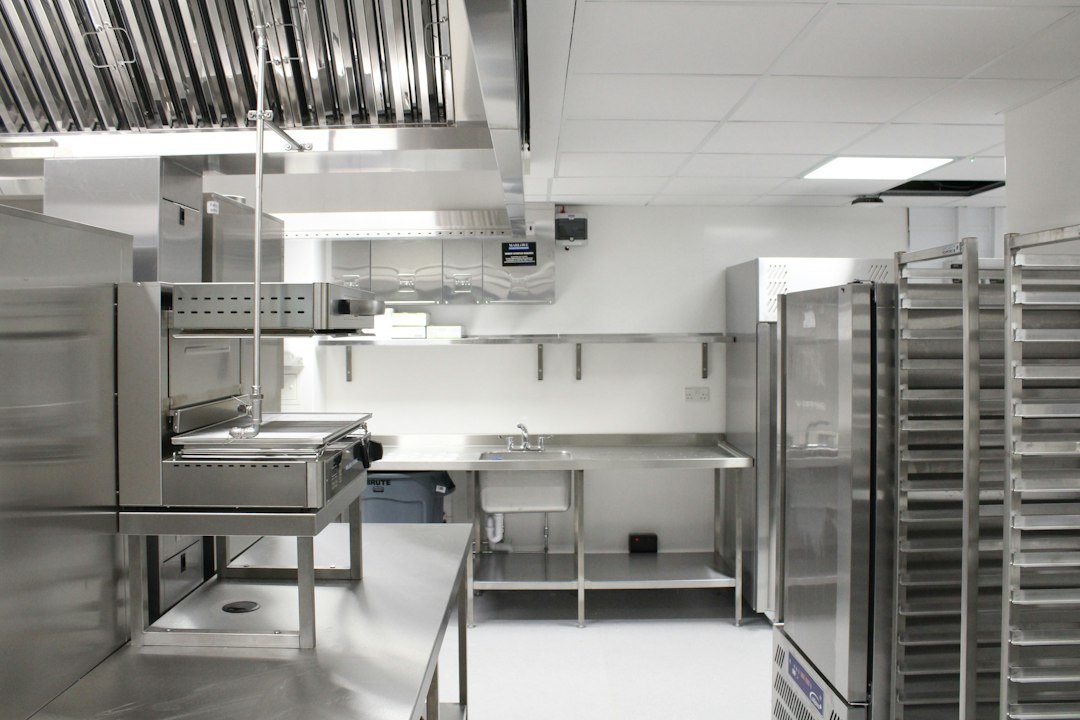
Featured photograph by Ceba Solutions via Unsplash; credited under the Unsplash license.