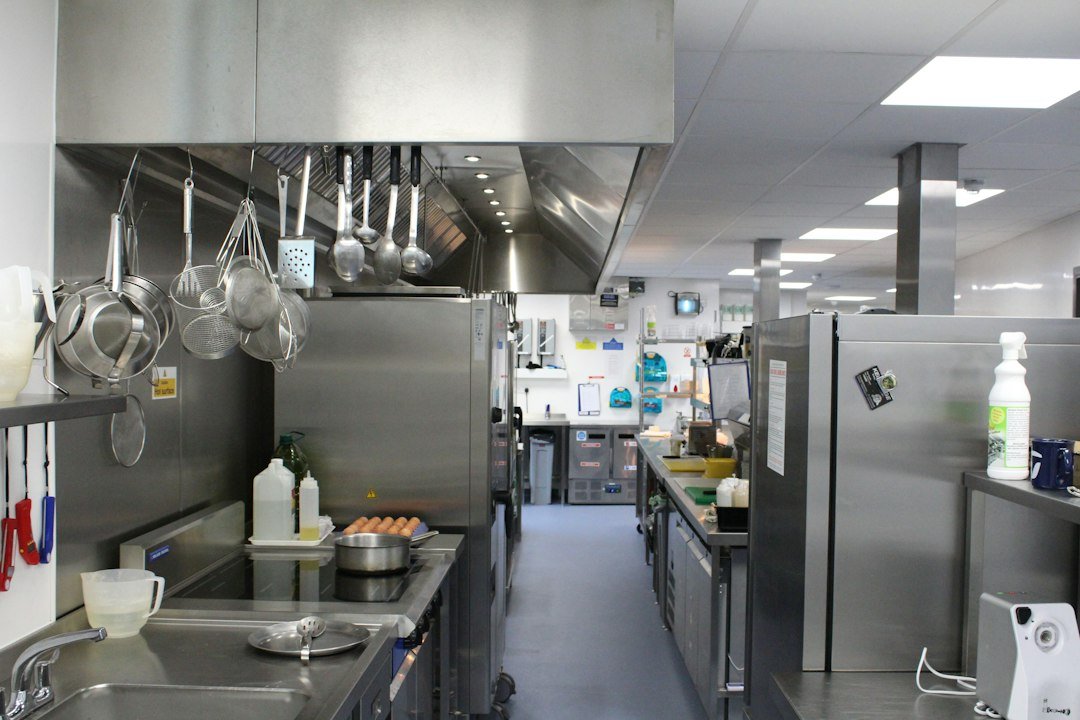
Slow tickets rarely have one cause. A restaurant may blame the line, the servers, the POS, prep, staffing or an unusually busy rush, but the useful management question is more specific: where did the order lose time?
Kitchen ticket time is one of the clearest operational measures a restaurant can track because it sits at the intersection of prep, staffing, station design, menu complexity, communication and guest expectations. If you measure it poorly, you get arguments. If you measure it consistently, you get a map of where service is breaking down.
This guide explains how to define ticket time, separate normal variation from operational failure, diagnose bottlenecks and build a practical review routine that managers can actually use during service.
What Is Restaurant Kitchen Ticket Time?
Kitchen ticket time is the elapsed time between a defined order-start point and a defined completion point. The exact start and finish should match how your restaurant operates.
A common definition is:
Ticket Time = Order Ready Time − Order Sent to Kitchen Time
For example, if a ticket reaches the kitchen at 7:12:30 p.m. and the full order is ready for pickup at 7:23:00 p.m., the ticket time is 10 minutes 30 seconds.
That sounds simple, but restaurants often create bad data because the start or end point is inconsistent. One shift measures from order entry. Another measures from the first item firing. One manager stops the clock when the first plate reaches the pass; another waits for the full table. Those numbers are not comparable.
Define the Clock Before You Track It
Before setting targets, decide exactly what the clock means in your operation.
| Service Type | Suggested Start Point | Suggested End Point |
|---|---|---|
| Full-service dining | Order sent to kitchen | Complete course ready at expo/pass |
| Quick service | Order confirmed | Complete order ready for handoff |
| Takeout | Order released to production | Order fully packed and staged |
| Delivery | Order accepted/released | Order packed and ready for courier |
| Multi-course dining | Course fired | Complete course ready |
Do not change the definition because the number looks bad. Consistency is more useful than a flattering metric.
Do Not Manage Only the Average
An average can hide a poor guest experience.
Imagine five tickets with completion times of 8, 9, 10, 11 and 22 minutes. The average is 12 minutes. That sounds manageable until you notice one table waited almost twice as long as the others.
Managers should look at several views:
- Average ticket time: useful for broad trend comparison.
- Median ticket time: shows the middle of the service experience without being distorted as much by extreme delays.
- Longest tickets: identifies severe failures that averages hide.
- Percentage over target: shows how often the kitchen misses the operating standard.
- Ticket time by hour or daypart: identifies when the system becomes unstable.
- Ticket time by station or menu item: helps isolate a production bottleneck.
You do not need advanced analytics to start. A simple daily report with average time, longest five tickets and count of tickets over target can already reveal patterns.
Set Targets From Your Own Operation
There is no single universal ticket-time target that fits every restaurant. A made-to-order steakhouse, pizza shop, bakery café and high-volume burger concept should not use the same number.
Build your standard from your menu, service promise, equipment, staffing model and production method.
A useful approach is to classify items or courses by realistic production window. Then observe strong shifts and determine what is consistently achievable without shortcuts.
The goal is not to force every ticket into the fastest possible time. The goal is to create a stable promise that protects both speed and quality.
The Four Places Where Ticket Time Is Usually Lost
1. Before cooking starts
Some delays happen before a cook touches the food. Common causes include unclear modifiers, delayed firing, batching confusion, poor printer/KDS routing or a station not noticing a new ticket.
If the kitchen receives orders unevenly because servers hold several checks and send them together, the line may appear slow even though the real problem is order release.
2. During production
This is the most obvious source of delay. It may result from insufficient prep, poor station setup, long-cook items, equipment capacity, weak sequencing or one cook carrying too many tasks.
3. At coordination
A table is not ready when one item is ready. The order is ready when the required items are ready together.
Many kitchens lose time because stations work independently. Grill may finish early, fry starts late and garnish waits for both. Strong expo control is what turns separate station output into one coordinated table.
4. After cooking
Food can be technically complete and still sit. Missing sides, unclear table numbers, packaging delays, absent servers, courier staging problems and final quality checks can all extend the guest’s real wait.
Use Ticket Aging During Service
Managers should not discover slow tickets after the shift. A useful kitchen display or expo routine should make aging tickets visible while action is still possible.
A simple live process is:
- normal tickets remain in the standard queue;
- tickets approaching the operating threshold receive attention;
- tickets beyond threshold are called out by expo or the manager;
- the team identifies the blocking item or station;
- front of house is informed before the guest has to ask;
- the cause is noted if it represents a recurring issue.
The point is not to shout ticket times continuously. The point is to create early visibility before a delay becomes a service-recovery problem.
Separate Capacity Problems From Execution Problems
One of the most important diagnostic questions is whether the kitchen is overloaded or simply disorganized.
Capacity problem: the station is working correctly, but demand exceeds what the equipment or labor can physically process.
Execution problem: the restaurant has enough theoretical capacity, but sequencing, prep, communication or work methods create delay.
These require different solutions.
If a fryer can handle a fixed number of portions at once and demand repeatedly exceeds that limit, coaching the cook harder will not solve the bottleneck. The restaurant may need menu staggering, additional equipment, a second fry position or different prep.
If the fryer has unused capacity while tickets age, the issue may be organization, order visibility or poor sequencing.
Watch the Bottleneck, Not the Whole Kitchen
During most rushes, one station becomes the limiting factor. Managers should learn to identify it quickly.
Ask:
- Which station has the oldest unfinished items?
- Which menu items appear on most delayed tickets?
- Is one piece of equipment creating a queue?
- Are modifiers slowing one station disproportionately?
- Is one cook waiting for prep, tools or ingredients?
- Are multiple stations waiting for one finishing component?
The best intervention is usually at the constraint. Adding help to a station that is already ahead may create more congestion without improving ticket time.
Prep Accuracy Is a Ticket-Time Control
Ticket time begins before service. Weak prep creates delays that the line cannot recover from later.
If sauces are not portioned, garnishes are incomplete, proteins are not thawed correctly or backups are stored far from the station, every ticket absorbs small delays.
That is why kitchen speed should connect to a disciplined restaurant prep list and production planning system. Prep quantities should reflect expected demand, and each station should enter service with the tools, ingredients and backups it needs.
Do Not Confuse Speed With Rushing
A fast kitchen is not a kitchen that works frantically. The fastest sustainable operations usually look controlled.
Rushing can increase:
- wrong modifiers;
- missing components;
- overcooked or undercooked food;
- remakes;
- cross-station confusion;
- unsafe shortcuts;
- guest complaints.
A remake is especially damaging because it creates a second production cycle and can delay an entire table. Reducing error often improves speed more than telling cooks to move faster.
Track Remakes Alongside Ticket Time
Ticket-time improvement is only real if quality remains stable.
If average ticket time falls while remakes rise, the restaurant may simply be pushing food out too aggressively.
Review at least three measures together:
- ticket time;
- remake/error count;
- guest complaints related to food quality or wait time.
This creates a balanced view of speed and execution. Your guest complaint and service recovery process can also help reveal whether slow-ticket problems are reaching the dining room.
Use Daypart Analysis
A daily average can hide the exact period when the kitchen loses control.
Break the day into meaningful operating windows, such as lunch, early dinner, peak dinner and late night. Compare volume and ticket time within those windows.
If dinner ticket time deteriorates only from 7:00 to 8:00 p.m., the solution may be staffing, prep depletion or a demand spike—not a general kitchen redesign.
Compare similar days as well. Friday dinner should usually be compared with other Friday dinners rather than a quiet Monday afternoon.
Look at Menu Mix, Not Just Sales Volume
Two hours with the same sales can place very different loads on the kitchen.
One hour may contain simple high-margin items with short cook times. Another may contain many grill entrées, customized orders or shared appetizers that create more production complexity.
When reviewing a slow period, ask what the kitchen actually produced. This is especially important if the menu changes or promotions shift demand toward a constrained station.
Illustrative Ticket-Time Review
Consider an illustrative dinner period with 80 completed tickets.
- Average ticket time: 14 minutes
- Median ticket time: 11 minutes
- Tickets over the internal 15-minute standard: 18
- Longest ticket: 29 minutes
- 12 of the 18 delayed tickets included one particular grilled item
The average suggests moderate delay, but the pattern points to something more specific. The manager should investigate the grill item and station rather than treating the whole kitchen as equally slow.
Possible causes might include a long cook method, poor batch planning, undersized grill capacity, delayed firing or insufficient prep. The data narrows the investigation; observation confirms the cause.
Build a Ticket-Time Root-Cause Log
You do not need to document every normal ticket. Track exceptions.
| Date/Shift | Ticket | Delay | Primary Cause | Immediate Action | Follow-Up |
|---|---|---|---|---|---|
| Fri Dinner | 184 | 9 min over | Grill backlog | Expo resequenced tickets | Review grill capacity |
| Fri Dinner | 201 | 7 min over | Missing prep | Backup sauce produced | Increase pre-shift par |
| Sat Lunch | 76 | 6 min over | Modifier clarification | Server confirmed order | Review POS modifier wording |
After several shifts, recurring causes become visible. That is where improvement work should focus.
The Manager’s During-Service Routine
A practical manager routine should be short enough to use in real time:
- Check current oldest ticket.
- Identify which station or item is holding it.
- Look for multiple tickets with the same constraint.
- Move help only where it removes the bottleneck.
- Tell front of house when a meaningful delay is developing.
- Protect quality; do not bypass essential cooking or safety steps.
- Record recurring causes for post-shift review.
This routine works best when responsibilities are clear before the rush. A focused pre-shift meeting can establish staffing positions, expected volume, menu outages and known production risks.
Connect Kitchen Time to Dining Room Flow
Kitchen ticket time should not be managed in isolation from the dining room.
When the kitchen slows, seating the next wave at the same pace can deepen the backlog. A manager may need to coordinate host pacing, reservations, server sections and communication with the kitchen.
This is especially important in full-service restaurants where kitchen delays can extend total table turn time and dining room flow.
The goal is not to manipulate guests for faster turns. It is to prevent the restaurant from accepting more production demand than the operation can currently handle.
When to Change the Menu or Process
If the same item repeatedly causes delays even on well-run shifts, the issue may be structural.
Possible responses include:
- changing prep method;
- pre-portioning components;
- moving a finishing step to another station;
- simplifying modifiers;
- changing plating sequence;
- adding equipment capacity;
- adjusting the recipe or presentation;
- removing an item that does not fit the operation.
A menu item should be evaluated not only by food cost and contribution margin but also by the operational load it creates.
Weekly Ticket-Time Review
A weekly review should answer five questions:
- When were the slowest periods?
- Which items or stations appeared most often in delayed tickets?
- Were delays caused by capacity, preparation, staffing or execution?
- Did remakes or complaints rise with speed problems?
- What one operational change should be tested next week?
Do not create a long action list. One well-defined change with a clear owner is more useful than ten vague observations.
Common Ticket-Time Management Mistakes
- Using one target for every item: production complexity differs.
- Watching only averages: extreme delays disappear inside the mean.
- Blaming the slowest cook: the real constraint may be prep, equipment or order release.
- Chasing speed at the expense of quality: remakes erase the gain.
- Reviewing data without observing the line: reports show where to look, not always why it happened.
- Changing too many things at once: you lose the ability to know what actually worked.
- Ignoring front-of-house pacing: demand entering the kitchen is part of the system.
Restaurant Kitchen Ticket-Time Checklist
- Define one consistent start and finish point.
- Establish realistic internal targets by service type or item group.
- Monitor aging tickets during service.
- Review the longest tickets after each busy shift.
- Track the cause of meaningful exceptions.
- Separate capacity problems from execution problems.
- Review ticket time by daypart and station.
- Track remakes and complaints alongside speed.
- Use prep planning to remove avoidable service delays.
- Coordinate kitchen load with dining room pacing.
- Assign one owner for each corrective action.
- Recheck the metric after the change.
Bottom Line
Ticket time becomes useful when it stops being a score and starts being a diagnostic tool.
A manager should be able to answer not only “How slow were we?” but also “Where did the time go, what caused it, and what will we change before the next rush?”
Measure consistently. Watch the bottleneck. Protect quality. Connect the data to prep, staffing, menu design and dining room pacing. That is how ticket-time tracking becomes an operating system rather than another report.