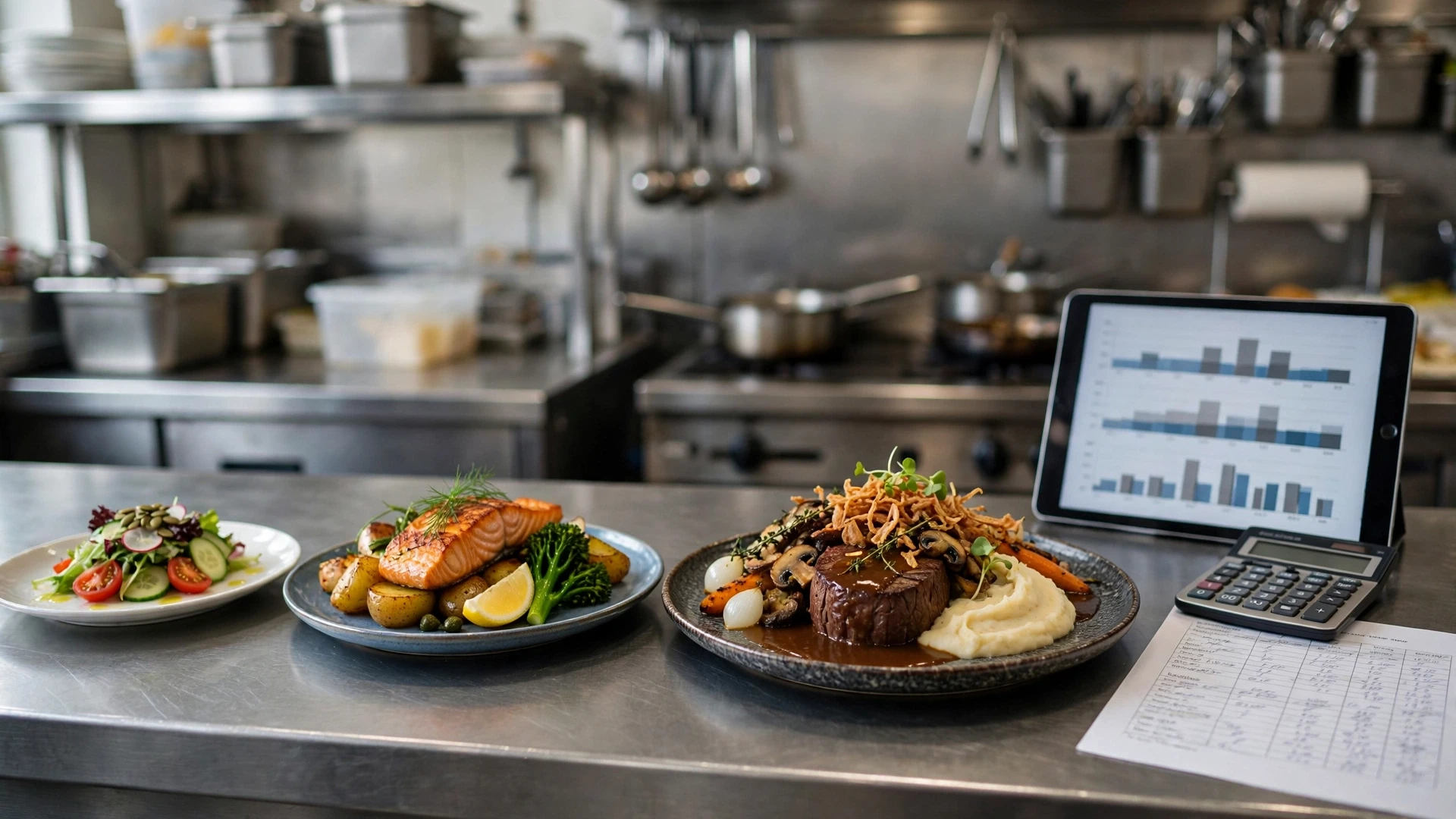
A menu item can be profitable while its modifiers quietly destroy margin.
A burger has a carefully engineered price. Then guests add cheese, bacon, avocado, extra sauce, a premium side, a protein substitution or another customization. The point-of-sale system records the modifiers, but management may never compare what the guest pays with what the modification actually costs.
That creates a blind spot.
Modifier profitability is the contribution created or lost when a guest changes the base item.
The basic question is:
Does the modifier price cover the incremental product cost and the operating burden it creates?
The answer is not always yes.
Define what counts as a modifier
Depending on the concept, modifiers can include:
• add cheese,
• add bacon,
• add avocado,
• extra protein,
• premium side upgrade,
• sauce add-on,
• substitute protein,
• substitute milk,
• remove ingredient,
• extra topping,
• cooking preference,
• size upgrade,
• combo upgrade.
Not every modifier needs a price.
Some modifiers exist only to communicate preparation choices. Profit analysis should focus on modifiers that change product cost, selling price, production complexity or service time.
Calculate incremental contribution
A simple modifier contribution can be:
Modifier contribution = Modifier selling price – Incremental product cost
Example:
Add avocado:
• modifier price: $2.00,
• standard avocado portion cost: $0.78.
Modifier contribution:
$2.00 – $0.78 = $1.22
The example is illustrative.
This is not full profit. It does not automatically include labor, payment fees, waste or overhead. It is a useful first view of incremental contribution.
Calculate modifier food-cost percentage carefully
Modifier cost % = Incremental product cost ÷ Modifier selling price × 100
Using the avocado example:
$0.78 ÷ $2.00 × 100 = 39%
Do not apply a universal target. A modifier can have a higher cost percentage and still produce useful contribution dollars. Compare the economics with the restaurant’s pricing strategy and operational constraints.
Cost the actual modifier portion
Modifier profitability is only as accurate as the portion standard.
“Add cheese” must mean a defined quantity:
• one slice,
• 28 grams,
• one measured scoop.
“Extra chicken” must have a defined weight.
“Extra sauce” must have a controlled portion or cup size.
If the point-of-sale price is fixed but the kitchen portion varies, the real modifier margin varies too.
For portion-control fundamentals: Restaurant Portion Control: How to Standardize Serving Sizes and Protect Food Cost
Separate add-ons from substitutions
Add-ons and substitutions create different economics.
Add-on
The guest keeps the base ingredient and adds something.
Example:
Add bacon to a burger.
Incremental cost is mainly the bacon portion plus any packaging or direct extra cost.
Substitution
One ingredient is removed and another replaces it.
Example:
Swap standard fries for a premium side.
Incremental cost should consider the cost difference, not the entire cost of the premium side.
If standard fries cost $0.80 and the premium side costs $1.55:
Incremental substitution cost = $1.55 – $0.80 = $0.75
If the upgrade price is $2.00, incremental contribution is $1.25 before other costs.
Credit the removed ingredient where appropriate
A substitution analysis can be wrong if management charges the full substitute cost but ignores the removed base component.
Example:
Base protein cost: $2.40.
Premium protein substitute cost: $3.60.
The incremental food cost is not automatically $3.60.
It is:
$3.60 – $2.40 = $1.20
If the substitute price is $2.50, the incremental contribution is $1.30.
That gives a clearer view of the change.
Measure attachment rate
A profitable modifier matters more when guests choose it often.
Modifier attachment rate = Modifier units sold ÷ Eligible base item units sold × 100
Example:
• 1,000 burgers sold,
• 280 add-cheese modifiers.
Attachment rate:
280 ÷ 1,000 × 100 = 28%
The example is illustrative.
Attachment rate helps management rank which modifiers deserve pricing attention.
Calculate total modifier contribution
A modifier with only $0.50 contribution may still matter if it sells thousands of times.
Total modifier contribution = Contribution per modifier × Modifier units sold
Example:
• contribution per add-cheese: $0.85,
• units: 1,400 per month.
$0.85 × 1,400 = $1,190
That is material enough to manage carefully.
Identify negative or weak modifiers
Create a modifier report with:
• modifier name,
• selling price,
• standard portion cost,
• incremental contribution,
• attachment rate,
• monthly units,
• total contribution,
• operational note.
Sort by:
• negative contribution,
• lowest contribution,
• highest volume,
• highest cost volatility.
This often reveals modifiers that have not been repriced for years.
Include packaging where the modifier changes packaging
Some add-ons need:
• extra sauce cup,
• larger container,
• separator,
• additional lid,
• different bag.
If the packaging change is directly caused by the modifier, include it in incremental direct cost when practical.
A $0.15 sauce cup can materially affect a $0.75 modifier.
Do not ignore waste and unusable partial portions
An avocado add-on may use half an avocado while the other half has limited life. A premium topping may require a pack size that creates more spoilage.
The theoretical portion cost is still useful, but management should review actual yield and waste.
If actual usable cost is consistently higher than recipe cost, the modifier economics need updating.
Evaluate labor and complexity for difficult modifiers
Some modifiers create almost no operating burden.
Others slow the kitchen.
Examples of higher-complexity modifiers:
• deconstructed dishes,
• major cooking-method changes,
• extensive ingredient swaps,
• custom plating,
• multiple substitutions in one ticket.
Do not attempt to assign a precise labor cost to every modification unless the restaurant has reliable data.
Instead, classify complexity:
• low,
• moderate,
• high.
A high-complexity, low-contribution modifier may not deserve a place on the menu even if it technically covers food cost.
Watch ticket accuracy
Modifier profit disappears when customization creates remakes.
Track whether certain modifiers are associated with:
• more remakes,
• longer ticket times,
• guest complaints,
• kitchen confusion.
A $1.50 contribution is not attractive if the modifier repeatedly causes a $15 remake.
For kitchen ticket-flow control: Restaurant Kitchen Ticket Time: How to Measure and Reduce Slow Orders
Build modifier groups intentionally in the POS
Poor POS setup makes analysis difficult.
Use consistent groups such as:
• add protein,
• premium toppings,
• side upgrades,
• sauces,
• substitutions,
• cooking preferences.
Avoid duplicate modifier names such as:
• Add Cheese,
• Extra Cheese,
• Cheese +,
• Cheese Upgrade,
unless they truly mean different portions.
Standardized naming improves reporting and training.
Separate free requests from paid extras
Some guest requests should remain free because the direct cost is negligible or because the restaurant chooses to absorb it as service.
But review “free” modifiers that have material cost.
Examples:
• extra premium sauce,
• additional specialty cheese,
• large quantity of garnish,
• expensive non-dairy milk.
The question is not whether every request should be charged. The question is whether management knows what it costs and has made a deliberate policy decision.
Use price ladders for size-based extras
A modifier price should correspond to the standard portion.
If a guest can buy:
• extra protein 50 g,
• double protein 100 g,
the price ladder should reflect the cost and desired contribution.
Do not let employees improvise portion size under one modifier button.
Review premium side upgrades
Side upgrades are often attractive because the base side is removed.
Calculate the incremental cost difference.
Example:
• fries cost: $0.85,
• premium salad cost: $1.60,
• upgrade price: $2.50.
Incremental cost:
$1.60 – $0.85 = $0.75
Incremental contribution:
$2.50 – $0.75 = $1.75
The example is illustrative.
Then check whether the salad requires more labor, packaging or service time.
Analyze modifiers by sales channel
Delivery platforms, kiosks and online ordering can change modifier behavior.
Digital ordering often makes add-ons more visible and easier to select.
Compare:
• dine-in attachment rate,
• takeout attachment rate,
• delivery attachment rate,
• kiosk attachment rate.
A modifier that performs well online may deserve better placement in digital menus.
Do not assume the same price must apply across every channel if the restaurant’s pricing strategy and platform rules allow differences.
Modifier profitability and menu engineering
Base-item menu engineering should include modifier behavior when it is material.
A lower-contribution entrée can become more attractive if it has high-margin modifier attachment.
A strong base item can underperform if guests frequently choose a costly unpriced substitution.
For the broader menu-item contribution framework: Restaurant Menu Item Profitability: How to Measure Contribution Margin
The most useful view is base item + common modifier pattern.
Worked example: burger modifier set
Assume a restaurant sells 2,000 burgers per month.
Modifier data:
| Modifier | Price | Incremental cost | Contribution | Units |
|---|---|---|---|---|
| Add cheese | $1.50 | $0.48 | $1.02 | 720 |
| Add bacon | $2.25 | $0.92 | $1.33 | 410 |
| Add avocado | $2.00 | $0.78 | $1.22 | 250 |
| Premium side | $2.50 | $0.75 net | $1.75 | 330 |
The figures are illustrative.
Monthly modifier contribution before other costs:
• cheese: $734.40,
• bacon: $545.30,
• avocado: $305.00,
• premium side: $577.50.
Now suppose extra sauce is free and costs $0.24 including cup and sauce, with 900 requests per month.
Direct cost:
$0.24 × 900 = $216
Management can now make an informed decision about whether to keep it free, reduce the portion, charge after the first extra, or accept the cost as part of service.
Build a monthly modifier review
- Export modifier sales with units, prices and eligible base items.
- Verify standard portions against recipes and service tools.
- Update incremental costs using current ingredient and directly caused packaging costs.
- Calculate contribution and attachment rate, then rank high-volume modifiers.
- Flag operational complexity, especially modifiers associated with slow tickets or remakes.
- Choose an action: keep or raise price, reduce portion, simplify, remove, make free deliberately, or promote more heavily.
- Recheck attachment, complaints and contribution after the change.
Build a modifier price architecture instead of isolated prices
Guests notice inconsistencies across modifiers. If extra chicken is $2.00 on one item and $4.00 on another for the same portion, staff and guests may both struggle to understand the logic.
Create a price architecture by modifier family:
• standard cheese add-on,
• premium cheese add-on,
• standard protein add-on,
• premium protein add-on,
• side upgrade,
• sauce extra.
The prices do not need to be identical across every dish, but differences should have an economic or operational reason. A structured price ladder also makes future cost updates faster.
Review guest behavior after a modifier-price change
A higher modifier price can improve contribution per unit while reducing attachment rate. Measure both.
Example:
Before change:
• price: $1.50,
• attachment rate: 35%.
After change:
• price: $1.90,
• attachment rate: 27%.
Do not judge the change from attachment rate alone. Compare total modifier contribution and guest feedback. A lower attachment rate may still produce better economics, or the price increase may have crossed the guest’s value threshold.
The goal is not the highest possible price. It is a modifier structure that produces acceptable guest value, clean execution and useful contribution.
Common modifier-profitability mistakes
Costing substitutions at full replacement cost
The removed base ingredient is ignored.
No portion standard
The modifier price is fixed but the cost changes by employee.
Reviewing only food-cost percentage
Contribution dollars and volume are ignored.
Too many POS modifier names
Reporting becomes fragmented.
Ignoring remakes
Operational cost overwhelms the small add-on margin.
Assuming free means cheap
High-volume free extras can accumulate material cost.
Run a first modifier profitability audit
- Export the 10 highest-volume paid modifiers for the last completed period.
- Verify the actual portion tool and standard quantity used for each modifier during service.
- Update incremental ingredient and directly caused packaging cost using current prices.
- Calculate contribution per modifier and attachment rate to eligible base items.
- Flag modifiers with weak contribution, high remake frequency or disproportionate station complexity.
- Choose one action for each exception: reprice, resize, simplify, remove or deliberately keep.
- After the change, compare attachment, complaints, ticket impact and contribution with the original baseline.
Manager checklist
For every high-volume paid modifier, confirm:
- Price.
- Exact standard portion.
- Current incremental cost.
- Contribution per unit.
- Monthly units.
- Attachment rate.
- Consistent POS naming.
- Packaging impact.
- Substitution credit where relevant.
- Complexity and remake risk.
Frequently asked questions
Should every add-on have the same food-cost percentage as the base menu?
No. Evaluate contribution dollars, guest value and operational impact, not a universal percentage target.
Should substitutions always be free?
No universal rule applies. The restaurant should compare the incremental cost and service strategy and set a clear policy.
How often should modifier prices be reviewed?
Review high-volume and volatile-cost modifiers whenever material costs change and on a regular menu-review cadence.
Are free removals profitable?
Removing an ingredient may reduce cost, but the restaurant usually should not assume the full theoretical saving is realized. The item may already be pre-portioned or prepared.
Next action
Export the 20 highest-volume modifiers from the POS. For each one, write down the price and actual standard portion cost. Any modifier whose price, portion or name cannot be explained in one minute belongs on the next menu-engineering review.