A restaurant opening checklist should detect and resolve conditions that could harm food safety, service, cash control or readiness before the first guest arrives—not merely produce a sheet of boxes ticked “done.” When the same opening failure appears every week, the problem is usually a weak control, unclear ownership or a process that does not fit the shift. Managers need an exception register that identifies the actual issue, immediate safe action, responsible person, root cause and verified closure.
Imagine an independent café logs 12 opening exceptions in 20 operating days: four missed refrigerator-temperature checks, three ingredient shortages, two POS/printer interruptions and three late prep handoffs. A count of 12 alone does not establish severity or financial loss. It tells the owner what deserves investigation. Four missed temperature records may require more urgent food-safety attention than several noncritical display setup delays, even if the incident count is the same.
This guide explains how to turn a restaurant opening checklist into a repeatable exception-management routine. Counts, minutes, wages and savings are hypothetical examples, not national industry statistics.
What is an opening checklist exception?
An exception is any documented condition that fails an approved ready-to-open standard. It might be a failed refrigeration check, missing sanitation supplies, an employee who has not arrived, a till that does not reconcile, an incomplete allergen-information handoff, a kitchen station not prepared for forecast demand, or a malfunctioning order printer.
Distinguish a task not done from a control that actually passed. A refrigerator reading written from memory is not proof that the temperature was measured. An opening checklist is effective when every critical line has an owner, a verifiable measure and a defined escalation, not just a signature box.
Risk-based priorities for opening exceptions
| Priority | Illustrative issue | Immediate decision |
|---|---|---|
| Critical food safety / legal requirement | Unverified TCS food storage temperature, suspected contamination | Isolate or hold affected food, follow approved safety plan and notify person in charge; do not serve unsafe product |
| Critical service capability | No functional payment/order path when opening requires it | Implement approved outage procedure or adjust service until ready |
| Major readiness | Missing key ingredients for promoted item | Authorize safe substitution or honest item unavailability, notify front of house |
| Minor presentation/housekeeping | Nonessential display is incomplete | Assign owner and resolution time without displacing critical controls |
These tiers are an internal management model. The legal or food-safety significance of a condition depends on the facts and rules adopted by the restaurant’s jurisdiction. A “minor” category must never be used to downplay a real hazard.
Build a checklist around verification, not just instructions
A useful opening checklist specifies what to check, how to observe or measure it, the expected standard, the last safe completion time, the person accountable and the evidence. Example: “Verify and record actual refrigerator product or unit conditions according to the approved monitoring procedure” is stronger than “Fridge OK.” Do not substitute an example website number for the establishment’s specific approved temperature plan; use the adopted food code and equipment procedures.
Assign logical groups: food safety and sanitation; cash and POS; kitchen mise en place; inventory and supplier exceptions; staff readiness; guest-facing service; and building or equipment condition. Give the opening manager a one-page summary for critical steps with links or references to more detailed departmental logs. A checklist containing 100 equally weighted boxes is likely to create completion fatigue.
Worked example: how repeat exceptions waste paid time
Suppose the manager spends an additional 25 minutes per day investigating recurring noncritical startup issues. At an illustrative fully burdened manager labor cost of $24 per paid hour, the cost of that rework time is (25 ÷ 60) × $24 = $10 per day. Over 20 comparable trading days, the modeled staff time cost is $200. This represents labor capacity consumed, not necessarily a separate $200 cash saving if the manager remains salaried and paid regardless.
If a documented corrective action cuts rework to ten minutes a day, time released is 15 minutes, or 0.25 hours per day. At $24/hour, the capacity value is $6 per day, or $120 over 20 days. Real payroll expense falls only if paid hours, overtime or another cost actually changes. Still, the additional capacity could improve coaching, ordering or opening readiness.
Example: an exception log from a restaurant’s first 20 shifts
| Failure type | Occurrence count | Potential underlying cause | Prevention test |
|---|---|---|---|
| Temperature-check record missing | 4 | Ownership or device accessibility failure | Named backup, verified recording before opening |
| Key ingredient short | 3 | Par level or delivery-receipt mismatch | Forecast-based evening precheck |
| POS/printer service problem | 2 | Power/network restart sequence not reliable | Test order print and offline plan pre-opening |
| Prep handoff late | 3 | Unclear close-to-open responsibilities | Written overnight prep carryover and signoff |
| Total recorded exceptions | 12 | Some days may have more than one | Track rates separately by failure type |
Do not calculate a “60% failing shifts rate” simply from 12 incidents divided by 20 shifts. If two incidents occurred on the same day, the number of shifts with an exception is lower than the incident count. Keep both: exception incidents per 100 openings, and percentage of openings with at least one critical exception.
What to do when an exception is found
- Make the immediate safe decision. Stop or isolate any affected food, equipment or cash process when required. Do not treat an unresolved critical control as complete.
- Record observable facts. Time, shift, location, product or equipment identifier, current measured condition and supporting source document. Avoid writing conclusions before investigation.
- Assign ownership. Name the person correcting the current occurrence and the person authorized to approve the return to normal service.
- Set a verified resolution. “Discussed with staff” is not a closure condition. A corrected measurement, reconciled till, successful test order or approved replacement stock may be.
- Investigate recurrence separately. Ask why the condition happened and why the checklist failed to prevent it, then test one durable preventive change.
- Review the next comparable opening. Verify that the control works without extraordinary management intervention.
For food-safety issues, follow the restaurant’s adopted local health-code rules and approved standard operating procedures. The federal FDA Food Code 2026 is a model for retail-food regulation and may not match every jurisdiction’s currently adopted edition. Operators should not treat an incident register as permission to bypass required hazard controls.
Copy-ready opening-exception register
| Column | What staff should record |
|---|---|
| Date / shift / branch | Unique opening identifier |
| Checklist control ID | Reference to expected opening standard |
| Observed condition | Facts, measurement, screenshot or count |
| Criticality / service impact | Risk level with escalation rule |
| Immediate safe action | What was held, isolated, substituted or suspended |
| Owner / backup | Named responsible staff |
| Target resolution time | Before opening or other justified deadline |
| Root cause category | People, process, supplier, equipment, forecast or data |
| Verified correction evidence | Test result, record ID, manager signoff |
| Repeat recurrence | Previous exception IDs and dates |
| Final status | Open, corrected, escalated, or service restricted |
| Next check | Time and method for proving the new control holds |
Correct root causes without inventing discipline problems
If an opening task fails repeatedly, do not automatically label it poor employee motivation. Check the sequence of work, equipment condition, staffing overlap, access rights, schedule feasibility and whether the necessary supplies were available. A 6:45 a.m. refrigerator check assigned to an employee whose shift begins at 7:00 a.m. is a schedule design failure. A backup thermometer kept in a locked office without access is a process problem.
Use “five whys” or a simple cause-and-effect review only when it contributes an actual testable explanation. For a repeated missing-product incident, compare purchase orders, receiving acceptance, opening par and prior-day closing counts. Do not assume supplier failure until the evidence excludes an incorrect order or inventory-entry error.
Opening versus closing handoff: one loop, not two isolated checklists
Some opening failures originate at the previous night’s close. A line with inadequate labeled stock, unplugged POS equipment or unfinished sanitation may burden the opener. The close team should record open tasks, responsible people and any approved limitations for the next shift. Then the opening manager verifies physical reality rather than blindly accepting the previous shift’s “complete” status.
For process design, connect this register with the manager logbook and shift handover and opening and closing checklist guide. Checklists work when incomplete issues stay visible across shifts until they are truly resolved.
Two-week corrective-action review
In days 1–3, establish how many openings contain each distinct exception type and whether safety-critical steps are being verified. From days 4–7, select one repeat problem with a testable cause and introduce the smallest reliable process change. During days 8–14, measure whether recurrence falls on comparable shifts without shifting work to unauthorized time or increasing another risk.
If temperature verification still fails because the thermometer cannot be found, replacing a written reminder with another written reminder may not help. A controlled thermometer location, defined backup and actual manager verification may produce a better result. If the employee still cannot safely perform the check, revise the responsible role or procedure. Document the change and its effect.
Opening-readiness scorecard for the owner
| Metric | Definition | What to avoid |
|---|---|---|
| Critical controls completed on time | Verified critical controls ÷ critical controls due | Self-reported ticks with no measurements |
| Openings with any critical exception | Distinct affected opening shifts ÷ total shifts | Counting incidents instead of shifts |
| Repeat exception rate | Repeat occurrences ÷ all exceptions, defined period | Changing categories midperiod |
| Time to safe resolution | Duration from discovery to verified correction | Closing when merely assigned |
| Guest impact | Service delays, sold-out promises, refunds or complaints | Claiming zero impact without observations |
| Incremental labor or material exposure | Actual avoidable cost or separately labeled capacity value | Equating every minute saved with cash savings |
Frequently asked questions
Is the opening checklist completed when every box has a tick?
No. Any critical failed condition must be properly resolved or managed under an authorized service restriction. A tick does not replace actual measurement or evidence.
Should all exceptions have equal weight?
No. A food-safety or legal failure deserves different escalation from a nonessential presentation delay. Use a documented severity policy with real safeguards.
Can software replace a paper checklist?
Software can improve accountability, timestamps and recurrence analysis, but it cannot make invented readings valid. Clear procedures and staff responsibility come first.
How do I know an improvement worked?
Compare matched openings, verify the underlying control actually passes and check that a lower incident count was not merely caused by less reporting or changed definitions.
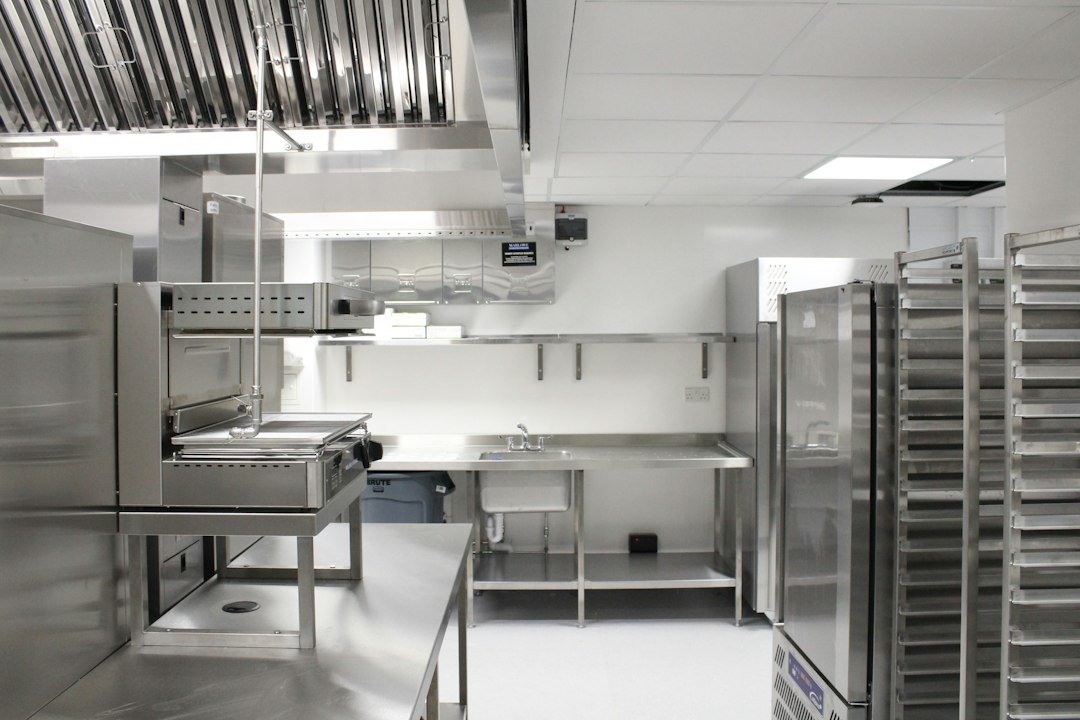
Featured photograph by Ceba Solutions via Unsplash; see Unsplash license terms. The photograph is illustrative and does not depict this article’s hypothetical business examples.
Further reading and sources
Use daily manager walk-throughs, pre-service readiness and shift handovers to connect exceptions to regular oversight. For food safety, consult the 2026 FDA Food Code and applicable locally adopted health rules. All quantities, labor rates and financial examples are explicit hypothetical training cases.