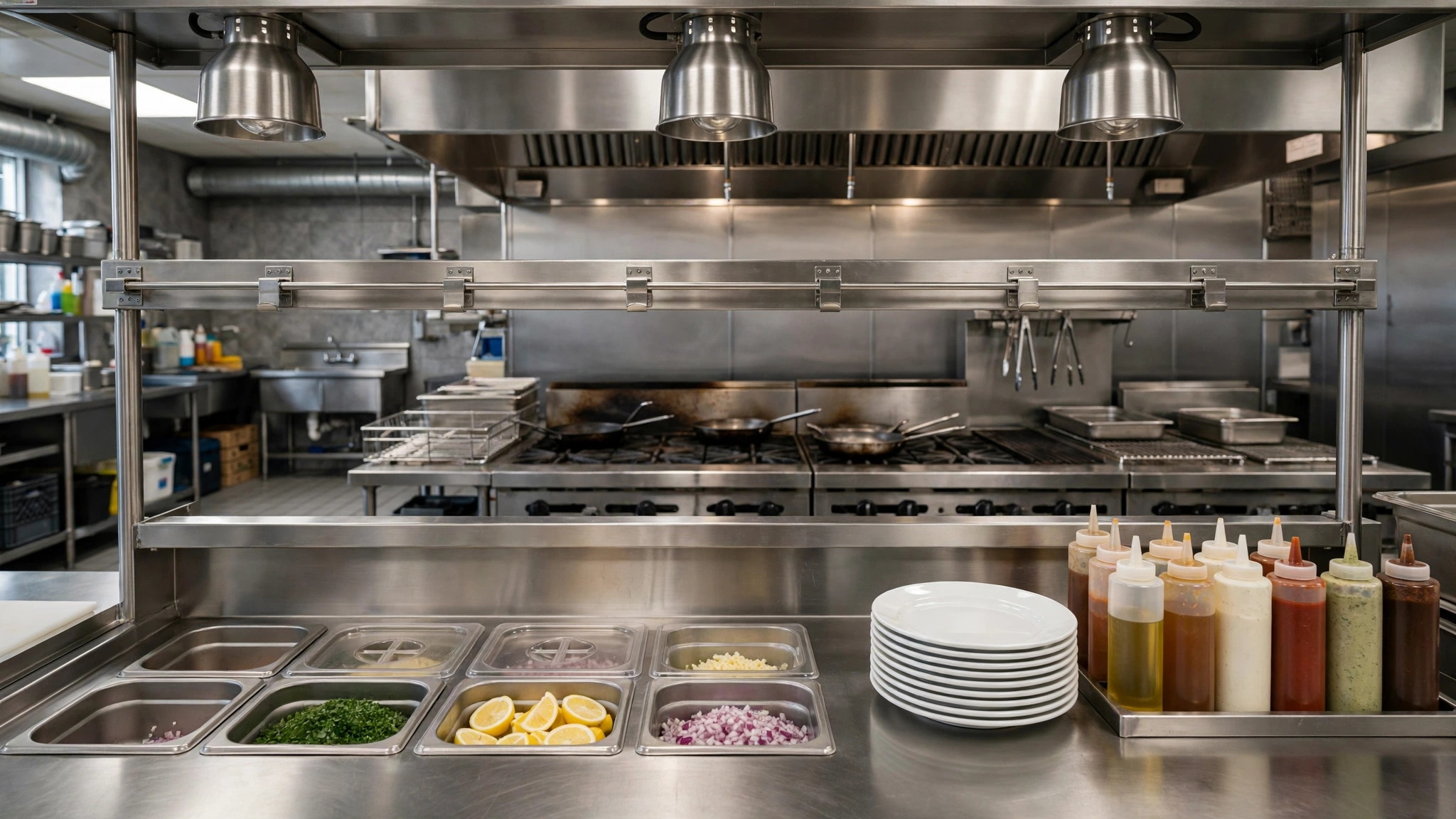
Pre-service readiness is the final operating check that confirms a restaurant is actually ready to open the doors and absorb the first rush. It is narrower than a full opening checklist and more operational than a pre-shift meeting: the goal is to verify that the dining room, kitchen, service stations, people, systems, and known exceptions are ready to perform together before the first guest order lands.
A useful readiness check should take only as long as necessary to find material problems. For many independent restaurants, a focused 10- to 20-minute manager walk-through can be enough when the underlying opening routines are already strong. The exact time is not a universal benchmark. What matters is that the manager checks the highest-risk handoffs and either clears them, assigns an owner, or delays opening of the affected station.
What pre-service readiness means in a restaurant
Pre-service readiness answers one practical question: if a guest walked in right now, could every critical part of the operation perform without avoidable delay, confusion, or safety risk?
That question is different from asking whether individual tasks were completed. A prep list may be signed, but one key sauce can still be missing. The dining room may look finished, but the reservation tablet may not be synced. The line may be stocked, but a fryer may be down. A server section may be assigned, but the team may not know about a large booking or an item that is unavailable.
The readiness check therefore verifies the connections between departments, not just isolated task completion.
| Control area | Readiness question | Typical evidence |
|---|---|---|
| Dining room | Can the first guests be seated without resetting or searching for supplies? | Tables set, host station ready, menus and reservation system available |
| Service stations | Can servers execute the first orders without leaving their station for missing basics? | Glassware, cutlery, condiments, checks, takeaway items, side work complete |
| Kitchen line | Can the first menu items be produced at expected quality? | Mise en place, tools, temperatures, smallwares, plates, equipment status |
| POS and KDS | Will orders route correctly from order entry to production? | Terminals online, printers or KDS active, modifiers and routing checked |
| Staffing | Are all critical positions covered for the expected demand? | Attendance confirmed, station assignments known, gaps assigned |
| Exceptions | Does the team know what is unusual today? | 86’d items, large parties, maintenance issues, deliveries, promotions, shortages |
Pre-service readiness vs opening checklist vs pre-shift meeting
These controls overlap, but they should not be treated as the same thing.
- Opening checklist: confirms recurring setup tasks are completed. See the daily restaurant opening and closing checklist guide.
- Pre-shift meeting: aligns the team around demand, priorities, menu changes, reservations, service focus, and responsibilities. See the restaurant pre-shift meeting guide.
- Pre-service readiness check: verifies that the physical operation, systems, staffing, and exceptions are genuinely ready to execute before service begins.
A restaurant can pass the opening checklist and still fail readiness. The readiness check is the manager’s final verification layer.
The six-zone pre-service readiness check
1. Front door, host station, and dining room
Start where the guest experience begins. The manager should be able to walk from the entrance to the first table and see a space that is fully ready rather than “almost finished.”
- Entrance, windows, and visible guest areas are clean enough for opening.
- Host stand has the reservation list or live reservation system available.
- Menus, wait-list tools, reservation tablet, pens, and communication devices are in place.
- Table numbers and section assignments match the floor plan.
- Dining tables are fully set to the restaurant’s normal service standard.
- Highchairs, booster seats, takeaway menus, and common guest-request items are accessible.
- Known out-of-service tables or areas are clearly communicated to the host.
The goal is not showroom perfection. It is operational readiness: the host should not need to improvise the first five minutes of service.
2. Server stations and service support
Service delays often begin with small missing items. One empty cutlery bin, an unfilled ice well, or missing takeaway packaging can force staff to abandon their sections during the first rush.
Check the items that your operation repeatedly depends on: glassware, cutlery, napkins, trays, condiments, water service, side plates, takeaway packaging, receipt paper, sanitizing supplies, and any service-specific equipment.
A useful control is to ask the station owner: “What would make you leave this station during the first 15 minutes?” If the answer is something predictable, fix it before opening.
3. Kitchen line and pass
The kitchen readiness check should follow actual menu flow. Walk the line in the same sequence an order travels: cold storage or prep rail, cooking station, finishing, pass, and pickup.
- Critical mise en place is present in usable quantities.
- Labels, dates, containers, and utensils are appropriate for the restaurant’s food-safety system.
- Hot and cold holding equipment is operating as intended.
- Cooking equipment required for the opening menu is available and functional.
- Smallwares, tongs, scoops, ladles, pans, towels, and gloves are where the station expects them.
- Clean plates, bowls, baskets, and packaging are staged.
- The pass is clear enough to receive the first tickets.
- Known menu shortages have been converted into a clear availability decision.
If an equipment issue is found, do not simply note it and continue. Use a defined escalation route. The restaurant equipment maintenance checklist can help separate minor defects from operating issues that need immediate attention.
4. POS, KDS, printers, and order routing
A technically open restaurant can still be operationally closed if orders cannot move correctly. Run a fast systems check before live traffic.
Verify that POS terminals are signed in, the correct revenue center or service period is active, card terminals are connected where applicable, and kitchen printers or displays are online. If the restaurant uses a kitchen display system, confirm that the expected stations are receiving the correct order types.
For complex routing, a small test order can be more valuable than looking at a green status icon. Ring a low-risk test item, confirm routing, then void or close it using the restaurant’s normal control process. The purpose is not to create fake sales data; it is to verify the operating path.
If ticket flow is a recurring problem, the restaurant kitchen ticket time guide can help identify where readiness and production controls break down after service begins.
5. Staffing, stations, and immediate capacity
Readiness is not just “everyone is clocked in.” The manager needs to know whether the right positions are actually covered.
Check attendance, late arrivals, call-outs, cross-trained backups, station assignments, breaks that overlap with early demand, and any employee restrictions that affect where people can be deployed. A staffing gap should become an operating decision before opening, not during the first rush.
Possible responses include reducing sections, combining stations, delaying a low-priority prep task, moving a cross-trained team member, limiting a menu item temporarily, or assigning the manager to a defined support role. The action depends on the concept and the size of the gap.
6. Known exceptions and today’s unusual risks
The strongest readiness checks focus on what is different today. Routine tasks are already covered by checklists. Exceptions are where surprises live.
Review:
- 86’d or limited menu items
- supplier shortages or substitutions
- large parties, events, or catering pickups
- maintenance issues
- weather-related demand or delivery problems
- promotions or menu launches
- new staff on shift
- reservation spikes
- late deliveries
- known guest accessibility needs
- special food-safety or allergen controls that require extra attention
The point is not to discuss every detail. It is to make sure each material exception has an owner and a response.
A simple readiness scoring method
Some restaurants benefit from a quick score, but the score should support judgment rather than replace it. One simple method is to rate each critical zone as:
- Green: ready for service.
- Amber: service can open, but a specific issue has an owner and short deadline.
- Red: the issue can materially disrupt service, safety, or order flow and must be resolved or controlled before the affected area opens.
| Status | Meaning | Manager action |
|---|---|---|
| Green | No material readiness gap | Open and monitor normally |
| Amber | Manageable gap with defined workaround | Assign owner, deadline, and recheck |
| Red | Material operational or safety risk | Resolve, isolate, or modify service before opening |
These labels are illustrative. A restaurant should define what qualifies as amber or red based on its food-safety plan, equipment, staffing model, menu, and service format.
Example: turning a readiness problem into an operating decision
Assume the manager finds three issues ten minutes before opening:
- one server is late,
- the fryer is heating more slowly than normal,
- a delivery containing one garnish has not arrived.
The wrong response is to write all three on a checklist and hope the team adapts. The better response is to classify the operational impact.
| Issue | Evidence | Impact | Action | Owner | Recheck |
|---|---|---|---|---|---|
| Late server | Not on site at briefing time | One section uncovered | Combine two low-volume sections until arrival | FOH manager | At opening |
| Slow fryer heat-up | Unit not yet at normal operating temperature | Fried items may be delayed | Hold affected items from immediate sale until verified ready | Kitchen lead | 5 minutes |
| Missing garnish | Supplier delivery delayed | Presentation difference only if approved substitute exists | Use approved substitute and brief service team | Chef / manager | Before first order |
The example thresholds and responses above are illustrative. The important pattern is evidence → impact → action → owner → recheck.
One-page pre-service readiness worksheet
A manager can run the final check with a compact worksheet like this:
| Date / service | ________________ | Manager | ________________ |
|---|---|---|---|
| Dining room | Green / Amber / Red | Issue | ________________ |
| Host station | Green / Amber / Red | Issue | ________________ |
| Server stations | Green / Amber / Red | Issue | ________________ |
| Kitchen line | Green / Amber / Red | Issue | ________________ |
| Pass / pickup | Green / Amber / Red | Issue | ________________ |
| POS / KDS | Green / Amber / Red | Issue | ________________ |
| Staffing | Green / Amber / Red | Issue | ________________ |
| Menu availability | Green / Amber / Red | Issue | ________________ |
| Reservations / events | Green / Amber / Red | Issue | ________________ |
| Critical exception owner | ________________ | Recheck time | ________________ |
| Ready to open? | Yes / Modified service / Hold affected area | ||
Keep the worksheet short enough that managers will actually use it. If a section needs a detailed task list, link it to the relevant opening, cleaning, maintenance, prep, or staffing checklist instead of expanding the readiness sheet indefinitely.
Common pre-service readiness mistakes
Checking appearance but not operating capacity
A dining room can look ready while the kitchen, POS, or staffing plan is not. Readiness must include the systems that produce the guest experience.
Turning the check into a second opening checklist
If every routine task is repeated, the final check becomes slow and staff stop treating it as meaningful. Use it to verify outcomes and handoffs.
Finding problems without assigning owners
An amber issue with no owner is not controlled. Every material gap should have one person responsible for the next action.
Using “ready” as a binary answer
Some issues do not require delaying the entire restaurant. A controlled menu restriction or section adjustment may be enough. The manager should isolate the risk instead of treating every defect as all-or-nothing.
Assuming the cause before checking evidence
If a station is short, do not immediately blame the prep team. Check the prep plan, batch yield, receiving, transfers, storage location, sales forecast, and last-minute demand changes before assigning cause.
Pre-service readiness checklist
- Walk the guest entrance and host station.
- Confirm dining room and section setup.
- Verify service stations have the supplies needed for the first rush.
- Walk the kitchen line in order-flow sequence.
- Confirm the pass and pickup area are clear and stocked.
- Verify key equipment is functioning.
- Confirm POS, KDS, printers, and card terminals as applicable.
- Review attendance and station assignments.
- Confirm current menu availability and known shortages.
- Review large parties, reservations, events, and unusual demand.
- Assign an owner to each amber or red issue.
- Set a recheck time for unresolved issues.
- Brief the team on changes that affect service.
- Open only when material risks are controlled.
How to run the readiness check in eight steps
- Start at the guest entrance. Walk the route the first guest will take and correct visible barriers before moving deeper into the operation.
- Check service support. Verify host and server stations can handle the first wave without leaving their zones for predictable supplies.
- Walk the kitchen in order-flow sequence. Follow the path from storage and prep to cooking, finishing, pass, and pickup.
- Test the order path. Confirm the POS, KDS or printers, card terminals, and routing required for the service period.
- Match people to stations. Compare actual attendance with the planned deployment and decide how any gap will be covered.
- List today’s exceptions. Write down shortages, equipment issues, large bookings, menu changes, late deliveries, and other non-routine risks.
- Assign each material issue. Record one owner, one immediate action, and one recheck time. Avoid shared ownership such as “the team” unless a specific lead is accountable.
- Make the opening decision. Open normally, open with a controlled modification, or hold the affected area until the red issue is cleared.
Track repeat readiness failures
The daily check becomes more useful when recurring gaps are reviewed instead of repeatedly patched. A simple exception log can record the date, station, issue, evidence, immediate action, owner, root cause after review, corrective action, and recheck date.
Two simple management measures can help without creating a heavy dashboard:
Readiness issue recurrence rate = repeat instances of the same issue ÷ total recorded readiness issues × 100
On-time closure rate = readiness issues closed by the assigned recheck time ÷ readiness issues with a due time × 100
These are internal control measures, not universal restaurant benchmarks. Use them to compare your own operation over time. A recurring missing prep item, late station opening, printer failure, or staffing gap is a signal to improve the underlying schedule, maintenance routine, par level, training, or handoff process.
First-30-minute feedback loop
After the first 30 minutes of service, the manager should quickly compare the readiness call with reality. Did any green area fail immediately? Did an amber issue stay controlled? Did the workaround create a new bottleneck? Record the answer while the evidence is fresh.
This short feedback loop prevents the readiness checklist from becoming ceremonial. It also helps the team refine what should be checked before opening and what can be removed because it rarely predicts service problems.
FAQ
How long should a restaurant pre-service readiness check take?
There is no universal duration. In a well-controlled operation, a focused 10- to 20-minute final walk-through may be enough. A complex restaurant, event-driven service, equipment issue, or staffing disruption can require longer.
Who should perform the readiness check?
Usually the manager responsible for the shift should own the final decision, but station leaders should provide evidence from their areas. The exact roles depend on the restaurant’s structure.
Should the kitchen and front of house use the same checklist?
They can share one manager readiness sheet, but detailed opening tasks should remain specific to each department. The final sheet should summarize whether the critical areas are actually ready.
What should happen if one station is not ready?
Assess the impact. The response may be to fix the issue before opening, hold one menu item, combine sections, reassign labor, delay one station, or modify service. The response should be explicit and communicated.
Is pre-service readiness the same as a food-safety inspection?
No. Food-safety controls are part of operational readiness, but a readiness check is broader. It also covers staffing, order routing, guest areas, equipment, menu availability, and communication.
How do you stop the checklist from becoming routine paperwork?
Keep it short, focus on exceptions and high-risk handoffs, require owners for unresolved issues, and review recurring failures. If the same issue appears repeatedly, fix the underlying system rather than adding another checkbox.
Bottom line
Pre-service readiness is the restaurant manager’s final operating gate before service. The best check does not repeat every opening task. It verifies that the guest area, service stations, kitchen line, systems, staffing, and known exceptions are connected and ready to perform together.
Use a short walk-through, classify material gaps, assign an owner, set a recheck time, and modify service when necessary. That turns “we think we’re ready” into a visible operating decision the whole team can execute.