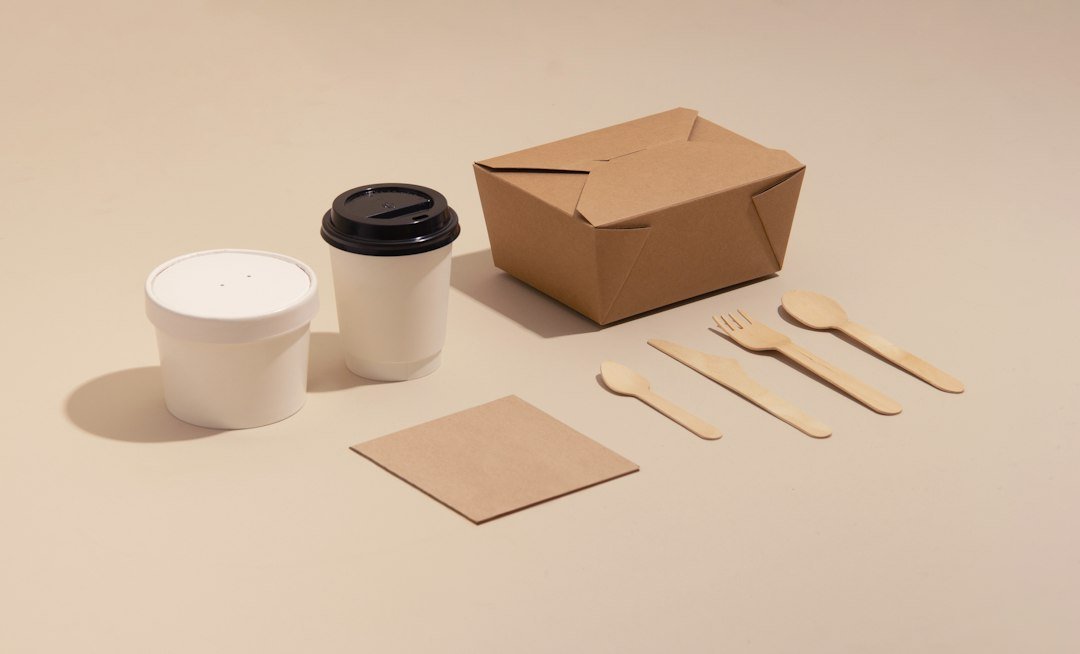
Takeout packaging is a per-order cost, not a background supply expense. A restaurant can price a sandwich correctly and still lose margin when the bag, clamshell, sauce cup, seal, cutlery, and replacements are omitted from its unit economics. This guide shows how to calculate packaging cost per completed order, build a monthly budget, and reduce waste without harming food safety or customer experience.
All supply prices below are illustrative planning assumptions, not verified current vendor quotations. Obtain at least two local wholesale quotes, include shipping and minimum quantities, and check packaging suitability for your actual menu.
What belongs in packaging cost per order?
Use a bill of materials for each order type, just as you do for recipes. Count the primary food container and its lid; bag or carrier; cups and lids; cutlery and napkins; condiment, dressing and sauce cups; security seals; labels; liners; and any insulated or cold-chain material. Include extra packaging placed into bags during rushes, not merely what the recipe standard calls for.
Do not automatically include reusable serving dishes or kitchen equipment. Separate general supplies such as cleaning chemicals from order-specific packaging. Consistent classification matters more than a label in your chart of accounts.
Example: how much does a takeout lunch package cost?
Imagine a deli sandwich-and-side order using the following sample materials. The numbers are hypothetical—not typical national market prices—and make the calculation reproducible.
| Supply item | Units | Illustrative unit price | Cost per order |
|---|---|---|---|
| Clamshell base | 1 | $0.42 | $0.42 |
| Lid | 1 | $0.16 | $0.16 |
| Carry bag | 1 | $0.14 | $0.14 |
| Security seal | 1 | $0.06 | $0.06 |
| Napkin | 1 | $0.05 | $0.05 |
| Cutlery set | 1 | $0.10 | $0.10 |
| Sauce cup and lid | 1 | $0.12 | $0.12 |
| Order label | 1 | $0.04 | $0.04 |
| Total | $1.09 |
If the pre-tax menu subtotal is $18, the packaging cost is $1.09 ÷ $18 × 100 = 6.1% of order revenue. This is not the food-cost percentage. Keep both visible when analyzing contribution.
Monthly packaging budget: the number that matters
Monthly packaging spend = completed takeout orders × standard packaging cost per order ÷ expected usable yield. The yield adjustment reflects damaged, discarded or over-issued items. For simplicity, a 4% unusable rate means 96% of purchased packaging becomes correctly used packaging.
Using 120 completed orders per day, 26 trading days and a $1.09 standard package:
- Monthly completed orders: 120 × 26 = 3,120.
- Without loss allowance: 3,120 × $1.09 = $3,400.80.
- At 96% usable yield: $3,400.80 ÷ 0.96 = $3,542.50 of required spend, approximately.
- If unit packaging cost falls by $0.20 without changing usability or volume, the unadjusted monthly saving is $624.
This illustrates why seemingly small changes in sauce cups or unnecessary cutlery add up. It does not justify using unsafe containers or removing essential seals.
Why actual cost exceeds the purchase price
A quoted container price can exclude freight, case-break charges, minimum-order handling, distributor surcharges, damaged units, and taxes that are not recoverable. Convert every quote to a landed usable-unit cost.
Usable unit cost = (case price + allocated freight + nonrecoverable purchasing cost) ÷ usable units received. If a case costs $84 landed for 200 containers and ten arrive damaged, the usable-unit price is $84 ÷ 190 = $0.44, not $0.42.
For restaurant owners already using a purchasing log, connect the landed unit cost to the supplier price comparison process. This makes price changes traceable without relying on staff memory.
Build different kits for different food types
Hot entrées
Choose containers appropriate to food temperature, steam and holding conditions. Test whether vents preserve crispness or cause moisture loss. An inexpensive container can be costly if it increases remake requests and refunds.
Cold dishes and desserts
Leak resistance, temperature control, stackability and presentation affect acceptance. Containers should not be specified from appearance alone. Run a short route test under expected delivery conditions.
Drinks and bakery items
Drink lids, cup carriers, wraps and bakery inserts deserve their own kit. Combining these into one all-restaurant average masks which menu categories consume the most packaging.
Packaging and delivery-app profitability
Consider an $18 menu order with ingredients of $5.40, incremental labor of $4.00, packaging of $1.09 and a 25% hypothetical marketplace commission of $4.50. Contribution before other variable and fixed costs is $18 − $5.40 − $4 − $1.09 − $4.50 = $3.01. Adding an unplanned $0.50 set of disposables reduces contribution to $2.51, a substantial decline relative to what was left. Read our delivery-app contribution model for the complete channel decision.
Four practical ways to control packaging spend
- Set a packing bill of materials. Print an order-type standard at expo: what is always packed and what is available only on request. Do not remove legally required or food-safe items.
- Audit issued versus sold. For 1,000 sandwiches sold, 1,250 clamshells consumed calls for investigation. Account for legitimate remakes, staff meals, breakage and inventory timing before assigning blame.
- Test suppliers on the total order. Compare case quantity, landed cost, lead time, fit, leak resistance and damage rates—not just unit price.
- Recount after menu changes. New dressings, family portions or combo bundles alter packaging requirements even if menu prices remain unchanged.
Simple packaging tracking table
| Week | Completed takeout orders | Packaging issued | Spend | Spend per order |
|---|---|---|---|---|
| 1 | 780 | Reconciled to kit standard | $920 | $1.18 |
| 2 | 820 | Reconciled to kit standard | $902 | $1.10 |
The figures above are hypothetical. Week 2 shows lower spend per order, but verify that the comparison uses purchased inventory consumption, not merely cash purchases placed in the same week.
Frequently asked questions
Should restaurants charge a separate packaging fee?
That is a pricing and legal-compliance decision, not an automatic recommendation. Check local disclosure rules, your marketplace contracts, customer expectations and total contribution before adding a charge.
Are compostable containers always cheaper over time?
No. Supplier cost, actual waste handling and local collection infrastructure vary. Do not make unsupported environmental claims. Choose compliant materials that perform safely and explain only substantiated benefits.
Is packaging part of restaurant food cost?
For operating decisions, break it out as a variable cost; formal financial-statement classification may differ. Do not double count it in the gross margin model.
For a wider profitability picture, pair this checklist with our takeout restaurant startup budget and true recipe costing guide.
Featured photo: Clair / Unsplash. Cost examples are original Restaurant Operator Lab planning scenarios, not supplier quotes.