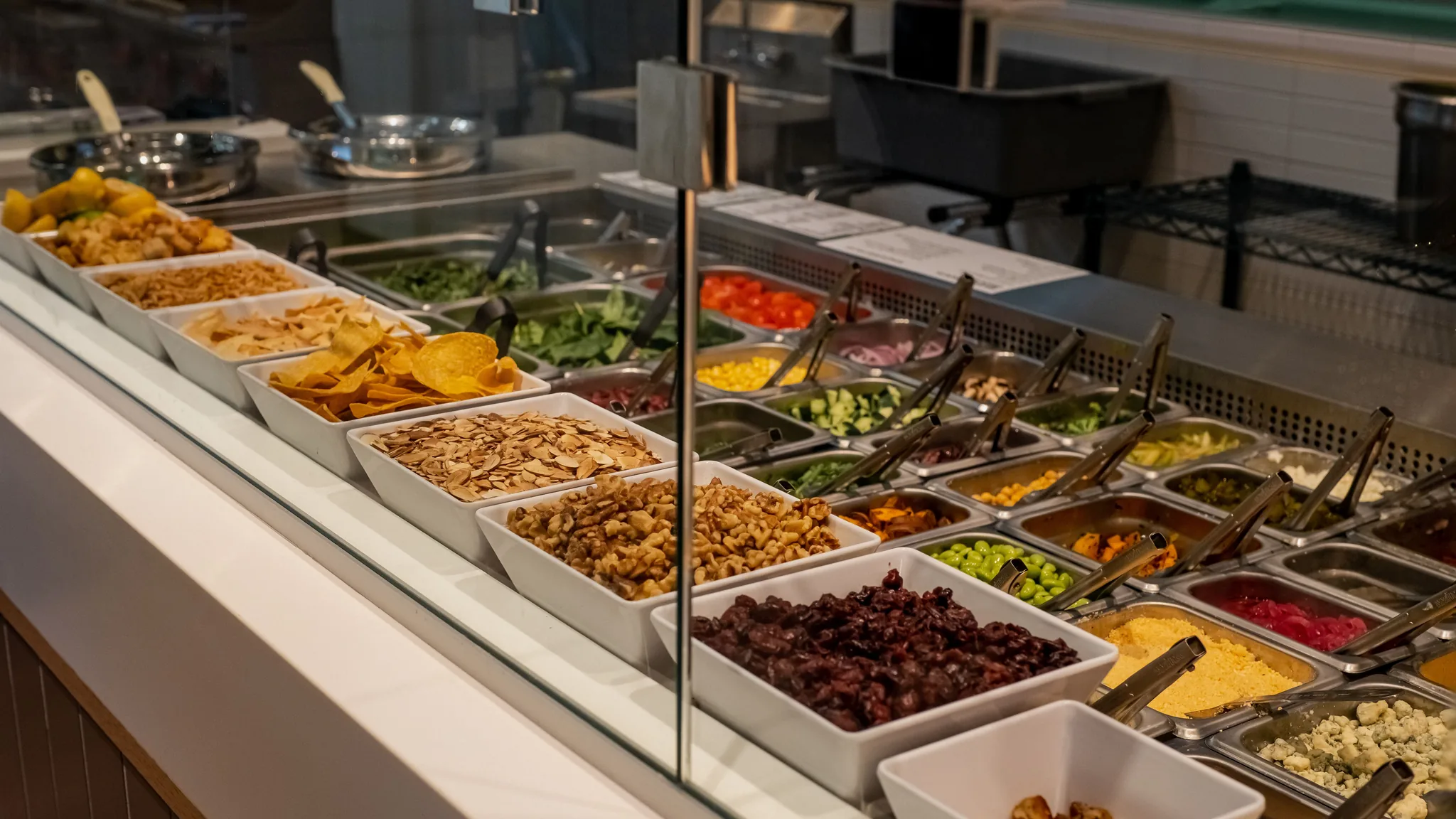
A sandwich shop can be operationally simpler than a full-service restaurant and still be expensive to launch. Cold storage, safe prep space, sandwiches made to order, peak-hour staff, online ordering, the lease, and the cash required before the shop finds repeat customers all have real costs. A shop that opens with a strong lunch rush can still lose money if the average ticket is too low or the pickup operation cannot handle the volume.
Quick answer: The opening investment depends on whether you plan a cold-sandwich counter, a hot-sub kitchen with cooking equipment and ventilation, a convenience-store deli, a franchise, or a shop that buys finished products for resale. This article uses a hypothetical $208,000 initial cash requirement for an independent U.S. sandwich shop in a leased retail space, including a $45,000 post-opening reserve. It is not a national startup-cost average or a vendor estimate. Treat the example as a structure for quotes, not as your financing application.
Define the sandwich concept before signing a lease
Start with product and throughput. Will you serve only refrigerated ready-to-eat sandwiches, hot pressed sandwiches, soups and salads, breakfast items, or a full deli? Will the menu include raw meat preparation, cooking, slicing, reheating, or hot holding? Each decision changes the required sinks, refrigeration, electrical supply, ventilation, storage, cleaning and labor capacity.
Then define channels: walk-in lunch, pickup, direct web ordering, marketplace delivery, office platters and catering. A lunch-focused deli beside offices may face an intense two-hour production peak but much lower dinner demand. A residential-area sandwich shop could have a more distributed weekend pattern. A delivery-heavy shop can sell more without extra seats but may surrender contribution through channel fees and promotions.
Write down daily orders, forecast peak orders per hour, average items per check, percentage of hot items, prep time, packaging requirements and staffing by daypart. Use the list to validate the site, equipment and queue layout, rather than trying to force a predetermined menu into an inexpensive lease.
Detailed worked example: $208,000 required cash
The fictional model assumes an independent sandwich shop with some hot food preparation, limited seating, pickup service and a previously occupied food-service unit requiring moderate work. All values are deliberately illustrative.
| Startup use of cash | Worked example |
|---|---|
| Lease deposit, first occupancy payments and utilities setup | $15,000 |
| Construction, counter, sinks, electrical and possible ventilation work | $58,000 |
| Slicers, refrigerated prep tables, holding and other kitchen equipment | $30,000 |
| POS, furniture, signage, packaging station and smallwares | $13,000 |
| Permits, insurance startup and professional fees | $5,000 |
| Initial ingredient, beverage and packaging stock | $7,000 |
| Recruiting, food-safety training and pre-opening payroll | $11,000 |
| Launch promotion, maps, photography and ordering setup | $6,000 |
| Construction and opening contingency | $18,000 |
| Pre-opening cash uses | $163,000 |
| Post-opening working cash reserve | $45,000 |
| Total cash funding requirement | $208,000 |
The $45,000 reserve is not an extra installation invoice; it is liquidity to protect operations after opening. If you finance equipment or receive a landlord improvement allowance, show sources and uses separately. A loan paid directly to an equipment supplier should not be described as money the restaurant received in its bank account. A landlord allowance may be reimbursed later, so do not assume it eliminates cash needed during construction.
The choice of premises can dominate the table. An established restaurant space might have usable drainage, handwashing, power capacity and suitable refrigeration, but modifications may still be costly. A vacant office or retail shell could need expensive conversion. Verify required permits and site constraints with local professionals and authorities before committing to rent. If the concept leans toward sliced meats, cheeses and a refrigerated display case, the small deli startup budget walks through those equipment and refrigeration lines.
Equipment: buy for your menu and fastest hour
A cold-deli concept may need refrigeration, safe food storage, slicers, refrigerated prep rails, sandwich assembly space, display cabinets, temperature monitoring and warewashing. A hot-sandwich concept may add a griddle, panini press, convection oven, holding equipment, more power and potentially exhaust systems. Soups and breakfast foods can materially change both the production process and the regulatory requirements.
Ask vendors for delivered-and-installed prices, electrical requirements, service access, warranty, parts availability, cleaning requirements and the actual usable production rate. A prep table advertised for a certain number of ingredient pans does not tell you how fast two employees can assemble a sandwich at noon. A slicer that meets today’s volume may become a bottleneck when corporate platters enter the mix.
Draw a floor flow: receiving → refrigerated storage → prep → order assembly → packing → pickup or courier handoff. Keep allergen controls, handwashing, cleaning equipment and hot/cold food safety in the plan. A short path reduces both labor and accuracy errors. A cramped pickup counter can destroy repeat orders even when the recipe is excellent.
Occupancy expenses: the hidden amount beyond base rent
Use the effective total occupancy cost, not just advertised base rent. Ask about common-area maintenance, utility deposits, real estate tax and insurance pass-throughs, percentage rent clauses, annual increases, signage approvals, waste arrangements and personal guarantees. Also budget for the weeks before revenue starts while the shop is under construction or waiting for inspection.
Stress-test at a reasonable downside sales figure. The restaurant occupancy cost guide explains why rent-to-sales ratios are diagnostic rather than universal requirements. If your forecast only works under an aggressive first-month sales level, renegotiate terms or choose another location.
Make sandwich unit economics explicit
For a simple first model, assume a $16.50 realized average customer ticket, excluding sales tax and net of discounts. Across the order mix, assume $5.20 for ingredients and packaging and $1.30 for payment processing, order-variable delivery or selling costs, resulting in $6.50 variable cost per paid transaction.
- Average realized ticket: $16.50.
- Fully modeled transaction-variable cost: $6.50.
- Contribution per transaction: $10.00.
That $10 is not net profit; labor coverage, rent, insurance, management, fixed software, maintenance and other recurring commitments still have to be paid. In reality, pickup, dine-in and marketplace delivery may have different variable costs. A delivery commission that is a fraction of revenue should be modeled on the channel using it, rather than charged to every walk-in order.
For recipes, weigh bread, protein, cheese, vegetables, sauces, wrap or box and anticipated trim/waste. Standardize scoops, slices and portion decisions. Supplier price increases can change food cost even if the menu price stays fixed. Our portion control guide and menu item contribution guide provide practical frameworks.
Break-even: how many sandwich orders are needed?
Assume fixed and semi-fixed recurring monthly costs of $29,000 including scheduled base payroll, rent, insurance, utilities, management overhead and other commitments, with the $6.50 order-variable cost excluded to avoid double counting.
$29,000 ÷ $10 contribution per transaction = 2,900 monthly transactions. At 26 days open per month, that means 112 paid checks per day when rounded up. The associated monthly sales are 2,900 × $16.50 = $47,850.
The model is intentionally simplified. If the owner expects a wage not already included in payroll, add that wage to fixed costs. If staffing must rise when lunch transactions cross 150 per day, test those extra hours as a cost step. If 30% of revenue goes through a marketplace, model actual channel fees and refunds. And if every order contains multiple sandwiches, transaction count is not the same as production units.
To build your own opening cash estimate, try our free startup budget planner.
The U.S. Small Business Administration’s break-even calculator uses fixed cost divided by unit contribution. Use our free break-even calculator to test your assumptions.
Three sales cases with transparent assumptions
| Paid checks per month | Net sales at $16.50 | Order contribution at $10 | Remainder after $29,000 monthly fixed costs |
|---|---|---|---|
| 2,200 | $36,300 | $22,000 | −$7,000 |
| 3,000 | $49,500 | $30,000 | $1,000 |
| 4,000 | $66,000 | $40,000 | $11,000 |
The figures are monthly operating illustrations before any owner compensation omitted from the base payroll, taxes, financing, depreciation or extraordinary repairs. They do not claim that an average U.S. sandwich shop achieves these sales. At higher volumes, staff, storage, pickup space and equipment may need to expand; actual cost behavior is not perfectly constant.
A good budget includes the minimum cash balance during the first 13 weeks. A positive theoretical operating remainder can coexist with a cash shortage because inventory, payroll and debt payments have different dates. Separate sales earned from cash received if you offer invoiced catering orders or corporate contracts.
Peak-hour labor, delivery and office catering
For sandwich shops, peak hour matters disproportionately. Estimate the maximum tickets that can be assembled per workstation, the number of orders that involve hot preparation, average packing seconds, and whether couriers interrupt the counter queue. A marketing campaign that brings 30 extra orders into the same ten minutes may create refunds rather than profit.
Track paid staff hours per 100 orders and sales per labor hour. Test schedules with the labor forecasting guide and sales per labor hour guide. Include employer taxes and benefits in the labor plan instead of forecasting only hourly wages.
Office lunch trays and business catering can improve use of prep capacity but create early production peaks and invoice risk. Model their packaging, delivery, discounts and payment terms separately. Do not treat a $400 office invoice as if it were 24 ordinary $16.50 walk-in checks for labor or cash timing.
Safety, licensing and the deli risk profile
Retail restaurants are generally regulated by state and local government rather than through a single national restaurant license. The FDA guidance on starting a food business explains that obligations vary by facility and product. The FDA Food Code is a model that jurisdictions may adopt with variations.
Cold ready-to-eat meats, cheeses, fresh vegetables, hot-held soups and prepared sandwiches have different handling considerations. Ask the local regulator about approved premises, cold holding, hot holding, cooling, date marking where applicable, handwashing, allergens and equipment approvals. Do not use a generic internet temperature chart in place of the code actually enforced at the location.
Sandwich shop pre-lease checklist
- Confirm the exact menu and whether cooking or hot holding is required.
- Count orders per hour, not just daily sales, for equipment and staffing design.
- Confirm zoning and health/permit suitability with the local authorities.
- Obtain itemized installed-cost quotations for major equipment and fit-out.
- Verify rent, CAM, taxes, guarantees, free-rent periods and lease escalations.
- Cost every primary sandwich and representative bundle, including packaging.
- Split sales channels and calculate contribution after actual fees.
- Estimate first-month sales below mature run rate and calculate runway.
- Plan safe receiving, storage, cleaning, allergen communication and pickup flow.
- Test a downside scenario before signing financing and lease commitments.
Frequently asked questions
Is a sandwich shop cheaper than a full-service restaurant?
It may be, especially with limited seating and a simple cold-food menu. But a premium hot-sandwich shop requiring major build-out, kitchen equipment, labor and delivery infrastructure can still be expensive. Compare the exact concept, not broad industry labels.
Is the $208,000 budget a typical U.S. sandwich shop price?
No. It is one itemized fictional example with $163,000 pre-opening cash uses and a $45,000 post-opening reserve. Your market and site can cost less or considerably more.
How many sandwiches must I sell to break even?
The illustration requires 2,900 paid transactions per month, or 112 per day over 26 days. Transactions differ from sandwiches sold. Your own ticket, costs, labor and operating days must replace every sample input.
Do delivery apps always increase profit?
No. A delivery order can add sales and still have lower contribution because of marketplace commission, promotions, refunds and packaging. Calculate incremental sales and incremental cost by channel.
How much should a sandwich shop owner earn?
There is no reliable single answer for a startup. A separate companion article, How Much Does a Sandwich Shop Owner Make?, analyzes reported business listings and a clearly hypothetical annual earnings model. Do not confuse an operating remainder with cash the owner can safely withdraw.
Sources and methodology
- U.S. Small Business Administration — Break-even point calculator.
- FDA — How to Start a Food Business.
- FDA — 2022 Food Code, model provisions, not a universal local code.
- National Restaurant Association — Labor cost context from the 2025 Data Abstract: broad limited-service context, not sandwich-shop startup pricing.
Method: The entire $208,000 startup table, $16.50 ticket, $6.50 variable cost, $29,000 overhead, three sales cases and related volume examples are hypothetical editorial calculations, not collected national price data or third-party vendor quotations. Local professional advice is needed before signing contracts.