A catering order can be perfect on quantity, timing and presentation and still fail because one guest’s gluten-free meal ended up on the wrong table. Special meal requests are a small share of plates and a large share of the risk. They arrive late, through several people, in loose wording such as “a couple of vegans and someone with a nut thing,” and they pass through sales, the kitchen, dispatch and service staff before anyone eats. Each handoff is a chance for detail to be lost.
Quick answer: treat every dietary or allergen request as a controlled line item, not a note. Capture it in a standard format with the guest name or seat, the exact restriction and its severity; confirm it in writing with the client; carry it onto the event order, production sheet and dispatch check; label and pack each special meal separately; and verify it again at handoff on site. If the kitchen cannot confidently meet a request, say so before the event, not at the table.
Why dietary requests break down in catering
Restaurant service has a short loop: the guest tells the server, the server enters the order, the kitchen cooks it and the server delivers it to the same guest. Catering stretches that loop across days and people. The client’s coordinator collects requests from attendees, a salesperson types them into a proposal, the event order is revised twice, the kitchen preps the day before, a driver loads the van and banquet staff serve guests they have never met.
Most failures come from a few repeatable causes:
- Vague capture. “Vegetarian” can mean no meat, or no meat and no fish, or no animal stock. “Dairy-free” may be a preference or a serious allergy.
- Counts without names. The kitchen knows to make four gluten-free plates but service staff do not know who they are for.
- Late changes outside the system. A request added by phone the night before reaches the chef but not the dispatch checklist.
- Look-alike food. A dairy-free risotto and a regular risotto in identical containers are easy to swap.
- Buffet exposure. Shared serving utensils and guests moving spoons between dishes undo careful kitchen work.
None of these require new technology to fix. They require a standard record that follows the meal from request to plate.
Step 1: capture requests in a standard format
Give clients a short request form or a fixed set of questions instead of an open notes field. For each request, record:
- guest name, or table and seat number for plated events,
- the restriction in plain terms (for example “no tree nuts,” “no gluten-containing ingredients,” “vegan: no meat, fish, dairy, eggs or honey”),
- whether it is a medical allergy, intolerance, religious requirement or preference,
- any severity note the guest or client provides, such as airborne sensitivity,
- who supplied the information and when.
The severity field matters because it changes how the kitchen works. A preference may only need a different dish. A serious allergy may need separate preparation, separate utensils, a separate container and a named handoff. Do not guess the category on the client’s behalf; ask.
Step 2: confirm what the kitchen can and cannot do
Before confirming the event, the chef or kitchen lead should review every special request against the menu and the kitchen’s real capabilities. Some requests are easy. Others conflict with shared fryers, flour in the air during baking, or ingredients bought pre-made with incomplete labels.
The honest options are usually:
- Adapt the menu item by removing or replacing the ingredient, with recipe and label changes recorded.
- Make a separate dish designed for that restriction.
- Decline and explain when the kitchen cannot control cross-contact well enough for a severe allergy, so the client can make other arrangements.
Declining feels like poor service but is far better than an over-confident promise. Staff should never say a dish is “safe” or “allergen-free” unless the operator has a verified process to support that claim. Use precise wording such as “prepared without peanuts or tree nuts” and follow the allergen labeling and disclosure rules that apply in your jurisdiction.
Step 3: put requests on every operating document
A request that lives only in an email thread will be missed. Add a dedicated special-meals section to the banquet event order and carry the same lines onto the catering production sheet and the dispatch checklist. Each line should show the guest or seat, the restriction, the dish being served and the container label.
| Document | What the special-meal section should show |
|---|---|
| Proposal / event order | Confirmed list of requests, dish for each, and any request declined |
| Production sheet | Prep method, separate equipment needs and who prepares each special meal |
| Pack and dispatch check | Labeled container count by restriction, checked against the list |
| On-site service brief | Guest names or seats, plate description and the staff member delivering each meal |
Use the same identifier on all four documents. If the event order says “Seat 14, no shellfish, herb chicken,” the container label and service brief should say the same thing.
Step 4: lock the list with the final guest count
Special meals should be locked on the same deadline as the main numbers. The final guest count control process is the natural place to do this: when the client confirms final attendance, they also confirm the final special-meal list in writing. Late additions after the cutoff should go through the same change order process as any other change, so the kitchen, dispatch and service records are all updated together.
A practical policy is to accept late requests only when the kitchen lead approves them and the change is recorded on every document. A request accepted by phone and remembered by one person is the most common route to a missed meal.
Step 5: prepare, label and pack special meals separately
In production, the goal is to stop special meals from being mixed up with standard food and to keep a clear trail of who made them.
- Prepare restriction-specific items first or in a separate area where possible, with clean equipment.
- Use distinct containers or lid colors and a printed label for each meal: guest or seat, restriction, dish, prep date and preparer’s initials.
- Pack special meals in a separate, clearly marked carrier rather than mixed into bulk pans.
- Count labeled meals against the special-meal list before the carrier is sealed.
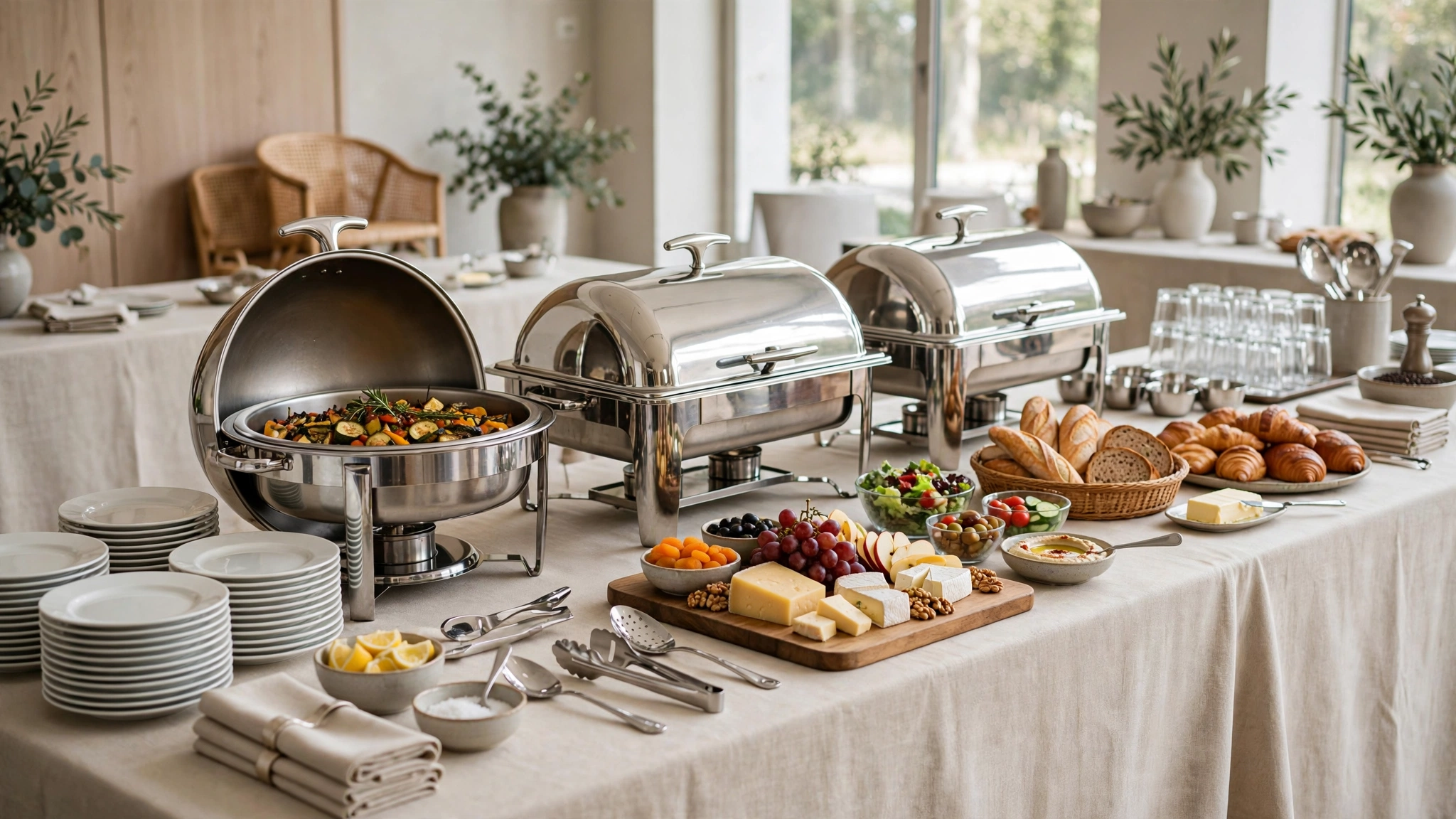
For buffets, plan separate labeled dishes with dedicated serving utensils, and place them so guests do not reach across other dishes. For guests with serious allergies, a plated meal handed directly to them is usually safer than relying on a shared buffet line. The buffet setup planning guide covers layout and refill flow in more detail.
Step 6: verify at dispatch and on site
Dispatch is the last point where the kitchen can catch an error. Add a special-meal line to the catering dispatch control check: list compared with labeled containers, any missing meal resolved before the vehicle leaves, and the carrier signed off by the person loading it.
On site, the event lead should brief service staff before guests arrive: who has a special meal, what it looks like and who will deliver it. For plated service, deliver special meals first or at the same moment as the table, by a named staff member who confirms with the guest. Transport and holding conditions apply to special meals exactly as they do to the rest of the food; see catering transport and holding.
Hypothetical example: a 120-guest plated lunch
The following example is hypothetical and is meant only to show how the record works.
A corporate client books a plated lunch for 120 guests. Ten days out, the coordinator sends a list of eight requests: three vegetarian, two vegan, two gluten-free and one “nut allergy.” The salesperson enters them into the special-meals section with names and asks two follow-up questions: whether the vegetarians eat fish (they do not) and how severe the nut allergy is (the guest carries an epinephrine auto-injector and avoids all tree nuts and peanuts).
The chef reviews the menu. The standard dessert contains almonds and is made on shared equipment, so the nut-allergy guest receives a separately prepared fruit dessert, made first on cleaned equipment and packed in a sealed, labeled container. The gluten-free guests receive the main course with a rice side instead of the bread-crumb topping.
Three days out, the final count drops to 112 and one vegan request is added. The change is entered as a change order and the production sheet, labels and service brief are reprinted. At dispatch, the loader counts nine labeled special meals in the special-meals carrier, matching the list. On site, the event lead briefs the four servers with a seating chart marked with the nine meals, and each special plate is delivered by name.
The work added perhaps an hour across the team. The alternative, a guest receiving the wrong dessert, carries a cost no event margin can absorb.
Common mistakes
- Accepting counts (“four gluten-free”) without names or seats.
- Using the word “safe” without a verified process behind it.
- Letting requests arrive by text or phone without updating the event documents.
- Packing special meals in the same carrier as standard trays with no separate count.
- Briefing the kitchen but not the service team who will deliver the plates.
- Putting allergy-friendly items on a buffet with shared utensils for guests with serious allergies.
Special-meal control checklist
- Standard request form with name or seat, restriction, type and severity
- Kitchen review and written confirmation of what can and cannot be provided
- Special-meals section on the event order, production sheet and dispatch check
- Special meals locked with the final guest count; later changes via change order
- Separate preparation, distinct labeled containers and a separate carrier
- Count at dispatch and signed carrier
- Pre-service brief and named delivery on site
Next step
Pull the event orders from your last five catered events and check how special requests were recorded. If any were stored as free-text notes without names, seats or severity, add a fixed special-meals section to your event order template before the next booking, and walk your kitchen and service leads through it once. Then use catering production planning to make sure each special meal has an owner and a place in the prep schedule.
Operational note: This guide is a general operating framework, not legal or medical advice. Allergen labeling, disclosure and food safety requirements vary by jurisdiction; follow the rules that apply to your business and consult your local health authority where needed.